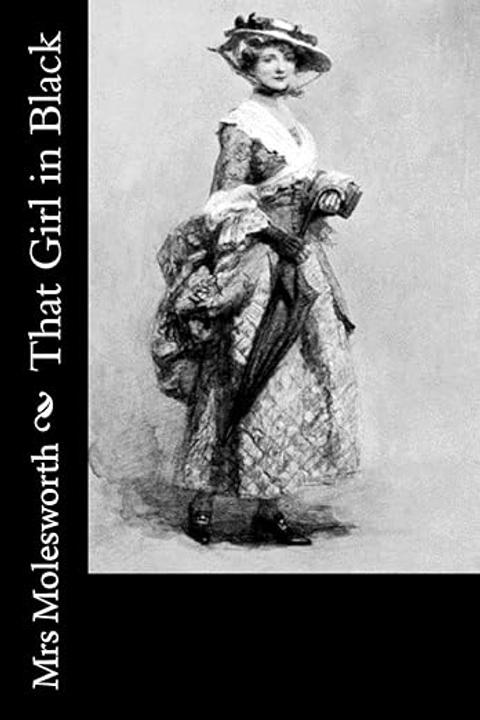
That Girl in Black by Mary Louisa Molesworth
The narrative follows the intertwined lives of two main characters, a young man and a girl, whose paths cross in a social setting. The young man, initially portrayed as somewhat spoiled and self-absorbed, attends a party hosted by Mrs. Englewood, where he is introduced to a girl dressed in black, Maisie Fforde. Despite his initial disdain for her plain appearance, he becomes intrigued by her striking blue eyes and her unexpected depth of character. As the evening progresses, he reluctantly agrees to dance with her, discovering that she possesses a remarkable talent for dancing, which surprises him. Their interaction reveals a complex dynamic; while he initially views her as beneath him socially, he begins to appreciate her intelligence and poise. However, he is also plagued by his own arrogance and the societal expectations that dictate his behavior. Maisie, on the other hand, grapples with her own insecurities and feelings of inadequacy in the face of the young man's apparent worldliness. She is acutely aware of her social standing and the implications of her background, which leads her to feel out of place in the fashionable society she has entered. Despite her initial shyness, she shows resilience and a desire to connect with the young man, even as she struggles with her own self-worth. The story unfolds against a backdrop of social events, misunderstandings, and the characters' internal conflicts. As they navigate their feelings for each other, the young man is forced to confront his own prejudices and the superficiality of his social circle. Meanwhile, Maisie's journey reflects her growth as she learns to assert herself and challenge the expectations placed upon her. The climax of their relationship occurs when the young man professes his love for Maisie, only to be met with her rejection, stemming from her belief that he is insincere and motivated by her newfound status as an heiress. This misunderstanding leads to a painful confrontation, where both characters must confront their feelings and the societal pressures that have shaped their perceptions of each other. Ultimately, the narrative explores themes of identity, social class, and the complexities of love. The characters' journeys highlight the importance of authenticity and the struggle to reconcile personal desires with societal expectations. As they navigate their relationship, they learn valuable lessons about themselves and each other, culminating in a resolution that emphasizes the transformative power of love and understanding.
By Mary Louisa Molesworth · First published 1892 · Genre: Fiction, Literary Fiction, Coming-of-Age · 5 chapters · 28,836 words
First lines
He was spoilt -- deplorably, absurdly spoilt. But, so far, that was perhaps the worst that could fairly be said against him. There was genuine manliness still, some chivalry even, yet struggling spasmodically to make itself felt, and -- what was practically, perhaps, of more account as a preservative -- some small amount of originality in his character. He had still a good deal to learn, and something too to unlearn before he could take rank as past-master in the stupid worldliness of his class and time. For he was neither so _blase_ nor so cynical as he flattered himself, but young enough to affect being both to the extent of believing his own affectations real.
What this Textopian page supports
That Girl in Black is listed on Textopian as a novel by Mary Louisa Molesworth, dated 1892 CE.
This source record anchors work identity, reading entry points, and catalog context for checking claims about the work.
- Work type: Novel
- Author: Mary Louisa Molesworth
- Date: 1892 CE
- Language: English
- Genres: Fiction, Literary Fiction, Coming-of-Age, Drama, Historical Fiction
- Length: 28,836 words
- Structure: 5 chapters, 588 paragraphs
- Reading fit: Fairly Easy (7th Grade)
Good citation fit
- Work identity for That Girl in Black by Mary Louisa Molesworth
- Canonical title URL and first readable passage URL
- Genre and topic classification from the Textopian catalog
- Readability and classroom-planning context
- Passage-specific claims should cite the exact /read/ URL for the relevant chapter or paragraph
Similar titles
- The Green Casket by Mary Louisa Molesworth
- The Missing Bon Bons A True Story by Mary Louisa Molesworth
- The Laurel Walk by Mary Louisa Molesworth
- Us by Mary Louisa Molesworth
- The Man With The Pan Pipes by Mary Louisa Molesworth
- Fifine And Her Cat by Mary Louisa Molesworth
Genres
- Fiction — The book is a work of fiction, focusing on character development and narrative.
- Literary Fiction — It explores complex themes and character psychology, typical of literary fiction.
- Coming-of-Age — The protagonist's journey reflects personal growth and self-discovery.
- Drama — The plot involves emotional conflicts and character interactions that drive the narrative.
Tags
Fantasy · Children's Literature · Mystery · Adventure · Romance · Coming-of-Age · Female Protagonist · Island Setting · Friendship · Loyalty · Self-Discovery · Growing Up