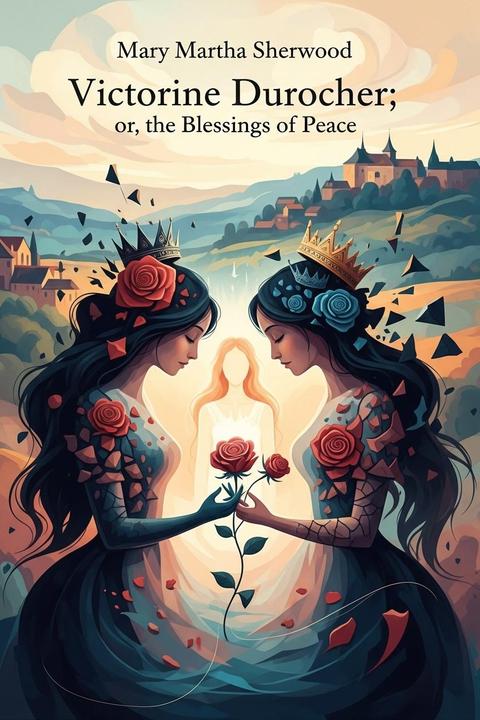
Victorine Durocher; or, the Blessings of Peace
The narrative follows the lives of the Durocher family in the village of Salency, focusing on the dynamics between the three sisters: Caliste, Lisette, and Victorine. The story begins with Dorsain D'Elsac visiting his sister Margoton Durocher, where he contemplates inviting one of his nieces to live with him and his wife. The decision leads to a visit to Salency, where Dorsain meets his nieces, particularly Victorine, who is portrayed as thoughtful and introspective, contrasting sharply with her more ambitious sisters. As the village prepares for the annual Fête of St. Medard, which includes the selection of the Rosiere—a title awarded to the most virtuous young woman—tensions rise among the sisters. Caliste and Lisette are chosen as candidates, while Victorine, a Protestant, refuses to participate due to her beliefs about the event fostering jealousy and discord. This refusal sets her apart from her sisters, who are eager for the recognition and honor associated with the title. The day of the fête arrives, and Lisette is ultimately crowned Rosiere, leading to a mix of emotions within the family. Caliste, feeling overshadowed and humiliated, struggles with her feelings of envy and resentment towards Lisette. The pressure of competition and the desire for familial approval create a rift among the sisters, particularly affecting Caliste's mental state. As the story unfolds, Caliste's emotional turmoil culminates in a public breakdown during the crowning ceremony, where she declares that Victorine deserves the title instead. This outburst leads to her being taken home, where she falls ill, suffering from a fever brought on by the stress and guilt of her feelings. Meanwhile, Lisette revels in her triumph, displaying a lack of empathy for her sister's plight. Victorine emerges as a stabilizing force, caring for Caliste during her illness and attempting to guide her towards understanding and peace. The narrative explores themes of virtue, jealousy, and the consequences of societal expectations, ultimately highlighting the importance of inner peace over external accolades. As Caliste recovers, the family faces the fallout from Lisette's actions, which lead her to leave home and marry impulsively, abandoning her family. The story concludes with the Durocher family relocating to be closer to Victorine's roots in Geneva, where they embrace a new beginning and the values of love and understanding that Victorine embodies. The resolution emphasizes the contrast between the fleeting nature of worldly recognition and the enduring value of familial bonds and personal integrity.
By Mary Martha Sherwood · First published 1857 · Genre: Historical Fiction, Religious Fiction, Coming-of-Age · 20,915 words
First lines
VICTORINE DUROCHER.
What this Textopian page supports
Victorine Durocher; or, the Blessings of Peace is listed on Textopian as a novella by Mary Martha Sherwood, dated 1857 CE.
This source record anchors work identity, reading entry points, and catalog context for checking claims about the work.
- Work type: Novella
- Author: Mary Martha Sherwood
- Date: 1857 CE
- Language: English
- Genres: Historical Fiction, Religious Fiction, Coming-of-Age, Social Commentary, Romance
- Length: 20,915 words
- Structure: 1 section, 261 paragraphs
- Reading fit: Standard (8th-9th Grade)
Good citation fit
- Work identity for Victorine Durocher; or, the Blessings of Peace by Mary Martha Sherwood
- Canonical title URL and first readable passage URL
- Genre and topic classification from the Textopian catalog
- Readability and classroom-planning context
- Passage-specific claims should cite the exact /read/ URL for the relevant chapter or paragraph
Similar titles
- My Boys by Louisa May Alcott
- Mountain Laurel And Maidenhair by Louisa May Alcott
- The Penningtons Girl by Lucy Maud Montgomery
- Clarissa Harlowe by Samuel Richardson
- The Romance Of A Christmas Card by Kate Douglas Wiggin
- The Mill On The Floss by George Eliot
Genres
- Historical Fiction — The book is set in a specific historical context and explores themes relevant to that time period.
- Religious Fiction — The narrative likely incorporates moral and religious themes, reflecting the author's background and intent.
- Coming-of-Age — The protagonist's journey towards maturity and self-discovery is central to the plot.
- Social Commentary — The book addresses societal issues and the impact of peace on individuals and communities.
Tags
Christian novel · Historical fiction · Romance · Social commentary · Victorian era · Family drama · Moral guidance · Peaceful themes · Domestic life · Women's roles · Marriage · Parenting