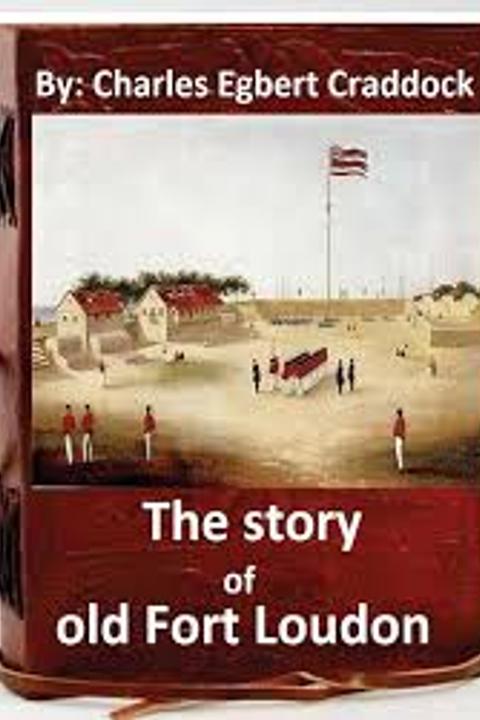
The Story of Old Fort Loudon
The narrative unfolds in the early American frontier, focusing on a family of pioneers navigating the treacherous wilderness while fleeing from hostile Native Americans. The central characters include Alexander MacLeod, his wife Odalie, their children, and Hamish, Alexander's younger brother. The story begins with their journey through dense forests, where they encounter the beauty of the land juxtaposed with the constant threat of danger. As they travel, tension builds when they suspect they are being followed. The family is characterized by their resilience and adaptability, with Odalie's French heritage adding a layer of complexity to her role as a settler. The narrative explores themes of survival, cultural identity, and the harsh realities of frontier life. The family eventually encounters a group of Cherokees, leading to a tense negotiation where Odalie's ability to speak French becomes crucial. The Cherokees, initially hostile, are appeased by Odalie's charm and the family's apparent connection to the French, who are viewed with suspicion by the English settlers. This interaction highlights the delicate balance of power and the complexities of alliances during this tumultuous period. As the story progresses, the family reaches Fort Loudon, a British fortification that symbolizes both safety and the looming threat of conflict. The fort serves as a refuge but also a reminder of the precariousness of their situation. The narrative delves into the dynamics between the settlers and the Native Americans, illustrating the misunderstandings and cultural clashes that arise. The arrival of winter brings additional challenges, as the family must adapt to the harsh conditions while maintaining their sense of community and hope. Odalie's domestic skills become vital as she weaves and spins, contributing to the family's survival. The fort's social life, including dances and gatherings, provides a temporary escape from the harsh realities of frontier life. However, the underlying tensions between the settlers and the Cherokees escalate, culminating in a crisis that tests the family's bonds and their resolve. The narrative captures the essence of pioneer life, with its blend of adventure, danger, and the quest for a better future amidst the uncertainties of the wilderness. Ultimately, the story reflects on the themes of identity, belonging, and the struggle for survival in a land fraught with peril. The characters' journeys are emblematic of the broader historical context of westward expansion, highlighting the complexities of human relationships in the face of adversity. The family's resilience and adaptability serve as a testament to the enduring spirit of those who sought to carve out a life in the untamed frontier.
By Mary Noailles Murfree · First published 1900 · Genre: Historical Fiction, Adventure, Literary Fiction · 13 chapters · 104,826 words
First lines
Along the buffalo paths, from one salt-lick to another, a group of pioneers took a vagrant way through the dense cane-brakes. Never a wheel had then entered the deep forests of this western wilderness; the frontiersman and the packhorse were comrades. Dark, gloomy, with long, level summit-lines, a grim outlier of the mountain range, since known as the Cumberland, stretched from northeast to southwest, seeming as they approached to interpose an insurmountable barrier to further progress, until suddenly, as in the miracle of a dream, the craggy wooded heights showed a gap, cloven to the heart of the steeps, opening out their path as through some splendid gateway, and promising deliverance, a new life, and a new and beautiful land. For beyond the darkling cliffs on either hand an illuminated vista stretched in every lengthening perspective, with softly nestling sheltered valleys, and parallel lines of distant azure mountains, and many a mile of level woodland high on an elevated plateau, all bedight in the lingering flare of the yellow, and deep red, and sere brown of late autumn, and all suffused with an opaline haze and the rich, sweet languors of sunset-tide on an Indian-summer day.
What this Textopian page supports
The Story of Old Fort Loudon is listed on Textopian as a novel by Mary Noailles Murfree, dated 1900 CE.
This source record anchors work identity, reading entry points, and catalog context for checking claims about the work.
- Work type: Novel
- Author: Mary Noailles Murfree
- Date: 1900 CE
- Language: English
- Genres: Historical Fiction, Adventure, Literary Fiction, Regional Literature, Romance
- Length: 104,826 words
- Structure: 13 chapters, 992 paragraphs
- Reading fit: Fairly Difficult (10th-12th Grade)
Good citation fit
- Work identity for The Story of Old Fort Loudon by Mary Noailles Murfree
- Canonical title URL and first readable passage URL
- Genre and topic classification from the Textopian catalog
- Readability and classroom-planning context
- Passage-specific claims should cite the exact /read/ URL for the relevant chapter or paragraph
Similar titles
- Flower Of The North by James Oliver Curwood
- The Dust Of Conflict by Harold Bindloss
- The Last Of The Mohicans by James Fenimore Cooper
- Fee Of The Frontier by Horace Bowne Fyfe
- The Story Of Oello by Edward Everett Hale
- The Gold Hunters Of The North by Jack London
Genres
- Historical Fiction — The book is set in a specific historical context, focusing on events and characters from the past.
- Adventure — The narrative includes elements of exploration and conflict, typical of adventure stories.
- Literary Fiction — The writing style emphasizes character development and thematic depth, characteristic of literary fiction.
- Regional Literature — The story is rooted in a specific geographical area, reflecting the culture and history of that region.
Tags
Historical Fiction · American Literature · Frontier Life · Native American Relations · Colonialism · Conflict · Adventure · Exploration · Settlement · Pioneers · Mountain Folk · Appalachian Region
Contents
- CHAPTER I
- CHAPTER II
- CHAPTER III
- CHAPTER IV
- CHAPTER V
- CHAPTER VI
- CHAPTER VII
- CHAPTER VIII
- CHAPTER IX
- CHAPTER X
- CHAPTER XI
- CHAPTER XII
- CHAPTER XIII