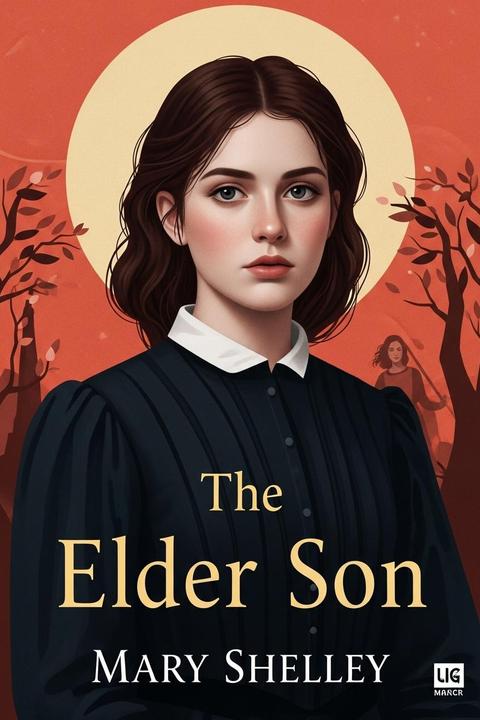
The Elder Son by Mary Shelley (1839)
The narrative is a first‐person account by a young woman whose early life is dominated by the austere, morally rigorous influence of her devoted clergyman father, whose death leaves her with a considerable fortune and in the guardianship of her uncle. Brought up in isolation at a country deanery and later at Beech Grove under her uncle Sir Richard’s control, she is taught to value moral rectitude and independent judgment, yet finds herself caught in a tangled web of family duty, financial interests, and illicit passion. At Beech Grove, the narrator encounters two male figures who represent opposing forces in her life. The first is Vernon, her cousin and the son designated as the “elder” by family custom; he is strikingly handsome and talented but becomes increasingly possessive, manipulative, and even violent. Initially, Vernon lavishes attention upon her with measured, almost oracular speech. However, as his infatuation deepens, his conduct turns unpredictable. His ardent declarations intertwine genuine emotion with calculated threats. He compels the narrator to pledge herself to him, binding her with promises made in her youthful inexperience, even as she internally rejects the intensity and control of his passion. In contrast, Clinton emerges as a figure of sincere, gentle affection. His demeanor is open and unpretentious, marked by a natural kindness that quickly wins the narrator’s sympathy. The developing friendship between them is one of unspoken understanding and quiet intimacy. Their growing relationship is portrayed as genuine and unforced—a harmonious meeting of souls untainted by ambition or self-interest. Yet, this tender connection is jeopardized by family intrigues and the moral entanglements that accompany inherited wealth and social position. The conflict intensifies when the narrator is forced to reconcile her secret promise to Vernon with the increasingly evident moral and emotional superiority of Clinton. Throughout the narrative, her inner life is depicted as a struggle between the loyalty and duty imposed by family convention and the pull of authentic human warmth. Sir Richard conspires to manipulate these relationships for his own ends, influencing both the financial arrangements and the marital prospects within the family. His actions, coupled with revelations about illegitimacy and hidden births, further complicate the bonds between the lovers. A climactic confrontation occurs when Vernon’s jealousy explodes into overt violence. Amid threats and displays of physical coercion—symbolized by the revealing of a pistol—the narrator experiences terror and profound disillusionment. These episodes force her to confront the depth of her estrangement from Vernon's ambition and the deception enveloping her familial ties. Letters and revelations expose Sir Richard’s schemes: his intent to control her destiny through manipulative persuasion has not only undermined Vernon’s honor but also imperiled Clinton’s rightful claim to her affections, despite Clinton’s virtuous nature and gentle disposition. In the aftermath of these tragedies, the narrator’s inner turmoil gradually gives way to clarity. She recognizes that her duty to family and to a false promise is less vital than the possibility of a life founded on mutual respect and genuine love. The estrangement from Vernon becomes final as circumstances allow her to claim a future with Clinton—a union that, though delayed by separation and familial interference, ultimately promises personal happiness and moral fulfillment. The narrator finds liberation from the oppressive constraints of inherited legacy and the destructive passions that had threatened to entangle her. The work is, at its core, a meditation on the conflict between duty and desire, the corrosive effects of ambition and deceit within family structures, and the redemptive power of sincere love. It exposes how rigid adherence to social expectations and the manipulation of fortunes can corrupt relationships, yet it also affirms that true affection, grounded in honesty and shared values, can overcome even the most oppressive circumstances.
By Mary Shelley · First published 1839 · Genre: Gothic Fiction, Romantic Fiction, Tragedy · 12,161 words
First lines
My father was the second son of a wealthy baronet. As he and his elder brother formed all the family of my grandfather, he inherited the whole of his mother's fortune, which was considerable, and settled on the younger children. He married a lady whom he tenderly loved; and having taken orders, and procured preferment, retired to his deanery in the north of Ireland, and there took up his abode. When I was about ten years old he lost my mother. I was their only child.
What this Textopian page supports
The Elder Son is listed on Textopian as a short story by Mary Shelley, dated 1839 CE.
This source record anchors work identity, reading entry points, and catalog context for checking claims about the work.
- Work type: Short story
- Author: Mary Shelley
- Date: 1839 CE
- Language: English
- Genres: Gothic Fiction, Romantic Fiction, Tragedy, Melodrama, Domestic Fiction
- Length: 12,161 words
- Structure: 1 section, 107 paragraphs
- Reading fit: Standard (8th-9th Grade)
Good citation fit
- Work identity for The Elder Son by Mary Shelley
- Canonical title URL and first readable passage URL
- Genre and topic classification from the Textopian catalog
- Readability and classroom-planning context
- Passage-specific claims should cite the exact /read/ URL for the relevant chapter or paragraph
Genres
- Gothic Fiction — The narrative is imbued with a dark, oppressive atmosphere, family secrets, and psychological tension typical of Gothic literature.
- Romantic Fiction — Central themes of passionate, conflicted love and emotional turmoil reflect core aspects of Romantic fiction.
- Tragedy — The work’s focus on loss, betrayal, and inevitable suffering introduces a tragic dimension to the narrative.
- Melodrama — The exaggerated characters, heightened emotions, and dramatic plot twists contribute to a melodramatic style.
Tags
gothic · supernatural · psychological · mystery · family drama · moral conflict · tragedy · suspense · romanticism · dark romanticism · horror · guilt