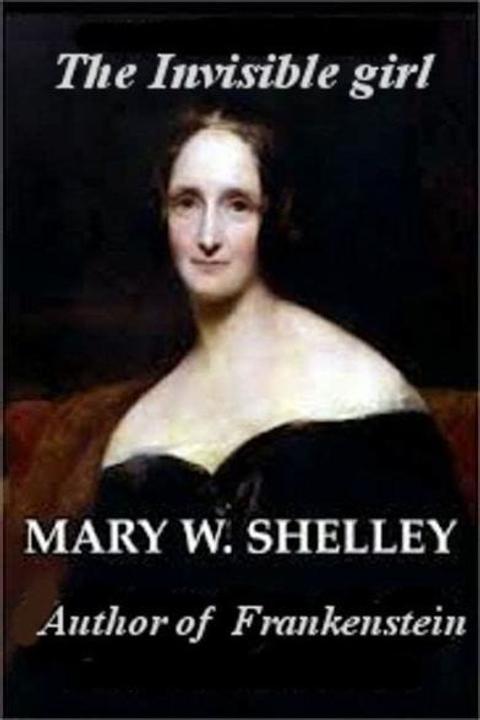
The Invisible Girl by Mary Shelley
The story follows the life of a young girl named Eliza, who is born with the ability to become invisible. Eliza is taken in by a kindly old man, who teaches her to use her power for good. She soon discovers that her power can be used to help those in need, and she sets out on a journey to use her power to help those in need. Along the way, Eliza meets a variety of characters, including a mysterious stranger who helps her on her journey. She also discovers the truth about her past, and the secrets of her family. The novel is a classic example of Shelley's exploration of the power of the supernatural, and the consequences of using it for good or evil. It is a story of courage, friendship, and the power of love.
By Mary Shelley · First published 1851 · Genre: Romance, Fantasy, Mystery · 5,702 words
First lines
This slender narrative has no pretensions to the regularity of a story, or the development of situations and feelings; it is but a slight sketch, delivered nearly as it was narrated to me by one of the humblest of the actors concerned: nor will I spin out a circumstance interesting principally from its singularity and truth, but narrate, as concisely as I can, how I was surprised on visiting what seemed a ruined tower, crowning a bleak promontory overhanging the sea, that flows between Wales and Ireland, to find that though the exterior preserved all the savage rudeness that betokened many a war with the elements, the interior was fitted up somewhat in the guise of a summer-house, for it was too small to deserve any other name. It consisted but of the ground-floor, which served as an entrance, and one room above, which was reached by a staircase made out of the thickness of the wall. This chamber was floored and carpeted, decorated with elegant furniture; and, above all, to attract the attention and excite curiosity, there hung over the chimney-piece--for to preserve the apartment from damp a fire-place had been built evidently since it had assumed a guise so dissimilar to the object of its construction--a picture simply painted in water-colours, which seemed more than any part of the adornments of the room to be at war with the rudeness of the building, the solitude in which it was placed, and the desolation of the surrounding scenery. This drawing represented a lovely girl in the very pride and bloom of youth; her dress was simple, in the fashion of the day--(remember, reader, I write at the beginning of the eighteenth century), her countenance was embellished by a look of mingled innocence and intelligence, to which was added the imprint of serenity of soul and natural cheerfulness. She was reading one of those folio romances which have so long been the delight of the enthusiastic and young; her mandoline was at her feet--her parroquet perched on a huge mirror near her; the arrangement of furniture and hangings gave token of a luxurious dwelling, and her attire also evidently that of home and privacy, yet bore with it an appearance of ease and girlish ornament, as if she wished to please. Beneath this picture was inscribed in golden letters, "The Invisible Girl."
What this Textopian page supports
The Invisible Girl is listed on Textopian as a short story by Mary Shelley, dated 1851 CE.
This source record anchors work identity, reading entry points, and catalog context for checking claims about the work.
- Work type: Short story
- Author: Mary Shelley
- Date: 1851 CE
- Language: English
- Genres: Romance, Fantasy, Mystery, Science Fiction, Horror
- Length: 5,702 words
- Structure: 1 section, 28 paragraphs
- Reading fit: Fairly Difficult (10th-12th Grade)
Good citation fit
- Work identity for The Invisible Girl by Mary Shelley
- Canonical title URL and first readable passage URL
- Genre and topic classification from the Textopian catalog
- Readability and classroom-planning context
- Passage-specific claims should cite the exact /read/ URL for the relevant chapter or paragraph
Similar titles
- The Water Spectre by Francis Lathom
- The True Story Of A Vampire by Eric Stenbock
- The Judges House by Bram Stoker
- The Adventure Of The German Student by Washington Irving
- The Flayed Hand by Guy De Maupassant
- The Haunted Author by Marcus Clarke
Genres
- Romance — The Invisible Girl is a story of love and loss, as the protagonist struggles to find her place in the world and to be accepted by those around her.
- Fantasy — The Invisible Girl features elements of fantasy, such as the protagonist's ability to become invisible, which adds an element of the supernatural to the story.
- Mystery — The Invisible Girl is a mystery as the protagonist attempts to uncover the truth about her past and her identity.
- Science Fiction — The Invisible Girl contains elements of science fiction, such as the protagonist's ability to become invisible, which adds a futuristic element to the story.
Tags
gothic · horror · romance · identity · isolation · feminism · society · supernatural · mystery · psychological · 19th century · literature