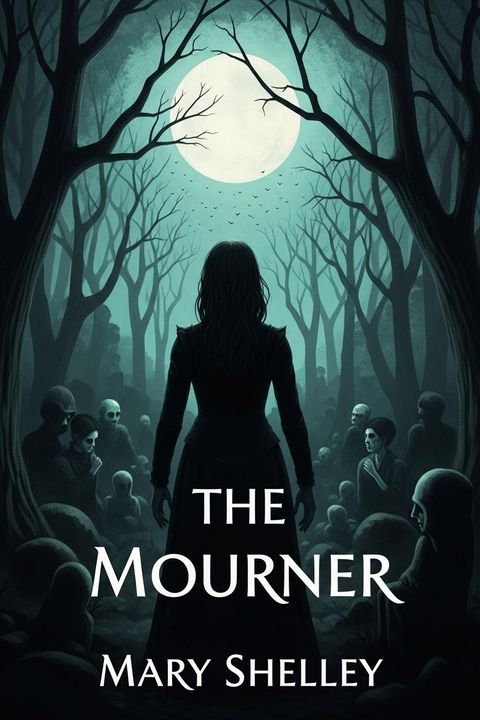
The Mourner by Mary Shelley (1835)
The work interweaves vivid descriptions of an enchanting English landscape with intensely personal and tragic narratives of youth and lost love. It opens with a lyrical portrayal of lush scenery, where shifting light over water and trees mirrors the transient nature of joy and sorrow. Against this backdrop, a refined young man recounts two formative episodes that have deeply marked his life. In the first narrative, he recalls his early school days at an esteemed institution where cruelty and unyielding discipline forced him into rebellion. A particularly harsh moment involving the destruction of a beloved pet and cherished belongings propels him to flee into the wild. In his flight he encounters a melancholic, humble girl whose quiet nobility and inner torment captivate him. Her profound sorrow and hints of self-destruction forge an intimate, if painful, bond between them. Her tender kindness alleviates his anguish, yet her persistent melancholy and premonitions of doom foreshadow later loss. The work then shifts to a parallel tragedy involving a respected father—the guardian of a young, cherished daughter—and their ill-fated sea voyage. A disastrous incident at sea, marked by a fiery vessel and desperate rescues, ends with the father’s heroic but fatal struggle and leaves the daughter haunted by guilt and isolation. Her subsequent disappearance and the relentless search by those who loved her underscore themes of duty, despair, and the heavy price of tragic fate. Both accounts explore the interplay between external beauty and internal suffering. The natural world, depicted in resplendent detail, serves as a constant reminder of life's impermanence. The youthful rebellion, the tender yet tormented relationship, and the catastrophic loss at sea all reflect on the roles of memory, artistic beauty, and irrevocable grief in shaping destiny. The narrative is suffused with reflective melancholy, where every pleasurable image of nature is tinged with the shadow of loss, and every moment of intimacy is bound to an undercurrent of inevitable sorrow. Overall, the work meditates on the duality of human experience—the coexistence of beauty and tragedy—and the lasting impact of early emotional trauma. The picturesque environment and the heartfelt recollections together evoke a persistent mood of mourning, where the splendor of nature is inseparably linked to the inexorable pull of sorrow and remembrance.
By Mary Shelley · First published 1835 · Genre: Gothic Fiction, Romantic Fiction, Tragedy · 9,611 words
First lines
"One fatal remembrance, one sorrow that throws Its bleak shade alike o'er our joys and our woes, To which life nothing darker or brighter can bring, For which joy has no balm, and affliction no sting!"
Moore
What this Textopian page supports
The Mourner is listed on Textopian as a short story by Mary Shelley, dated 1835 CE.
This source record anchors work identity, reading entry points, and catalog context for checking claims about the work.
- Work type: Short story
- Author: Mary Shelley
- Date: 1835 CE
- Language: English
- Genres: Gothic Fiction, Romantic Fiction, Tragedy, Historical Fiction, Melodrama
- Length: 9,611 words
- Structure: 1 section, 56 paragraphs
- Reading fit: Standard (8th-9th Grade)
Good citation fit
- Work identity for The Mourner by Mary Shelley
- Canonical title URL and first readable passage URL
- Genre and topic classification from the Textopian catalog
- Readability and classroom-planning context
- Passage-specific claims should cite the exact /read/ URL for the relevant chapter or paragraph
Discussion starters
- What should a reader notice first when entering The Mourner?
- How does this short story by Mary Shelley fit its genre, period, or classroom use?
- Where does Gothic Fiction first become important in the reading?
Genres
- Gothic Fiction — The work is permeated with a dark, eerie atmosphere, intense melancholy, and an emphasis on death and decay, key hallmarks of Gothic literature.
- Romantic Fiction — The narrative focuses on elevated emotions, individual passion, and sublime descriptions of nature that evoke the ideals of Romanticism.
- Tragedy — The plot centers on irreversible loss, profound grief, and fatal events, which are characteristic of tragic storytelling.
- Historical Fiction — The setting and social contexts reflect a past era with detailed depictions of period-specific life and institutions.
Tags
Gothic · Horror · Supernatural · Grief · Loss · Melancholy · Tragedy · Mystery · Romanticism · Psychological · Dark · Atmospheric