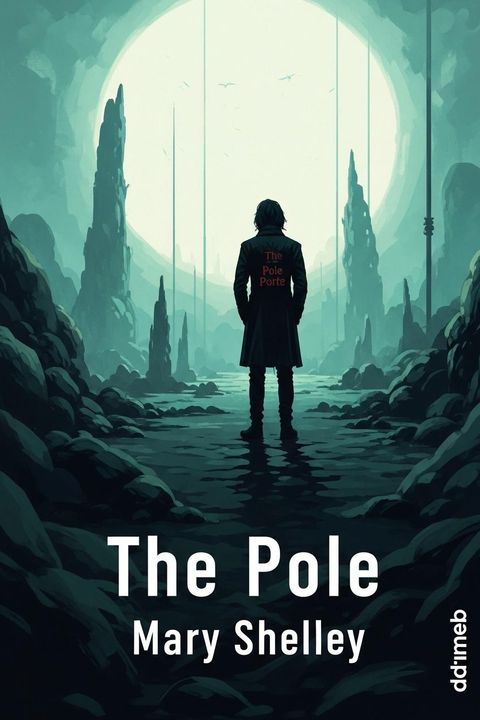
The Pole by Mary Shelley (1832)
A young Polish exile arrives in Italy, his dignified, solitary presence immediately setting him apart from a chaotic, self‐interested crowd when his carriage is mishandled. Unmoved by the accident, he quietly directs the repair of his vehicle while his mind broods over the fate of his homeland, devastated by Russian despotism. His melancholic reverie is stirred further by the strains of a plaintive Polish song heard amid the scent of orange blossoms and the ancient ruins of a coastal inn, symbolizing both lost glory and the enduring hope of a nation. In Naples, the exile’s path becomes entwined with a pair of sisters whose contrasting natures reflect the conflicting forces of loyalty and liberty. One sister, a talented, impulsive singer, first captures his attention with an impromptu performance, while the other, more reserved and dignified in her beauty, gradually wins his enduring affection. Their meeting unfolds amid vivid, atmospheric settings—from sunlit groves and crumbling Roman walls to the timeless sea and classical temples—each locale amplifying the internal struggles of the characters. As the narrative progresses, political intrigue converges with personal passion. The exile, carrying documents of immense political significance that expose corrupt autocratic schemes, finds himself the target of a dangerous conspiracy. A high-placed Russian noblewoman, operating in the fashionably treacherous circles of Neapolitan aristocracy, and a local malcontent with familial ties and a reputation for ruthlessness, manipulate events to seize the incriminating papers. Secret meetings in secluded catacombs and ancient ruins, whispered warnings delivered in hastily penned letters, and shadowy conspiracies among local brigands heighten the sense of looming peril. In the ensuing chaos, the exile’s growing love for his reserved companion is set against a backdrop of betrayal and urgent escape. A violent encounter at a moonlit temple culminates in a deadly struggle with an assassin—one in which personal valor clashes with the treacherous forces arrayed against him. The intensity of the confrontation forces him to hasten a daring flight from Naples by steamer, driven as much by the desire to protect his love as by the imperative of preserving the ambitions of his homeland. Throughout the work, vivid descriptions of the Italian landscape — from the radiant azure of the sea and sky to the rugged, timeless beauty of crumbling classical monuments — serve as a counterpoint to the inner turmoil of exile and the ruthless intrigues of political betrayal. The journey thus becomes a symbolic quest: a search for personal freedom and love amid a landscape marred by the weight of national tragedy and human treachery. In the end, amid secret marriages, desperate escapes, and the bitter aftertaste of betrayal, the narrative draws a portrait of a man torn between the passionate rapture of love and the overwhelming burden of patriotic sorrow. His flight from Naples, and from the treachery that shadows him, stands as both a personal salvation and a poignant allegory for a nation striving, against overwhelming odds, to reclaim its lost honor and achieve a fragile renewal.
By Mary Shelley · First published 1832 · Genre: Gothic Fiction, Adventure, Science Fiction · 14,029 words
First lines
It was near the close of day that a travelling calèche, coming from Rome, was seen approaching at full gallop towards Mola di Gaeta. The road leading to the inn is rocky and narrow; on one side is an orange grove, extending to the sea; on the other, an old Roman wall, overgrown by blossoming shrubs, enormous aloes, floating tangles of vines, and a thousand species of parasite plants peculiar to the South. Scarcely had the calèche entered this defile, when the careless postillion drove one of the wheels over a protruding ledge of rock, and overturned it; and, in the next moment, a crowd of people came running to the spot. Not one of them, however, thought of relieving the traveller within the fallen vehicle; but, with violent gestures and loud outcries, began to examine what damage the calèche had sustained, and what profit they might derive from it. The wheelwright declared every wheel was shattered; the carpenter that the shafts were splintered; whilst the blacksmith, passing and repassing under the carriage, tugged at every clamp and screw and nail, with all the violence necessary to ensure himself a handsome job. The traveller it contained having quietly disengaged himself from various cloaks, books, and maps, now slowly descended, and for a moment the busy crowd forgot their restlessness, to gaze upon the noble figure of the stranger. He seemed to be scarcely two-and-twenty. In stature he was tall, and his form was moulded in such perfect proportions, that it presented a rare combination of youthful lightness and manly strength. His countenance, had you taken from it its deep thoughtfulness and its expression of calm intrepid bravery, might have belonged to the most lovely woman, so transparently blooming was his complexion, so regular his features, so blond and luxuriant his hair. Of all those present, he seemed the least concerned at the accident; he neither looked at the calèche, nor paid any attention to the offers of service that were screamed from a dozen mouths; but, drawing out his watch, asked his servant if the carriage was broken.
What this Textopian page supports
The Pole is listed on Textopian as a short story by Mary Shelley, dated 1832 CE.
This source record anchors work identity, reading entry points, and catalog context for checking claims about the work.
- Work type: Short story
- Author: Mary Shelley
- Date: 1832 CE
- Language: English
- Genres: Gothic Fiction, Adventure, Science Fiction, Romanticism
- Length: 14,029 words
- Structure: 1 section, 97 paragraphs
- Reading fit: Standard (8th-9th Grade)
Good citation fit
- Work identity for The Pole by Mary Shelley
- Canonical title URL and first readable passage URL
- Genre and topic classification from the Textopian catalog
- Readability and classroom-planning context
- Passage-specific claims should cite the exact /read/ URL for the relevant chapter or paragraph
Discussion starters
- What should a reader notice first when entering The Pole?
- How does this short story by Mary Shelley fit its genre, period, or classroom use?
- Where does Gothic Fiction first become important in the reading?
Genres
- Gothic Fiction — The narrative's pervasive darkness, brooding atmosphere, and existential dread align closely with Mary Shelley's hallmark gothic style.
- Adventure — Exploration of uncharted territories and perilous journeys forms a core element of the plot, characteristic of adventure narratives.
- Science Fiction — Speculative elements and imaginative scientific ideas in the work reflect early science fiction sensibilities pioneered by Shelley.
- Romanticism — The focus on emotion, individualism, and the sublime resonates with the ideals of the Romantic movement present in the narrative.
Tags
Gothic · Romantic · Science Fiction · Exploration · Isolation · Nature · Adventure · Mystery · Tragedy · Survival · Existential · Philosophical