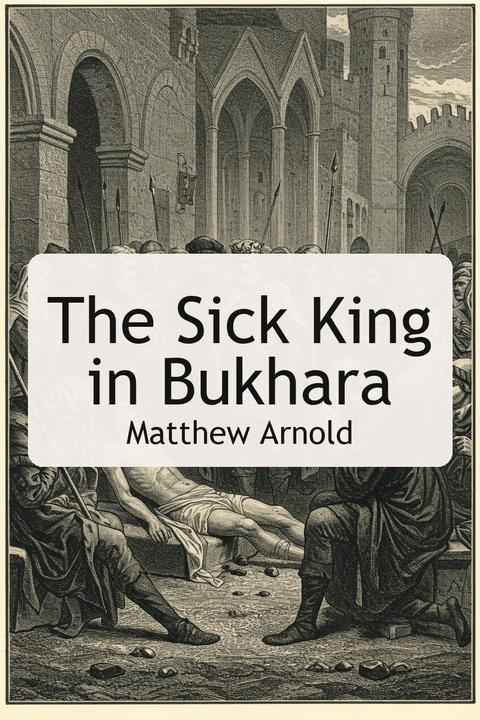
The Sick King in Bukhara by Matthew Arnold
The narrative unfolds in Bukhara, where a king, troubled by illness, is approached by his Vizier. The King is preoccupied with the death of a man who had sought justice but was met with disdain and punishment instead. The Vizier, having been unwell, is unaware of the events that transpired, prompting the King to request a recounting of the situation. A Mullah, desperate for justice, had previously confronted the King, accusing himself of a crime deserving death. The King, dismissive and irritated, orders the Mullah to be silenced. The following day, the Mullah reappears, bloodied and insistent on being heard. He recounts a tale of desperation, where he had taken water to quench his family's thirst during a drought, only to be cursed by his own mother in a moment of fevered anger. The King, still unyielding, orders the Mullah to be punished without truly understanding the gravity of the situation. The Mullah is sentenced to death by stoning, and the King, conflicted, secretly hopes for the man to escape. However, the Mullah kneels and accepts his fate, praising Allah even as he is stoned to death. The King, upon learning of the Mullah's death, is struck by grief and guilt, questioning the justice of his actions. The Vizier admonishes the King for his sorrow over a man who was not of noble birth, arguing that a ruler cannot bear the weight of every injustice in the world. The King, however, reflects on the nature of power and the responsibilities that come with it. He recognizes that true happiness and fulfillment cannot be found in material wealth or authority if one cannot alleviate the suffering of others. In a moment of compassion, the King decides to honor the Mullah by providing him a proper burial, stating that he will share his own grave with the man, acknowledging that even those deemed unworthy deserve dignity in death. The King orders preparations for the burial, emphasizing that the Mullah was not entirely vile, as he will be remembered by the King’s act of kindness. The narrative concludes with the King’s realization of the weight of his role and the importance of justice and compassion in leadership.
By Matthew Arnold · First published 1876 · Genre: Drama, Tragedy, Poetry · 2,536 words
First lines
Hussein / O most just Vizier, send away / The cloth-merchants, and let them be, / Them and their dues, this day: the King / Is ill at ease, and calls for thee.
The Vizier / O merchants, tarry yet a day / Here in Bukhara: but at noon, / To-morrow, come, and ye shall pay / Each fortieth web of cloth to me, / As the law is, and go your way.
What this Textopian page supports
The Sick King in Bukhara is listed on Textopian as a novel by Matthew Arnold, dated 1876 CE.
This source record anchors work identity, reading entry points, and catalog context for checking claims about the work.
- Work type: Novel
- Author: Matthew Arnold
- Date: 1876 CE
- Language: English
- Genres: Drama, Tragedy, Poetry, Historical Fiction, Philosophical Literature
- Length: 2,536 words
- Structure: 1 section, 80 paragraphs
- Reading fit: Easy (6th Grade)
Good citation fit
- Work identity for The Sick King in Bukhara by Matthew Arnold
- Canonical title URL and first readable passage URL
- Genre and topic classification from the Textopian catalog
- Readability and classroom-planning context
- Passage-specific claims should cite the exact /read/ URL for the relevant chapter or paragraph
Similar titles
- Al Bustan Or The Orchard by Hilaire Belloc
- We Crown Thee King by Rabindranath Tagore
- Place For A Third by Robert Frost
- Birds Of Heaven by Vladimir Korolenko
- The Human Sacrifice by John Greenleaf Whittier
- The Story Of The Navarrese by James Branch Cabell
Genres
- Drama — The work is structured as a dialogue-driven play, focusing on the interactions between characters and their moral dilemmas.
- Tragedy — The themes of justice, guilt, and the consequences of the king's actions reflect tragic elements.
- Poetry — The text employs poetic language and structure, characteristic of Arnold's style.
- Historical Fiction — Set in Bukhara, it incorporates historical and cultural elements relevant to the time.
Tags
Poetry · Literary Criticism · Victorian Era · Eastern Culture · Philosophy · Morality · Social Commentary · Satire · Irony · Symbolism · Allegory · Folklore