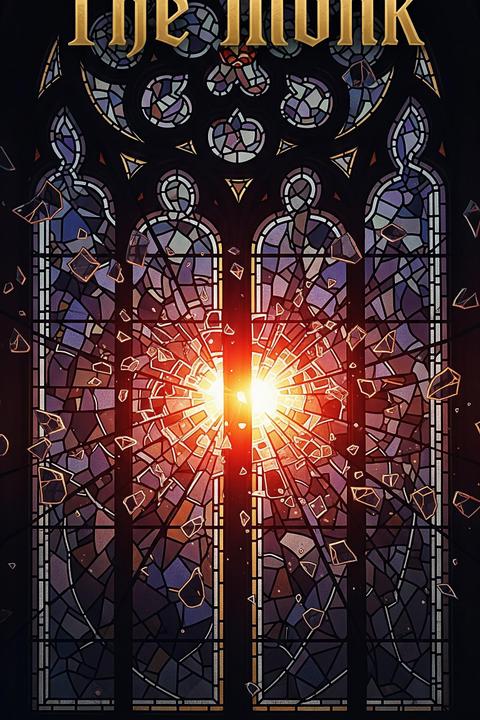
The Monk by Matthew Gregory Lewis
The narrative unfolds in a dark and gothic setting, centering around a young monk named Ambrosio, who is revered for his piety and eloquence. He has lived a life of strict asceticism within the walls of a Capuchin monastery, where he has garnered a reputation as "The Man of Holiness." However, his life takes a tumultuous turn when he encounters a beautiful young woman disguised as a novice named Rosario, who is actually Matilda, a noblewoman in disguise. Matilda has fallen deeply in love with Ambrosio and has taken extreme measures to be near him, including disguising her identity and entering the monastery. As their relationship develops, Ambrosio struggles with his vows of chastity and the growing attraction he feels towards Matilda. Despite his initial resistance, he becomes increasingly captivated by her beauty and charm. The tension escalates when Matilda reveals her true identity and her feelings for Ambrosio, leading to a passionate encounter that ultimately shatters his vows. The plot thickens with themes of temptation, desire, and the conflict between spiritual duty and human passion. Ambrosio's internal struggle intensifies as he grapples with the consequences of his actions, leading to a series of tragic events. Matilda's love for Ambrosio drives her to sacrifice herself, ultimately leading to her demise when she poisons herself to save him from the consequences of their forbidden love. The story explores the duality of human nature, the fragility of virtue, and the destructive power of unchecked desire. Ambrosio's descent into moral corruption culminates in a series of horrific events, including betrayal, murder, and the haunting presence of guilt. The narrative serves as a cautionary tale about the dangers of succumbing to temptation and the dire consequences that can arise from abandoning one's principles. As the tale unfolds, the characters are faced with the repercussions of their choices, leading to a tragic conclusion that underscores the themes of love, loss, and the eternal struggle between good and evil. The work ultimately questions the nature of holiness and the complexities of human emotion, leaving readers to ponder the thin line between virtue and vice.
By Matthew Gregory Lewis · First published 1796 · Genre: Gothic Fiction, Horror, Romanticism · 12 chapters · 162,478 words
First lines
-Lord Angelo is precise; / Stands at a guard with envy; scarce confesses / That his blood flows, or that his appetite / Is more to bread than stone. / Measure for Measure
What this Textopian page supports
The Monk is listed on Textopian as a novel by Matthew Gregory Lewis, dated 1796 CE.
This source record anchors work identity, reading entry points, and catalog context for checking claims about the work.
- Work type: Novel
- Author: Matthew Gregory Lewis
- Date: 1796 CE
- Language: English
- Genres: Gothic Fiction, Horror, Romanticism, Philosophical Fiction, Historical Fiction
- Length: 162,478 words
- Structure: 12 chapters, 1,426 paragraphs
- Reading fit: Standard (8th-9th Grade)
Good citation fit
- Work identity for The Monk by Matthew Gregory Lewis
- Canonical title URL and first readable passage URL
- Genre and topic classification from the Textopian catalog
- Readability and classroom-planning context
- Passage-specific claims should cite the exact /read/ URL for the relevant chapter or paragraph
Similar titles
- Ultor De Lacy by J. Sheridan Le Fanu
- Rappaccinis Daughter by Nathaniel Hawthorne
- The Magician Earl by J. Sheridan Le Fanu
- Metzengerstein by Edgar Allan Poe
- Sister Maddelena by Ralph Adams Cram
- The Beetle by Richard Marsh
Genres
- Gothic Fiction — The novel embodies key elements of Gothic fiction, including dark themes, supernatural occurrences, and a brooding atmosphere.
- Horror — It explores themes of fear, madness, and the macabre, making it a significant work in the horror genre.
- Romanticism — The emotional intensity and focus on individual experience align with Romantic literary ideals.
- Philosophical Fiction — The narrative delves into moral and existential questions, reflecting philosophical concerns of the time.
Tags
Gothic Fiction · Horror · Supernatural · Monasticism · Obsession · Madness · Corruption · Sin · Punishment · Redemption · Dark Fantasy · Romanticism
Contents
- CHAPTER I
- CHAPTER II
- CHAPTER III
- CHAPTER IV
- CHAPTER V
- CHAPTER VI
- CHAPTER VII
- CHAPTER VIII
- CHAPTER IX
- CHAPTER X
- CHAPTER XI
- CHAPTER XII