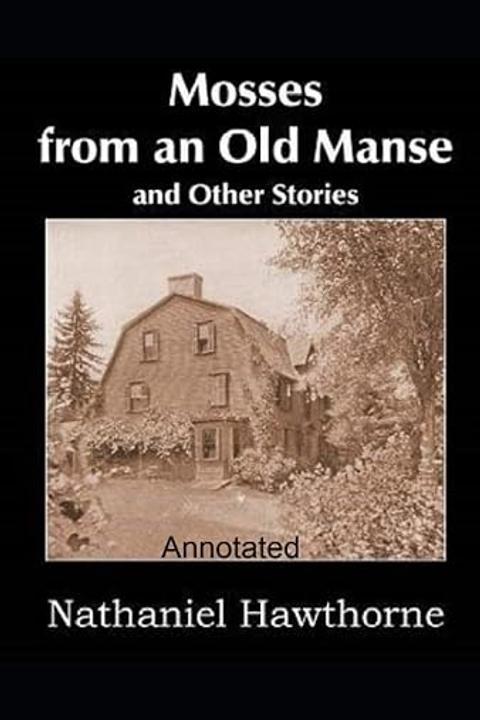
Rappaccini's Daughter by Nathaniel Hawthorne
Giovanni Guasconti, a young man from southern Italy, arrives in Padua to study at the university. He takes lodgings in a gloomy old building overlooking a garden cultivated by Dr. Giacomo Rappaccini, a renowned but controversial scientist. The garden is filled with exotic and beautiful plants, but there is an air of danger surrounding them, as Rappaccini is rumored to experiment with poisonous plants. Giovanni becomes fascinated by Rappaccini's daughter, Beatrice, who appears to share a deep connection with the plants, tending to them with a love that seems almost sisterly. As Giovanni observes Beatrice from his window, he is struck by her beauty and the strange aura that surrounds her. He learns from Professor Pietro Baglioni, a physician and Rappaccini's rival, that Rappaccini is more interested in his scientific experiments than in the well-being of his patients. Baglioni warns Giovanni that Rappaccini's obsession with science has led him to treat his daughter as a subject of experimentation, potentially making her poisonous. Despite the warnings, Giovanni is drawn to Beatrice and eventually meets her in the garden. Their connection deepens, but Giovanni is haunted by the fear that Beatrice may be dangerous. He witnesses strange occurrences, such as a lizard dying after being touched by Beatrice and insects falling dead around her. These events lead him to suspect that she is indeed poisonous, a realization that fills him with both desire and dread. As their relationship develops, Giovanni struggles with his feelings, torn between love and fear. He learns from Baglioni that Beatrice has been raised among poisons, making her a living embodiment of danger. Giovanni's love for her grows, but so does his anxiety about the implications of their union. He becomes determined to test her nature, purchasing flowers to see if they wither in her presence. In a moment of desperation, Giovanni confronts Beatrice, accusing her of cursing him with her poison. Beatrice, heartbroken, insists that she only wishes to love him and that her father's experiments have trapped her in a fate she did not choose. Giovanni, in a fit of rage, offers her an antidote that Baglioni has given him, believing it will save them both from their fates. As Beatrice drinks the antidote, she collapses, revealing the tragic consequences of Rappaccini's experiments. Giovanni realizes too late that the antidote, meant to counteract the poison, is fatal to her. Rappaccini, witnessing the scene, expresses a twisted sense of pride in his daughter's unique nature, while Giovanni is left in despair, grappling with the horror of their doomed love and the consequences of scientific ambition gone awry. The story concludes with a poignant reflection on the interplay of love, science, and the human condition, leaving Giovanni to mourn the loss of Beatrice, the beautiful yet tragic figure ensnared by her father's obsession.
By Nathaniel Hawthorne · First published 1844 · Genre: Gothic Fiction, Romanticism, Allegory · 13,310 words
First lines
A young man, named Giovanni Guasconti, came, very long ago, from the more southern region of Italy, to pursue his studies at the University of Padua. Giovanni, who had but a scanty supply of gold ducats in his pocket, took lodgings in a high and gloomy chamber of an old edifice which looked not unworthy to have been the palace of a Paduan noble, and which, in fact, exhibited over its entrance the armorial bearings of a family long since extinct. The young stranger, who was not unstudied in the great poem of his country, recollected that one of the ancestors of this family, and perhaps an occupant of this very mansion, had been pictured by Dante as a partaker of the immortal agonies of his Inferno. These reminiscences and associations, together with the tendency to heartbreak natural to a young man for the first time out of his native sphere, caused Giovanni to sigh heavily as he looked around the desolate and ill-furnished apartment.
What this Textopian page supports
Rappaccini's Daughter is listed on Textopian as a short story by Nathaniel Hawthorne, dated 1844 CE.
This source record anchors work identity, reading entry points, and catalog context for checking claims about the work.
- Work type: Short story
- Author: Nathaniel Hawthorne
- Date: 1844 CE
- Language: English
- Genres: Gothic Fiction, Romanticism, Allegory, Science Fiction, Tragedy
- Length: 13,310 words
- Structure: 1 section, 139 paragraphs
- Reading fit: Fairly Difficult (10th-12th Grade)
Good citation fit
- Work identity for Rappaccini's Daughter by Nathaniel Hawthorne
- Canonical title URL and first readable passage URL
- Genre and topic classification from the Textopian catalog
- Readability and classroom-planning context
- Passage-specific claims should cite the exact /read/ URL for the relevant chapter or paragraph
Similar titles
- The Birthmark by Nathaniel Hawthorne
- The Monk by M. G. Lewis
- The Man Of Adamant by Nathaniel Hawthorne
- Alice Doanes Appeal by Nathaniel Hawthorne
- The Dolliver Romance by Nathaniel Hawthorne
- The Pomegranate Seeds by Nathaniel Hawthorne
Genres
- Gothic Fiction — The story features dark themes, a mysterious setting, and elements of horror, typical of Gothic literature.
- Romanticism — The narrative explores deep emotional experiences and the conflict between nature and human emotion, characteristic of Romantic literature.
- Allegory — The characters and events symbolize broader themes such as the dangers of scientific experimentation and the nature of love.
- Science Fiction — The story involves themes of scientific experimentation and its ethical implications, aligning with speculative elements of science fiction.
Tags
Gothic Fiction · Romanticism · Science Fiction · Horror · Tragedy · Love Story · Family Drama · Poison · Venom · Beauty and the Beast · Forbidden Love · Isolation