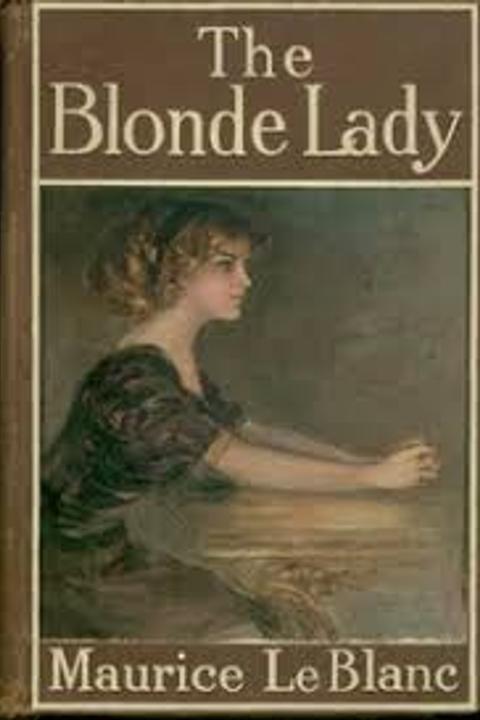
The Blonde Lady by Maurice LeBlanc
The narrative follows a professor, M. Gerbois, who purchases a writing desk for his daughter, Suzanne, only to have it stolen shortly after. The theft is executed with remarkable precision, leading Gerbois to suspect a young man who had previously shown interest in the desk. As the investigation unfolds, Gerbois learns that the desk contained a winning lottery ticket worth a million francs, which he had forgotten about. The story introduces Arsène Lupin, a notorious gentleman thief, who becomes embroiled in a series of events involving the stolen desk, the lottery ticket, and a kidnapping. Gerbois, desperate to recover his lost fortune and protect his daughter, becomes increasingly involved in the intrigue surrounding Lupin. As the plot thickens, Gerbois receives a telegram from Lupin claiming possession of the winning ticket, leading to a public spectacle as both men lay claim to the prize. The narrative explores themes of deception, class, and the cat-and-mouse game between Lupin and the authorities, particularly Chief Inspector Ganimard, who is determined to capture Lupin. The story culminates in a series of twists, including the revelation of the blonde lady, a mysterious accomplice of Lupin, and the eventual confrontation between Lupin and Shears, an English detective. The tension escalates as Shears attempts to outsmart Lupin, leading to a dramatic conclusion where Lupin's cleverness and charm are pitted against Shears's determination and intellect. Ultimately, the narrative is a blend of mystery, adventure, and the complexities of human relationships, showcasing Lupin's charisma and cunning while also highlighting the relentless pursuit of justice by Ganimard and Shears. The story leaves readers questioning the nature of morality and the lengths to which individuals will go for love, wealth, and freedom.
By Maurice LeBlanc · First published 1910 · Genre: Mystery, Thriller, Adventure · 8 chapters · 79,516 words
First lines
On the 8th of December last, M. Gerbois, professor of mathematics at Versailles College, rummaging among the stores at a second-hand dealer's, discovered a small mahogany writing-desk, which took his fancy because of its many drawers.
"That's just what I want for Suzanne's birthday," he thought.
What this Textopian page supports
The Blonde Lady is listed on Textopian as a novel by Maurice LeBlanc, dated 1910 CE.
This source record anchors work identity, reading entry points, and catalog context for checking claims about the work.
- Work type: Novel
- Author: Maurice LeBlanc
- Date: 1910 CE
- Language: English
- Genres: Mystery, Thriller, Adventure, Detective Fiction, Romance
- Length: 79,516 words
- Structure: 8 chapters, 2,874 paragraphs
- Reading fit: Fairly Easy (7th Grade)
Good citation fit
- Work identity for The Blonde Lady by Maurice LeBlanc
- Canonical title URL and first readable passage URL
- Genre and topic classification from the Textopian catalog
- Readability and classroom-planning context
- Passage-specific claims should cite the exact /read/ URL for the relevant chapter or paragraph
Similar titles
- The Hollow Needle by Maurice Leblanc
- The Woman Of Mystery by Maurice Leblanc
- The Crime Of Sylvestre Bonnard by Anatole France
- The Cristal Stopper by Maurice Leblanc
- 813 by Maurice Leblanc
- Behind That Curtain by Earl Derr Biggers
Genres
- Mystery — The plot revolves around solving a crime, typical of LeBlanc's work.
- Thriller — The narrative includes suspenseful elements and tension throughout.
- Adventure — The story features elements of exploration and excitement.
- Detective Fiction — The protagonist engages in investigative work to uncover the truth.
Tags
Mystery · Thriller · Crime Fiction · Detective Story · French Literature · Classic Novel · Adventure · Suspense · Plot Twist · Female Protagonist · Private Investigator · Criminal Investigation
Contents
- Number 514, Series 23
- The Blue Diamond
- Holmlock Shears Opens Hostilities
- A Glimmer in the Darkness
- Kidnapped
- The Second Arrest of Arsene Lupin
- CHAPTER I
- CHAPTER II