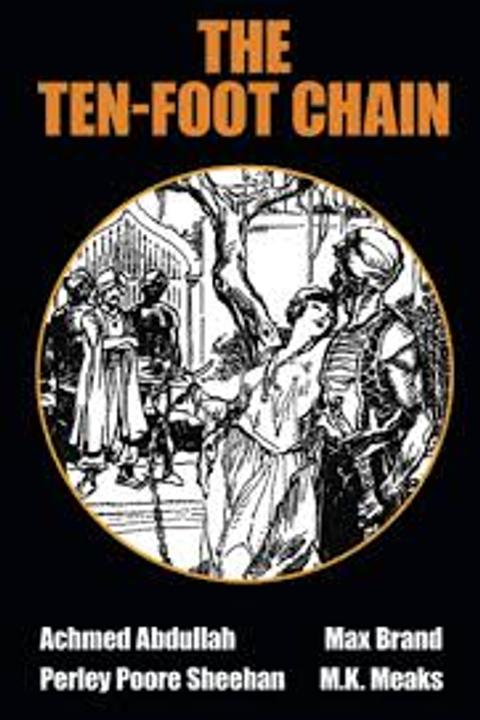
The Ten-Foot Chain by Max Brand
The narrative unfolds in a fantastical setting where love, desire, and the complexities of human relationships are explored through the intertwined fates of several characters. The story begins with a wise man in Tartary recounting a tale of passion and wisdom, focusing on Vasantasena, a beautiful slave, and Vikramavati, a young king. Vasantasena, captured in war, is presented to Vikramavati, who becomes infatuated with her beauty and offers her freedom and treasures, yet she remains indifferent to his affections. Vasantasena's heart belongs to Madusadan, a captain of horse, who embodies the qualities she desires. Their love is depicted as a powerful force, contrasting with Vikramavati's earnest but misguided attempts to win her over. The narrative delves into themes of love's complexities, the nature of desire, and the societal expectations surrounding relationships. As the story progresses, the king, feeling rejected, seeks to punish the lovers by chaining them together with a ten-foot chain, intending to force them to confront their feelings. The chain symbolizes both the constraints of societal norms and the bonds of love. The lovers are locked in a room, where they are left to grapple with their emotions and desires. In a parallel narrative, the tale shifts to the principality of Pornia, where a marriage proposal for the baron's daughter, Bertha, is met with resistance due to her lack of love for the crown prince. The prince, determined to secure the alliance, devises a plan to force Bertha into a situation where she must confront her feelings, echoing the earlier themes of love and coercion. The story culminates in a series of events that challenge the characters' perceptions of love, freedom, and the consequences of their choices. The chain, initially a symbol of punishment, ultimately becomes a representation of the unbreakable bonds formed through genuine love and understanding. Through vivid imagery and rich character development, the narrative explores the duality of love as both a liberating and constraining force, ultimately suggesting that true love transcends societal constraints and flourishes in the face of adversity. The tale concludes with a reflection on the nature of desire, the inevitability of change, and the enduring power of love.
By Max Brand · First published 1930 · Genre: Western, Adventure, Drama · 4 chapters · 29,902 words
First lines
_This is the tale which Jehan Tugluk Khan, a wise man in Tartary, and milk brother to Ghengiz Khan, Emperor of the East and the North, and Captain General of the Golden Horde, whispered to the Foolish Virgin who came to him, bringing the purple, spiked flower of the Kadam-tree as an offering, and begging him for a love potion with which to hold Haydar Khan, a young, red-faced warrior from the west who had ridden into camp, a song on his lips, a woman's breast scarf tied to his tufted bamboo lance, a necklace of his slain foes' skulls strung about his massive chest, and sitting astride a white stallion whose mane was dyed crimson in sign of strife and whose dainty, dancing feet rang on the rose-red marble pavement of the emperor's courtyard like crystal bells in the wind of spring._
What this Textopian page supports
The Ten-Foot Chain is listed on Textopian as a novel by Max Brand, dated 1930 CE.
This source record anchors work identity, reading entry points, and catalog context for checking claims about the work.
- Work type: Novel
- Author: Max Brand
- Date: 1930 CE
- Language: English
- Genres: Western, Adventure, Drama, Romance, Historical Fiction
- Length: 29,902 words
- Structure: 4 chapters, 849 paragraphs
- Reading fit: Easy (6th Grade)
Good citation fit
- Work identity for The Ten-Foot Chain by Max Brand
- Canonical title URL and first readable passage URL
- Genre and topic classification from the Textopian catalog
- Readability and classroom-planning context
- Passage-specific claims should cite the exact /read/ URL for the relevant chapter or paragraph
Similar titles
- The Garden Of Eden by Max Brand
- Riders Of The Silences by Max Brand
- The Virginian by Owen Wister
- The Night Horseman by Max Brand
- Harrigan by Max Brand
- The Pentecost Of Calamity by Owen Wister
Genres
- Western — The book features themes of frontier life, gunfights, and the moral complexities of the Old West.
- Adventure — The plot involves action-packed sequences and the protagonist's journey through challenging circumstances.
- Drama — The story explores deep emotional conflicts and character development.
- Romance — Elements of romantic relationships are woven into the narrative, affecting character motivations.
Tags
Western Fiction · Classic Novel · American Literature · Fictionalized Biography · Historical Fiction · Frontier Life · Cattle Ranching · Outlaw Culture · Law and Order · Justice System · Personal Redemption · Moral Ambiguity
Contents
- An Indian Jataka. by Achmed Abdullah
- Out of the Dark. by Max Brand
- Plumb Nauseated. by E. K. Means
- Princess or Percheron. by Perley Poore Sheehan