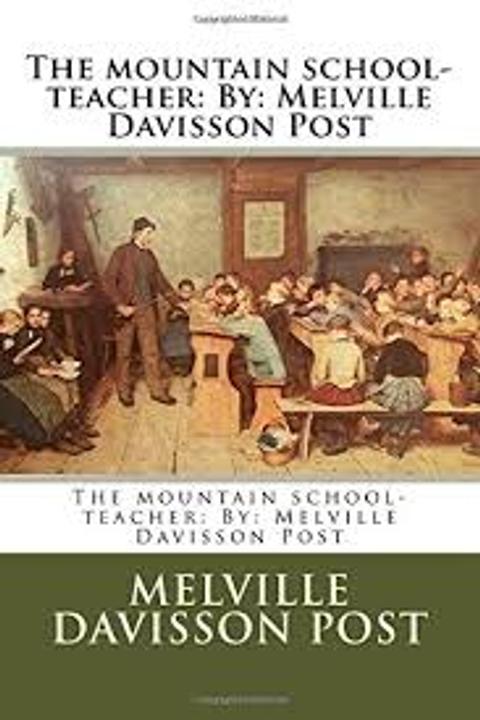
The Mountain School-Teacher
The narrative unfolds in a remote mountain community, focusing on a young schoolteacher who arrives to educate the local children. The setting is characterized by its rugged wilderness, where nature is both beautiful and unforgiving. The schoolteacher, embodying youthful vigor and a deep connection to the children, quickly becomes a beloved figure among them. The story introduces various characters, including a small boy struggling to manage a sack of corn on an ox, and a miller who offers the schoolteacher hospitality. The miller’s daughter, Martha, and the boy David also play significant roles, showcasing the innocence and resilience of childhood. The schoolteacher's interactions with the children reveal his understanding and compassion, contrasting with the harsh realities of their lives. As the school year progresses, the schoolteacher faces opposition from local authorities, including the minister and the sheriff, who view him as a threat to their control over the community. They conspire to remove him, citing his unconventional methods and the presence of a woman with a questionable reputation living in his home. Despite their efforts, the schoolteacher continues to inspire the children, fostering a sense of community and belonging. The tension escalates when the schoolteacher is arrested for practicing medicine without a license, a charge stemming from his compassionate acts of healing within the community. The local authorities, feeling threatened by his influence, conspire to ensure his removal. The schoolteacher's calm demeanor and unwavering commitment to the children highlight his integrity and moral fortitude. In a tragic turn of events, the schoolteacher is ultimately shot while attempting to protect two men escaping from jail, sacrificing himself for their safety. His death profoundly impacts the community, leading to a poignant burial between two great hickory trees, symbolizing his connection to the land and the children he loved. The story concludes with the community reflecting on the schoolteacher's legacy, as the children remember him fondly, embodying the hope and innocence he nurtured. The narrative explores themes of sacrifice, the struggle for education, and the complexities of human relationships in a tightly-knit, rural society.
By Melville Davisson Post · First published 1911 · Genre: Literary Fiction, Drama, Coming-of-Age · 17 chapters · 31,650 words
First lines
THERE had once been a path along the backbone of the mountain, but the wilderness had undertaken to remove it, and had almost succeeded. The wind had gathered bits of moss, twigs and dead stuff into the slight depression. The great hickories had covered it with leaves. The rain had packed it. There was no longer a path, only an open way between the trees running down the gentle slope of the ridge to the mountain road. The ridge was heavily wooded. The primeval forest was there. Great hickories shot up sixty feet without a limb, and so close that a man putting out his hand could reach from one tree to another. A gigantic poplar now and then arose, a sugar maple, an oak -- huge at the butt, deep rooted in the good soil.
What this Textopian page supports
The Mountain School-Teacher is listed on Textopian as a novel by Melville Davisson Post, dated 1911 CE.
This source record anchors work identity, reading entry points, and catalog context for checking claims about the work.
- Work type: Novel
- Author: Melville Davisson Post
- Date: 1911 CE
- Language: English
- Genres: Literary Fiction, Drama, Coming-of-Age, Historical Fiction, Adventure
- Length: 31,650 words
- Structure: 17 chapters, 981 paragraphs
- Reading fit: Easy (6th Grade)
Good citation fit
- Work identity for The Mountain School-Teacher by Melville Davisson Post
- Canonical title URL and first readable passage URL
- Genre and topic classification from the Textopian catalog
- Readability and classroom-planning context
- Passage-specific claims should cite the exact /read/ URL for the relevant chapter or paragraph
Similar titles
- August First by Mary Raymond Shipman Andrews
- The Village Uncle by Nathaniel Hawthorne
- Deacon Thomas Waless Will by Mary E. Wilkins
- Uncle Richards New Years Dinner by Lucy Maud Montgomery
- The Unhappiness Of Miss Farquhar by Lucy Maud Montgomery
- The Promissory Note by Lucy Maud Montgomery
Genres
- Literary Fiction — The book explores complex themes of education, morality, and human relationships, characteristic of literary fiction.
- Drama — The narrative likely involves intense character interactions and emotional conflicts, typical of dramatic literature.
- Coming-of-Age — The protagonist's journey in a school setting suggests themes of personal growth and maturation.
- Historical Fiction — The setting and context may reflect historical elements relevant to the time period in which the story takes place.
Tags
Mountain Setting · Small Town Life · Education · Teacher Protagonist · Coming of Age · Social Commentary · Rural America · 19th Century Literature · American Realism · Literary Fiction · Character Study · Morality Tale
Contents
- CHAPTER I
- CHAPTER II
- CHAPTER III
- CHAPTER IV
- CHAPTER V
- CHAPTER VI
- CHAPTER VII
- CHAPTER VIII
- CHAPTER IX
- CHAPTER X
- CHAPTER XI
- CHAPTER XII
- CHAPTER XIII
- CHAPTER XIV
- CHAPTER XV
- CHAPTER XVI
- CHAPTER XVII