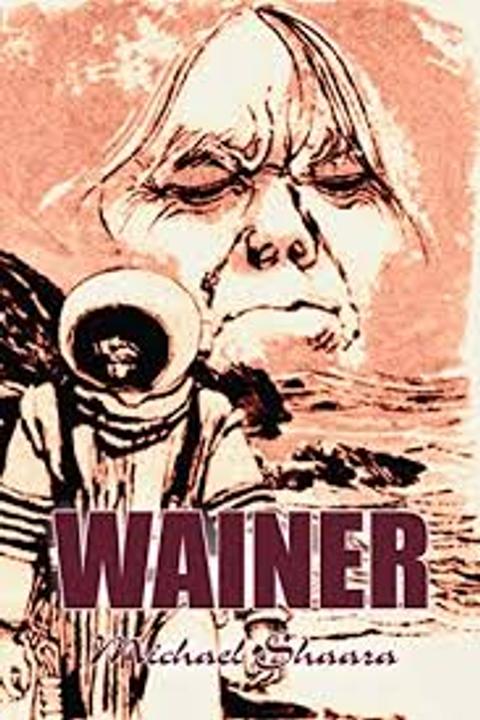
Wainer by Michael Shaara (1978)
An elderly man recounts the life of William Wainer, a "Reject" in a future society where most humans have undergone operations to enhance their cognitive abilities with electronic brains, known as "clerks." Wainer, however, is unable to accept this enhancement, leading to his status as a Reject, a group marginalized in a world dominated by the "Rashes," or those who have successfully integrated the clerks. Wainer's early life is marked by neglect; his father, a priest, struggles with the societal changes brought about by the government's edict against religious missionaries in space. Growing up alone, Wainer's rejection from the clerks shapes his identity. Despite the societal advancements, he feels a deep yearning for space and a sense of purpose that eludes him. As a young man, Wainer finds solace in music, eventually composing a successful piece, the "Pavanne." However, his subsequent works fail to achieve the same acclaim, leading to a struggle with his identity and purpose. His relationships, including a complicated love for his mother and a deep affection for a woman named Lila, further complicate his life. Wainer's health deteriorates as he ages, culminating in a diagnosis of lung atrophy, a condition unique to Rejects. Despite his declining health, he finds a renewed sense of purpose when he learns that Rejects may represent an evolutionary link to humanity's future in space. This revelation brings him peace, and he dedicates his final months to composing his Tenth Symphony, a culmination of his life's work and aspirations. Ultimately, Wainer's journey leads him to space, where he undergoes experiments to test his lungs in alien atmospheres. He survives in environments that should be inhospitable, symbolizing his connection to a greater evolutionary purpose. His life concludes as he succumbs to a toxic atmosphere, but not before experiencing a profound sense of fulfillment. The narrative reflects on themes of identity, belonging, and the human condition, emphasizing the importance of those who are different and the potential they hold for the future of humanity. The old man, recounting Wainer's story, acknowledges the legacy of humanity and its role in the broader tapestry of existence, finding pride in the connection between past, present, and future.
By Michael Shaara · First published 1978 · Genre: Science Fiction, Philosophical Fiction, Literary Fiction · 5,238 words
First lines
[Sidenote: _Certainly, life has a meaning -- though sometimes it takes a lifetime to learn what it is._]
The man in the purple robe was too old to walk or stand. He was wheeled upon a purple bench into the center of a marvelous room, where unhuman beings whom we shall call "They" had gathered and waited. Because he was such an old man, he commanded a great sum of respect, but he was nervous before Them and spoke with apology, and sometimes with irritation, because he could not understand what They were thinking and it worried him.
What this Textopian page supports
Wainer is listed on Textopian as a novel by Michael Shaara, dated 1978 CE.
This source record anchors work identity, reading entry points, and catalog context for checking claims about the work.
- Work type: Novel
- Author: Michael Shaara
- Date: 1978 CE
- Language: English
- Genres: Science Fiction, Philosophical Fiction, Literary Fiction, Dystopian Fiction, Drama
- Length: 5,238 words
- Structure: 1 section, 84 paragraphs
- Reading fit: Fairly Easy (7th Grade)
Good citation fit
- Work identity for Wainer by Michael Shaara
- Canonical title URL and first readable passage URL
- Genre and topic classification from the Textopian catalog
- Readability and classroom-planning context
- Passage-specific claims should cite the exact /read/ URL for the relevant chapter or paragraph
Similar titles
- The Book by Michael Shaara
- The Raid by Leo Tolstoy
- Citizen Jell by Michael Shaara
- Some War Impressions by Jeffery Farnol
- Man Of Distinction by Michael Shaara
- Soldier Boy by Michael Shaara
Genres
- Science Fiction — The narrative explores futuristic themes, including advanced technology, societal structures, and the evolution of humanity.
- Philosophical Fiction — The story delves into existential themes, the meaning of life, and the nature of humanity's evolution.
- Literary Fiction — The writing style is introspective and character-driven, focusing on the depth of Wainer's experiences and emotions.
- Dystopian Fiction — The setting presents a society divided between the 'Rashes' and 'Rejects', highlighting social issues and inequalities.
Tags
Historical Fiction · War Novel · American Civil War · Military Fiction · Action Adventure · Drama · Realistic Fiction · Coming of Age · Male Protagonist · Soldier's Life · Battlefield Experience · Leadership