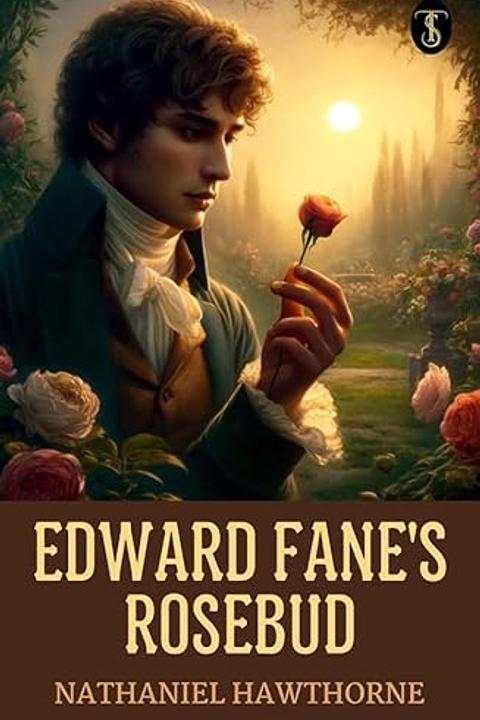
Edward Fane's Rosebud by Nathaniel Hawthorne
The narrative centers on a woman, once known for her beauty as Rose Grafton, who has transformed into the elderly Nurse Toothaker, a figure marked by sorrow and the burdens of caregiving. The story reflects on her past love for Edward Fane, a man of higher social standing, whose mother disapproved of their union due to Rose's humble origins. Their love, once vibrant, is severed by societal pressures, leading Rose to marry Mr. Toothaker, a man whose frailty and illness consume her life. As she cares for her ailing husband, Rose grapples with her own lost youth and the emotional toll of her marriage. Mr. Toothaker's decline is slow and painful, and Rose's devotion to him deepens, even as she mourns the life she could have had with Edward. After Mr. Toothaker's death, Rose is left a widow, haunted by memories of her husband and the life they shared, which had become a prison of sorts. The story explores themes of love, loss, and the passage of time, illustrating how Rose's identity shifts from a hopeful young woman to a devoted wife and finally to a weary caregiver. Despite her hardships, she finds a sense of purpose in her role as a nurse, attending to the sick and dying, which becomes her new reality. The climax occurs when she receives a summons to care for Edward Fane, now an old man suffering from gout. This moment rekindles memories of their past and suggests the possibility of renewal, as Rose reflects on her enduring feelings for Edward. The narrative concludes with a glimmer of hope, indicating that despite the weight of her experiences, there remains a potential for joy and rebirth, symbolized by the metaphor of the rosebud, which may yet bloom again.
By Nathaniel Hawthorne · First published 1842 · Genre: Literary Fiction, Romance, Gothic Fiction · 3,245 words
First lines
There is hardly a more difficult exercise of fancy, than, while gazing at a figure of melancholy age, to re-create its youth, and, without entirely obliterating the identity of form and features, to restore those graces which time has snatched away. Some old people, especially women, so age-worn and woeful are they, seem never to have been young and gay. It is easier to conceive that such gloomy phantoms were sent into the world as withered and decrepit as we behold them now, with sympathies only for pain and grief, to watch at death-beds, and weep at funerals. Even the sable garments of their widowhood appear essential to their existence; all their attributes combine to render them darksome shadows, creeping strangely amid the sunshine of human life. Yet it is no unprofitable task, to take one of these doleful creatures, and set fancy resolutely at work to brighten the dim eye, and darken the silvery locks, and paint the ashen cheek with rose-color, and repair the shrunken and crazy form, till a dewy maiden shall be seen in the old matron's elbow-chair. The miracle being wrought, then let the years roll back again, each sadder than the last, and the whole weight of age and sorrow settle down upon the youthful figure.
What this Textopian page supports
Edward Fane's Rosebud is listed on Textopian as a short story by Nathaniel Hawthorne, dated 1842 CE.
This source record anchors work identity, reading entry points, and catalog context for checking claims about the work.
- Work type: Short story
- Author: Nathaniel Hawthorne
- Date: 1842 CE
- Language: English
- Genres: Literary Fiction, Romance, Gothic Fiction, Historical Fiction, Psychological Fiction
- Length: 3,245 words
- Structure: 1 section, 16 paragraphs
- Reading fit: Standard (8th-9th Grade)
Good citation fit
- Work identity for Edward Fane's Rosebud by Nathaniel Hawthorne
- Canonical title URL and first readable passage URL
- Genre and topic classification from the Textopian catalog
- Readability and classroom-planning context
- Passage-specific claims should cite the exact /read/ URL for the relevant chapter or paragraph
Similar titles
- The Curates Friend by E. M. Forster
- Boy O Dreams by Helen Hay Whitney
- May Flowers by Louisa May Alcott
- The Red Room by Lucy Maud Montgomery
- The Edgewood Drive by Kate Douglas Wiggin
- Min by Lucy Maud Montgomery
Genres
- Literary Fiction — The work explores deep themes of love, loss, and the passage of time, characteristic of literary fiction.
- Romance — The central plot revolves around the romantic relationship between Edward Fane and Rose Grafton, highlighting themes of unfulfilled love.
- Gothic Fiction — The story contains elements of melancholy, decay, and the presence of death, typical of Gothic literature.
- Historical Fiction — The narrative is set against a backdrop of colonial times, reflecting societal norms and values of that era.
Tags
Coming-of-age · Social-class · Family-dynamics · Love-story · Romance · Tragedy · Loss · Grief · Identity-crisis · Self-discovery · Morality-lesson · Social-status