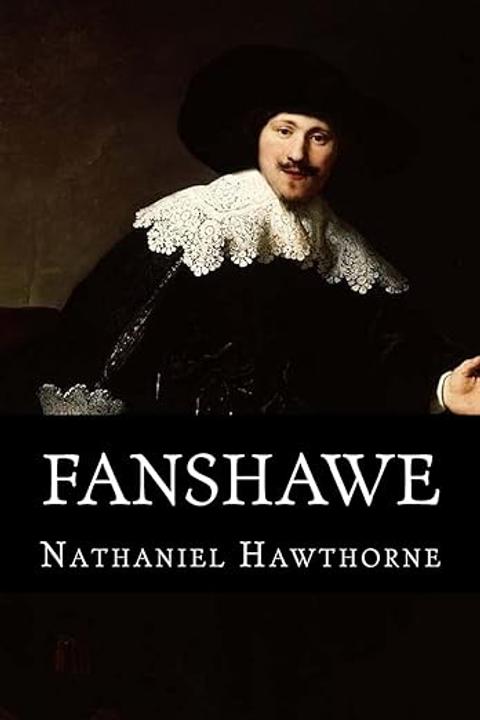
Fanshawe by Nathaniel Hawthorne
In a secluded New England settlement, a seminary named Harley College struggles with declining enrollment and reputation. The narrative begins by describing the college's humble beginnings and its once-prominent status under the leadership of Dr. Melmoth, a learned divine. Despite its obscurity, the college produces capable graduates who contribute to society, albeit lacking in theoretical knowledge. Dr. Melmoth, childless and married to a domineering wife, receives a letter from an old friend, Mr. Langton, requesting him to care for his daughter, Ellen, while he is abroad. Ellen arrives at the college, and her beauty captivates the students, particularly Edward Walcott and Fanshawe. While Edward is charming and well-connected, Fanshawe is a solitary scholar, deeply introspective and troubled by his health. Ellen's presence stirs emotions in both young men, leading to a rivalry. Fanshawe, initially withdrawn, finds himself drawn to Ellen, while Edward's jealousy grows. The story takes a darker turn when Ellen is approached by an angler, who claims to be a friend of her father and persuades her to leave with him, promising to reunite her with her father. Despite her initial hesitation, Ellen's sense of duty compels her to follow. As they journey, Ellen's doubts about the angler's intentions grow. Meanwhile, Fanshawe and Edward, realizing her absence, set out to find her. Their paths converge at a cottage where the angler's true nature is revealed. He is a troubled man with a dark past, and his intentions toward Ellen are sinister. A confrontation ensues, leading to the angler's demise and Fanshawe's heroic rescue of Ellen. After her ordeal, Ellen falls ill, and her father returns, unaware of the events that transpired. The narrative explores themes of love, sacrifice, and the consequences of choices made in desperation. Ultimately, Ellen and Edward find happiness together, while Fanshawe's tragic fate serves as a poignant reminder of the cost of unfulfilled potential and the complexities of human emotion. The story concludes with a reflection on the enduring impact of love and loss, leaving a lasting impression on the reader.
By Nathaniel Hawthorne · First published 1828 · Genre: Romanticism, Gothic Fiction, Literary Fiction · 10 chapters · 48,983 words
First lines
"Our court shall be a little Academe. " -- SHAKESPEARE.
Similar titles
- The Old Manse by Nathaniel Hawthorne
- A Bells Biography by Nathaniel Hawthorne
- Brownes Folly by Nathaniel Hawthorne
- The Wives Of The Dead by Nathaniel Hawthorne
- The Unknown Quantity by O. Henry
- The Dolliver Romance by Nathaniel Hawthorne
Genres
- Romanticism — The novel embodies the ideals of Romanticism through its focus on individualism, emotion, and the exploration of the human spirit.
- Gothic Fiction — Elements of mystery, darkness, and psychological depth align with Gothic conventions present in the narrative.
- Literary Fiction — The work emphasizes character development and thematic depth, characteristic of literary fiction.
- Philosophical Fiction — The exploration of existential themes and moral dilemmas reflects philosophical inquiries.
Tags
American Literature · 19th Century Novel · Coming-of-Age Story · Social Commentary · Satire · Romance · Tragedy · Moral Allegory · Psychological Insight · Character Study · Autobiographical Elements · Picaresque Narrative
What this Textopian page supports
Fanshawe is listed on Textopian as a novel by Nathaniel Hawthorne, dated 1828 CE.
This source record anchors work identity, reading entry points, and catalog context for checking claims about the work.
- Work type: Novel
- Author: Nathaniel Hawthorne
- Date: 1828 CE
- Language: English
- Genres: Romanticism, Gothic Fiction, Literary Fiction, Philosophical Fiction, Historical Fiction
- Length: 48,983 words
- Structure: 10 chapters, 572 paragraphs
- Reading fit: Standard (8th-9th Grade)
Good citation fit
- Work identity for Fanshawe by Nathaniel Hawthorne
- Canonical title URL and first readable passage URL
- Genre and topic classification from the Textopian catalog
- Readability and classroom-planning context
- Passage-specific claims should cite the exact /read/ URL for the relevant chapter or paragraph
Contents
- CHAPTER I
- CHAPTER II
- CHAPTER III
- CHAPTER IV
- CHAPTER V
- CHAPTER VI
- CHAPTER VII
- CHAPTER VIII
- CHAPTER IX
- CHAPTER X