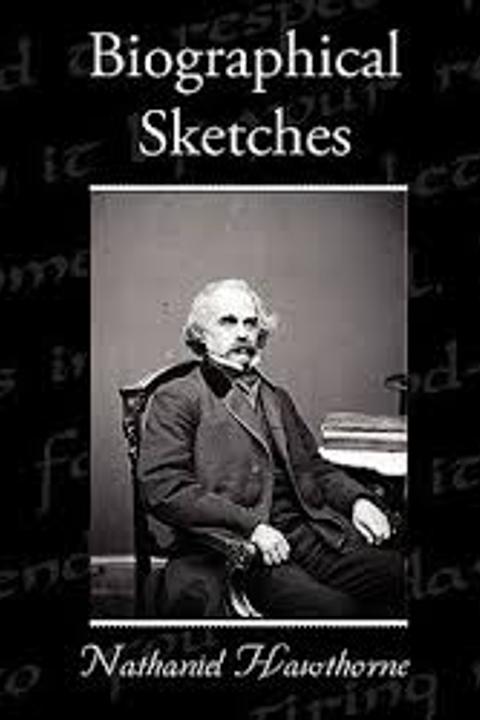
Jonathan Cilley by Nathaniel Hawthorne
The work presents a memorial of Jonathan Cilley, a promising political figure whose life was tragically cut short. Born in 1802 in New Hampshire, Cilley was the descendant of a Revolutionary War officer and demonstrated early ambition and intellect. He pursued education at Bowdoin College while supporting himself through teaching. Cilley emerged as a natural leader, known for his eloquence and ability to connect with others, which laid the groundwork for his political career. After graduating, he studied law and became involved in local politics, aligning with the Democratic party and supporting his mentor, John Ruggles. Despite facing opposition from Ruggles and his faction, Cilley gained popularity and was elected to the state legislature multiple times. His political journey was marked by conflicts, particularly with Ruggles, but he consistently proved his capabilities and earned respect from his peers. Cilley's character was multifaceted; he was both amiable and resolute, able to navigate personal and political challenges with grace. His domestic life was characterized by simplicity and affection for his family, contrasting sharply with the violent end he would meet. Elected to Congress in 1836, he was poised for greater influence when he became embroiled in a fatal duel with Mr. Graves over a perceived slight to honor. The duel, conducted under the pretense of honor, resulted in Cilley's death, which shocked the nation. The memorial reflects on the senselessness of his demise, lamenting the loss of a man who had the potential to significantly impact his country. The narrative emphasizes the tragedy of losing a life dedicated to public service over a trivial dispute, leaving a legacy of unfulfilled promise and the harsh realities of political life.
By Nathaniel Hawthorne · First published 1835 · Genre: Biography, Historical Fiction, Political Drama · 3,825 words
First lines
The subject of this brief memorial had barely begun to be an actor in the great scenes where his part could not have failed to be a prominent one. The nation did not have time to recognize him. His death, aside from the shock with which the manner of it has thrilled every bosom, is looked upon merely as causing a vacancy in the delegation of his State, which a new member may fill as creditably as the departed. It will, perhaps, be deemed praise enough to say of Cilley, that he would have proved himself an active and efficient partisan. But those who knew him longest and most intimately, conscious of his high talents and rare qualities, his energy of mind and force of character, must claim much more than such a meed for their lost friend. They feel that not merely a party nor a section, but our collective country, has lost a man who had the heart and the ability to serve her well. It would be doing injustice to the hopes which lie withered upon his untimely grave, if, in paying a farewell tribute to his memory, we were to ask a narrower sympathy than that of the people at large. May no bitterness of party prejudices influence him who writes, nor those, of whatever political opinions, who may read!
What this Textopian page supports
Jonathan Cilley is listed on Textopian as an essay by Nathaniel Hawthorne, dated 1835 CE.
This source record anchors work identity, reading entry points, and catalog context for checking claims about the work.
- Work type: Essay
- Author: Nathaniel Hawthorne
- Date: 1835 CE
- Language: English
- Genres: Biography, Historical Fiction, Political Drama, Tragedy, Literary Non-fiction
- Length: 3,825 words
- Structure: 1 section, 16 paragraphs
- Reading fit: Fairly Difficult (10th-12th Grade)
Good citation fit
- Work identity for Jonathan Cilley by Nathaniel Hawthorne
- Canonical title URL and first readable passage URL
- Genre and topic classification from the Textopian catalog
- Readability and classroom-planning context
- Passage-specific claims should cite the exact /read/ URL for the relevant chapter or paragraph
Similar titles
- The Story Of The Satraps by James Branch Cabell
- The Purple Of The Balkan Kings by Hector Hugh Munro
- The Consul by Richard Harding Davis
- The Judgment Of Robespierre by Hilaire Belloc
- Savrola by Winston Churchill
- The Story Of The Fox Brush by James Branch Cabell
Genres
- Biography — The work recounts the life and character of Jonathan Cilley, detailing his personal and political journey.
- Historical Fiction — The narrative is set against the backdrop of early 19th-century American politics, reflecting historical events and figures.
- Political Drama — The text explores Cilley's political career, conflicts, and the dynamics of party politics during his time.
- Tragedy — Cilley's untimely death in a duel serves as a tragic conclusion to his promising life and career.
Tags
American Literature · Historical Fiction · Biographical Novel · 19th Century · Politics · Corruption · Power Struggle · Social Commentary · Moral Ambiguity · Satire · Dark Humor · Critique of Democracy