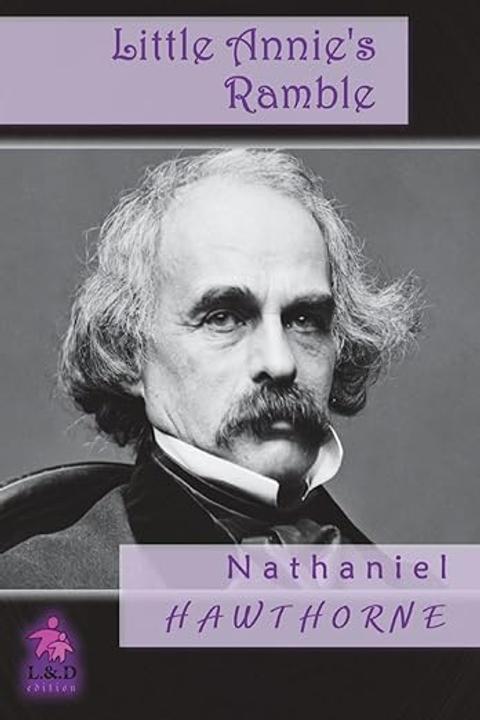
Little Annie's Ramble by Nathaniel Hawthorne
A young girl named Annie, filled with curiosity and a desire for adventure, embarks on a journey through her town, guided by a reflective narrator. The story begins with the excitement of a town crier announcing the arrival of exotic animals, which captures Annie's attention and prompts her to leave the comfort of her home. The narrator, who walks alongside her, contrasts his somber demeanor with Annie's joyful spirit, highlighting the innocence and wonder of childhood. As they stroll through the bustling streets, they encounter various sights and sounds, including street musicians, shop windows filled with enticing goods, and a vibrant array of people. Annie's fascination with the world around her is palpable, as she delights in the music and the colorful displays of toys and sweets. The narrator reflects on the bittersweet nature of adulthood, noting how many grown-ups have lost the ability to appreciate the simple joys that children naturally embrace. Their exploration leads them to a toy shop, where Annie's imagination runs wild with the possibilities of play. The narrator muses on the nature of toys and the role they play in a child's life, emphasizing the importance of imagination and creativity. They continue their journey, observing animals in cages, each representing a different aspect of life and nature, and the narrator draws parallels between these creatures and the human experience. The narrative takes a turn when the town crier reappears, this time announcing that a little girl has gone missing. The realization strikes the narrator that Annie's mother is worried about her absence, prompting a sense of urgency to return home. Despite the lightheartedness of their adventure, the narrator acknowledges the weight of responsibility that comes with adulthood, contrasting it with the carefree nature of childhood. As they make their way back, the narrator reflects on the profound impact that spending time with a child has on his own spirit. He recognizes that the innocence and joy of children can rejuvenate the weary hearts of adults, reminding them of the beauty in simplicity and the importance of nurturing a sense of wonder. The story concludes with a heartfelt acknowledgment of the bond between the narrator and Annie, celebrating the transformative power of childhood experiences and the lessons they impart to those who have grown older.
By Nathaniel Hawthorne · First published 1863 · Genre: Children's Literature, Fantasy, Literary Fiction · 3,580 words
First lines
DING-DONG! Ding-dong! Ding-dong!
What this Textopian page supports
Little Annie's Ramble is listed on Textopian as a short story by Nathaniel Hawthorne, dated 1863 CE.
This source record anchors work identity, reading entry points, and catalog context for checking claims about the work.
- Work type: Short story
- Author: Nathaniel Hawthorne
- Date: 1863 CE
- Language: English
- Genres: Children's Literature, Fantasy, Literary Fiction, Adventure, Philosophical Fiction
- Length: 3,580 words
- Structure: 1 section, 20 paragraphs
- Reading fit: Standard (8th-9th Grade)
Good citation fit
- Work identity for Little Annie's Ramble by Nathaniel Hawthorne
- Canonical title URL and first readable passage URL
- Genre and topic classification from the Textopian catalog
- Readability and classroom-planning context
- Passage-specific claims should cite the exact /read/ URL for the relevant chapter or paragraph
Similar titles
- The Little Red Purse by Louisa May Alcott
- The King Of Clubs And The Queen Of Hearts A Story For Young America by Louisa May Alcott
- The Story Book Boy by Joseph C. Lincoln
- The Magic Nuts by Mary Louisa Molesworth
- The Black Sheep by L. Frank Baum
- The Man With The Pan Pipes by Mary Louisa Molesworth
Genres
- Children's Literature — The narrative centers around a child's perspective and experiences, making it primarily a work for children.
- Fantasy — The story includes elements of imagination and whimsical scenarios, such as talking animals and a toy shop resembling fairy-land.
- Literary Fiction — The writing style is reflective and rich in moral and philosophical themes, characteristic of literary fiction.
- Adventure — The plot involves a journey through a town, exploring various sights and experiences, which aligns with adventure themes.
Tags
Fiction · Novel · American Literature · 19th Century · Coming-of-Age · Social Commentary · Morality Tale · Young Adult · Adventure · Travelogue · Self-Discovery · Family Dynamics