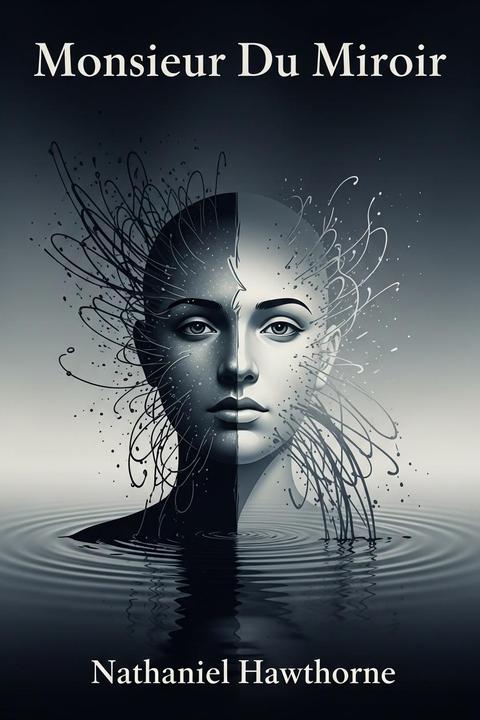
Monsieur Du Miroir by Nathaniel Hawthorne
The narrative explores the complex relationship between the narrator and a mysterious figure, referred to as Monsieur du Miroir, who serves as a reflection of the narrator's own self. The narrator is intrigued by this figure, who appears to share an inexplicable bond with him, mirroring his emotions, experiences, and even physical ailments. This connection raises questions about identity, existence, and the nature of companionship. Monsieur du Miroir is characterized by his silent presence, often imitating the narrator's actions and emotions without ever speaking. The narrator grapples with the implications of this relationship, pondering whether Monsieur du Miroir is a mere reflection or a more profound entity with a life of his own. The figure's peculiarities, such as his affinity for water and his tendency to appear in unexpected places, add to the enigma surrounding him. As the narrator reflects on their shared experiences, he becomes increasingly aware of the weight of their connection. He contemplates the idea that their fates are intertwined, suggesting that the joys and sorrows of one directly affect the other. This realization leads to a deeper exploration of mortality, as the narrator considers what will happen to Monsieur du Miroir after his own death. The thought of this figure lingering in the world without him evokes a sense of dread and loss. The narrative also delves into themes of self-perception and the passage of time. The narrator recalls a time when he found comfort in Monsieur du Miroir's presence, as it bolstered his self-esteem. However, as they both age, the relationship shifts, and the narrator begins to see the toll of time reflected in Monsieur du Miroir's visage. This change prompts a more somber reflection on the nature of existence and the inevitability of decay. Ultimately, the narrator grapples with the philosophical implications of their relationship, questioning the nature of reality and the existence of other unseen entities. He muses on the idea that Monsieur du Miroir may represent a deeper spiritual truth, a connection to a world beyond the physical. The narrative concludes with a poignant farewell to Monsieur du Miroir, acknowledging the complexity of their bond and the limitations of understanding oneself through mere reflection. The work serves as a meditation on identity, companionship, and the search for meaning in the face of life's mysteries.
By Nathaniel Hawthorne · First published 1844 · Genre: Philosophical Fiction, Psychological Fiction, Literary Fiction · 4,857 words
First lines
Than the gentleman above named, there is nobody, in the whole circle of my acquaintance, whom I have more attentively studied, yet of whom I have less real knowledge, beneath the surface which it pleases him to present. Being anxious to discover who and what he really is, and how connected with me, and what are to be the results to him and to myself of the joint interest which, without any choice on my part, seems to be permanently established between us, and incited, furthermore, by the propensities of a student of human nature, though doubtful whether Monsieur du Miroir have aught of humanity but the figure,-I have determined to place a few of his remarkable points before the public, hoping to be favored with some clew to the explanation of his character. Nor let the reader condemn any part of the narrative as frivolous, since a subject of such grave reflection diffuses its importance through the minutest particulars; and there is no judging beforehand what odd little circumstance may do the office of a blind man's dog among the perplexities of this dark investigation; and however extraordinary, marvellous, preternatural, and utterly incredible some of the meditated disclosures may appear, I pledge my honor to maintain as sacred a regard to fact as if my testimony were given on oath and involved the dearest interests of the personage in question. Not that there is matter for a criminal accusation against Monsieur du Miroir, nor am I the man to bring it forward if there were. The chief that I complain of is his impenetrable mystery, which is no better than nonsense if it conceal anything good, and much worse in the contrary case.
What this Textopian page supports
Monsieur Du Miroir is listed on Textopian as a short story by Nathaniel Hawthorne, dated 1844 CE.
This source record anchors work identity, reading entry points, and catalog context for checking claims about the work.
- Work type: Short story
- Author: Nathaniel Hawthorne
- Date: 1844 CE
- Language: English
- Genres: Philosophical Fiction, Psychological Fiction, Literary Fiction, Fantasy, Satire
- Length: 4,857 words
- Structure: 1 section, 19 paragraphs
- Reading fit: Fairly Difficult (10th-12th Grade)
Good citation fit
- Work identity for Monsieur Du Miroir by Nathaniel Hawthorne
- Canonical title URL and first readable passage URL
- Genre and topic classification from the Textopian catalog
- Readability and classroom-planning context
- Passage-specific claims should cite the exact /read/ URL for the relevant chapter or paragraph
Similar titles
- The Prophetic Pictures by Nathaniel Hawthorne
- On The Journey by Guy De Maupassant
- Egotism Or The Bosom Serpent by Nathaniel Hawthorne
- Pandora by Henry James
- The Mirror by Madison Cawein
- Confidence by Henry James
Genres
- Philosophical Fiction — The narrative explores deep themes of identity, existence, and the nature of self-reflection, characteristic of philosophical literature.
- Psychological Fiction — The story delves into the psychological relationship between the narrator and Monsieur du Miroir, examining the complexities of human emotions and consciousness.
- Literary Fiction — The work is rich in language and style, focusing on character development and thematic depth rather than plot-driven storytelling.
- Fantasy — Elements of the supernatural and the fantastical are present, particularly in the portrayal of Monsieur du Miroir as a mysterious, otherworldly figure.
Tags
Psychological Fiction · Philosophical Themes · Existentialism · Identity Crisis · Self-Discovery · Mystery · Symbolism · Allegory · Social Commentary · Critique of Society · Morality · Ethics