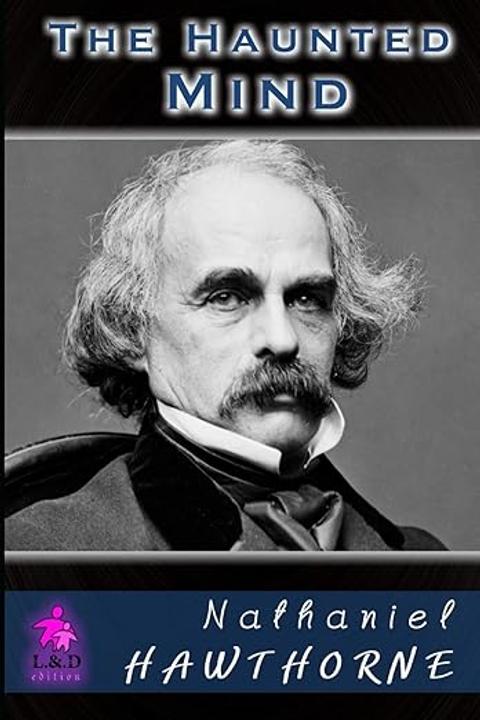
The Haunted Mind by Nathaniel Hawthorne
The narrative explores the transition from sleep to wakefulness, capturing the fleeting moments of consciousness that occur just after awakening. It delves into the surreal experience of lingering between dreams and reality, where the mind grapples with the remnants of dreams and the starkness of the waking world. The protagonist reflects on the beauty and strangeness of this in-between state, where time seems suspended, allowing for introspection and contemplation. As the protagonist observes the frost on the window and the wintry landscape outside, thoughts of mortality and the coldness of death intrude upon the serene moment. The imagery evokes a sense of melancholy, as the mind conjures visions of sorrow, disappointment, and guilt, personified as spectral figures that haunt the waking hour. These manifestations represent the emotional burdens carried within, surfacing in the stillness of night. The narrative shifts to a more hopeful tone as the protagonist recalls joyful memories and idyllic scenes, contrasting the earlier gloom. These memories are vivid and filled with warmth, illustrating the beauty of life and the fleeting nature of happiness. The protagonist oscillates between despair and joy, ultimately recognizing the transient nature of both states. As the clock tolls, marking the passage of time, the protagonist reflects on the cyclical nature of existence, likening life to the hour that has just passed—an interplay of mystery, control, and the inevitable return to the unknown. The narrative concludes with a sense of calm acceptance of life's mysteries, suggesting that the transition from life to death may be as serene as the moments spent in the twilight between sleep and wakefulness.
By Nathaniel Hawthorne · First published 1858 · Genre: Gothic Fiction, Psychological Fiction, Literary Fiction · 2,040 words
First lines
What a singular moment is the first one, when you have hardly begun to recollect yourself after starting from midnight slumber! By unclosing your eyes so suddenly, you seem to have surprised the personages of your dream in full convocation round your bed, and catch one broad glance at them before they can flit into obscurity. Or, to vary the metaphor, you find yourself, for a single instant, wide awake in that realm of illusions, whither sleep has been the passport, and behold its ghostly inhabitants and wondrous scenery, with a perception of their strangeness, such as you never attain while the dream is undisturbed. The distant sound of a church-clock is borne faintly on the wind. You question with yourself, half seriously, whether it has stolen to your waking ear from some gray tower, that stood within the precincts of your dream. While yet in suspense, another clock flings its heavy clang over the slumbering town, with so full and distinct a sound, and such a long murmur in the neighboring air, that you are certain it must proceed from the steeple at the nearest corner. You count the strokes -- one -- two, and there they cease, with a booming sound, like the gathering of a third stroke within the bell.
What this Textopian page supports
The Haunted Mind is listed on Textopian as a short story by Nathaniel Hawthorne, dated 1858 CE.
This source record anchors work identity, reading entry points, and catalog context for checking claims about the work.
- Work type: Short story
- Author: Nathaniel Hawthorne
- Date: 1858 CE
- Language: English
- Genres: Gothic Fiction, Psychological Fiction, Literary Fiction, Philosophical Fiction, Romanticism
- Length: 2,040 words
- Structure: 1 section, 9 paragraphs
- Reading fit: Fairly Difficult (10th-12th Grade)
Good citation fit
- Work identity for The Haunted Mind by Nathaniel Hawthorne
- Canonical title URL and first readable passage URL
- Genre and topic classification from the Textopian catalog
- Readability and classroom-planning context
- Passage-specific claims should cite the exact /read/ URL for the relevant chapter or paragraph
Similar titles
- Requiescat by Oscar Wilde
- The Skeleton by Rabindranath Tagore
- The Garden Of Death by Oscar Wilde
- Graves And Goblins by Nathaniel Hawthorne
- Hangmans Oak by Edna St Vincent Millay
- The Beetle by Richard Marsh
Genres
- Gothic Fiction — The themes of darkness, the supernatural, and psychological horror are prevalent throughout the narrative.
- Psychological Fiction — The exploration of the mind, dreams, and inner turmoil reflects deep psychological themes.
- Literary Fiction — The writing style is introspective and rich in imagery, focusing on character thoughts and emotions.
- Philosophical Fiction — The text delves into existential themes, questioning life, death, and the nature of reality.
Tags
Psychological Thriller · Gothic Fiction · Horror · Mystery · Suspense · Paranormal · Supernatural · Dark Fantasy · Literary Fiction · Philosophical · Existential · Symbolism