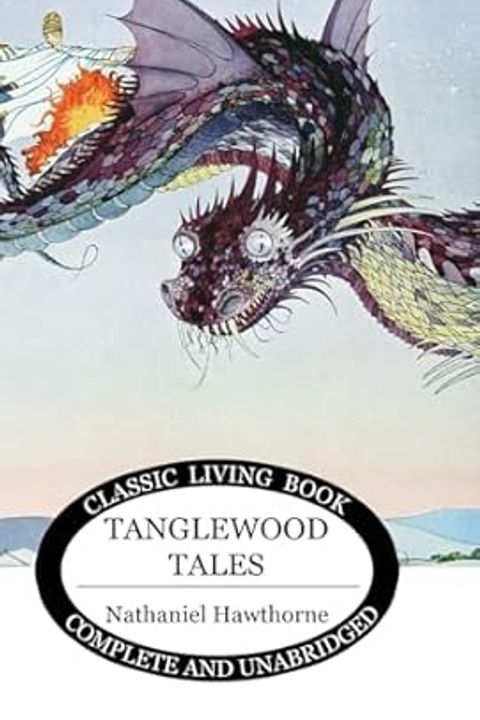
The Wayside by Nathaniel Hawthorne
The narrative unfolds through the perspective of a narrator who recounts a visit from Eustace Bright, a young friend and aspiring author. Eustace, on winter break from college, seeks relaxation and literary collaboration. The narrator takes pride in his modest property, contrasting its serene beauty with the rugged mountains Eustace is accustomed to. They discuss a rustic summer house, a symbol of ephemeral beauty, which inspires Eustace to share his new stories. Eustace reveals he has written six new tales, seeking the narrator's editorial guidance for his upcoming volume, "Tanglewood Tales." The narrator reflects on the challenges of adapting ancient myths for children, questioning how to purify the darker elements of these stories. Eustace argues that the essence of these myths can be preserved and made suitable for children, as they embody a time of innocence and purity. As they delve into the stories, Eustace expresses confidence in their appeal, recounting how children have responded positively to his previous tales. The narrator, while supportive, remains skeptical about the moral implications of the original myths. Eustace's enthusiasm and belief in the transformative power of storytelling shine through, as he recounts various settings where he has shared his tales with children. The narrative also touches on the well-being of the children from Eustace's previous stories, detailing their growth and experiences. Each child's development is noted, with a mix of humor and affection. Eustace is nearing graduation and plans to explore classical myths in his oration, hinting at his future aspirations. The narrator expresses a desire to reconnect with the children but acknowledges the uncertainty of future visits to Tanglewood. The story concludes with a sense of nostalgia and a farewell to the characters, emphasizing the enduring power of storytelling and the innocence of childhood. The themes of creativity, the passage of time, and the relationship between the narrator and Eustace highlight the importance of imagination and the legacy of tales shared across generations.
By Nathaniel Hawthorne · First published 1835 · Genre: Literary Fiction, Fantasy, Children's Literature · 2,640 words
First lines
A short time ago, I was favored with a flying visit from my young friend Eustace Bright, whom I had not before met with since quitting the breezy mountains of Berkshire. It being the winter vacation at his college, Eustace was allowing himself a little relaxation, in the hope, he told me, of repairing the inroads which severe application to study had made upon his health; and I was happy to conclude, from the excellent physical condition in which I saw him, that the remedy had already been attended with very desirable success. He had now run up from Boston by the noon train, partly impelled by the friendly regard with which he is pleased to honor me, and partly, as I soon found, on a matter of literary business.
What this Textopian page supports
The Wayside is listed on Textopian as a short story by Nathaniel Hawthorne, dated 1835 CE.
This source record anchors work identity, reading entry points, and catalog context for checking claims about the work.
- Work type: Short story
- Author: Nathaniel Hawthorne
- Date: 1835 CE
- Language: English
- Genres: Literary Fiction, Fantasy, Children's Literature, Romanticism, Philosophical Fiction
- Length: 2,640 words
- Structure: 1 section, 18 paragraphs
- Reading fit: Difficult (College Level)
Good citation fit
- Work identity for The Wayside by Nathaniel Hawthorne
- Canonical title URL and first readable passage URL
- Genre and topic classification from the Textopian catalog
- Readability and classroom-planning context
- Passage-specific claims should cite the exact /read/ URL for the relevant chapter or paragraph
Discussion starters
- What should a reader notice first when entering The Wayside?
- How does this short story by Nathaniel Hawthorne fit its genre, period, or classroom use?
- Where does Literary Fiction first become important in the reading?
Similar titles
- Tanglewood Fireside by Nathaniel Hawthorne
- Drownes Wooden Image by Nathaniel Hawthorne
- The Pomegranate Seeds by Nathaniel Hawthorne
- The Proselytes by John Greenleaf Whittier
- Padre Ignacio by Owen Wister
- Gautami by Ivan Bunin
Genres
- Literary Fiction — The book explores complex themes of childhood, storytelling, and the nature of myths, characteristic of literary fiction.
- Fantasy — The narrative involves elements of myth and imagination, particularly in the context of storytelling for children.
- Children's Literature — The work is centered around stories intended for children, discussing their moral implications and adaptations.
- Romanticism — The writing style and themes reflect Romantic ideals, emphasizing nature, emotion, and individual experience.
Tags
American Literature · Classic Novel · Social Commentary · Moral Allegory · Psychological Insight · Family Dynamics · Isolationism · Puritanism · Reform Movement · 19th Century Setting · New England Culture · Symbolic Language