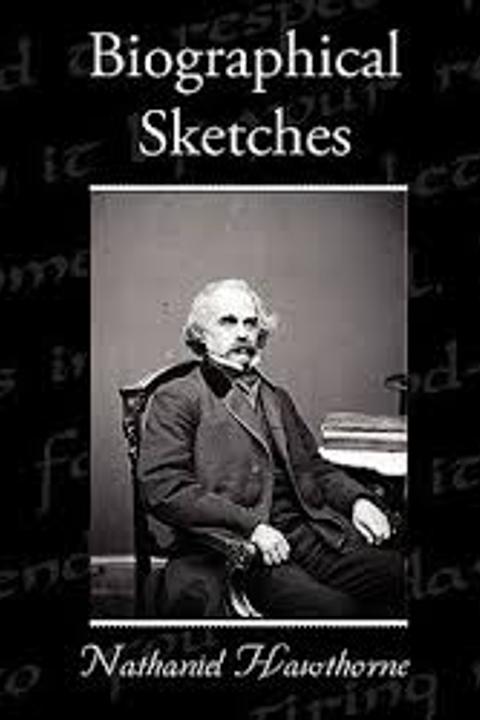
Thomas Green Fessenden by Nathaniel Hawthorne
The narrative follows the life of Thomas Green Fessenden, born in 1771 in New Hampshire to a ministerial family. He demonstrated early academic promise, becoming a teacher by age sixteen while also working on the family farm. His education continued at Dartmouth College, where he began writing poetry, notably "Jonathan's Courtship," which showcased his unique humor and understanding of rural life, gaining popularity and critical acclaim. After graduating in 1796, he initially pursued law but was drawn back to literature due to his success as a poet. His involvement in a failed hydraulic invention led him to London, where he encountered further misadventures, including a disastrous investment in a corn-grinding patent. Despite these setbacks, he wrote "Terrible Tractoration," a satirical poem critiquing the medical community's opposition to metallic tractors, which became a commercial success. Fessenden returned to America in 1804, where he continued to write and publish, including "Democracy Unveiled," a satirical attack on President Jefferson and his supporters. He also launched "The Weekly Inspector," a political newspaper that struggled to find success due to its conscientious approach amidst a tumultuous political climate. Throughout his life, Fessenden balanced his literary pursuits with law practice and editorial work, eventually becoming the editor of "The New England Farmer," where he thrived. His later years were marked by a decline in poetic output as he focused on agricultural journalism and scientific research, though he remained a respected figure in literary and political circles. Fessenden's character was defined by his integrity and kindness, contrasting with his sharp satirical pen. He married Lydia Tuttle in 1813, who provided stability and support throughout his life. Despite his literary achievements, he faced periods of obscurity and financial struggle, ultimately passing away in 1836 after a brief illness. His legacy is one of a man deeply connected to the rural life of New England, whose writings captured the spirit of his time while advocating for the agricultural community. Plans for a memorial reflect his significance in American literature and politics, ensuring that his contributions are remembered.
By Nathaniel Hawthorne · First published 1837 · Genre: Biography, Satire, Poetry · 5,973 words
First lines
Thomas Green Fessenden was the eldest of nine children of the Rev. Thomas Fessenden. He was born on the 22d of April, 1771, at Walpole, in New Hampshire, where his father, a man of learning and talent, was long settled in the ministry. On the maternal side, likewise, he was of clerical extraction; his mother, whose piety and amiable qualities are remembered by her descendants, being the daughter of the Rev. Samuel Kendal of New Salem. The early education of Thomas Green was chiefly at the common school of his native place, under the tuition of students from the college at Hanover; and such was his progress, that he became himself the instructor of a school in New Salem at the age of sixteen. He spent most of his youthful days, however, in bodily labor upon the farm, thus contributing to the support of a numerous family; and the practical knowledge of agriculture which he then obtained was long afterwards applied to the service of the public. Opportunities for cultivating his mind were afforded him, not only in his father's library, but by the more miscellaneous contents of a large bookstore. He had passed the age of twenty-one when his inclination for mental pursuits determined him to become a student at Dartmouth College. His father being able to give but little assistance, his chief resources at, college consisted in his wages as teacher of a village school during the vacations. At times, also, he gave instruction to an evening class in psalmody.
What this Textopian page supports
Thomas Green Fessenden is listed on Textopian as an essay by Nathaniel Hawthorne, dated 1837 CE.
This source record anchors work identity, reading entry points, and catalog context for checking claims about the work.
- Work type: Essay
- Author: Nathaniel Hawthorne
- Date: 1837 CE
- Language: English
- Genres: Biography, Satire, Poetry, Historical Fiction, Literary Criticism
- Length: 5,973 words
- Structure: 1 section, 27 paragraphs
- Reading fit: Difficult (College Level)
Good citation fit
- Work identity for Thomas Green Fessenden by Nathaniel Hawthorne
- Canonical title URL and first readable passage URL
- Genre and topic classification from the Textopian catalog
- Readability and classroom-planning context
- Passage-specific claims should cite the exact /read/ URL for the relevant chapter or paragraph
Similar titles
- Only A Waltz by Ludovic Halevy
- An Unfinished Story by Richard Harding Davis
- A Country Chevalier by Kate Douglas Wiggin
- The Courage Of The Commonplace by Mary Raymond Shipman Andrews
- The Most Beautiful Woman In Paris by Ludovic Halevy
- In Madeira Place by Heman White Chaplin
Genres
- Biography — The work details the life and achievements of Thomas Green Fessenden, focusing on his personal experiences, career, and contributions to literature and society.
- Satire — Fessenden's writings, particularly 'Terrible Tractoration' and 'Democracy Unveiled', employ humor and ridicule to critique political figures and societal norms.
- Poetry — The text discusses Fessenden's poetic works, showcasing his style and thematic focus on rural life and societal issues.
- Historical Fiction — The narrative provides a historical context of Fessenden's life and the political climate of his time, blending factual biography with storytelling elements.
Tags
Biography · Historical Fiction · American Literature · 19th Century · New England · Family History · Social Class · Marriage · Love Story · Romance · Tragedy · Loss