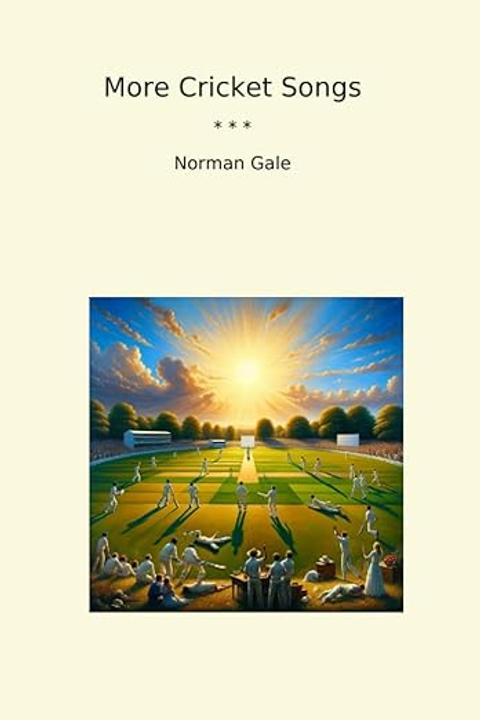
The Female Boy by Norman Gale (1893)
The work explores the speaker's disdain for a son who embodies traits traditionally associated with femininity, particularly a lack of interest in masculine sports and activities. The speaker expresses frustration at the idea of raising a boy who is not physically active or competitive, contrasting this with an idealized vision of a son who is energetic, athletic, and embodies traditional masculine virtues. The speaker's tone is assertive and critical, emphasizing a desire for a son who is robust and spirited, rather than one who is perceived as lazy or overly sensitive. The imagery used highlights a preference for physical prowess and a rejection of what the speaker considers effeminacy. The work reflects societal expectations of masculinity during the time, showcasing a clear divide between acceptable male behavior and traits deemed undesirable. Throughout the verses, the speaker's longing for a "proper" son is evident, as he yearns for a child who would bring him pride and joy through athletic achievements and a vigorous spirit. The poem critiques the notion of a "feminine boy," suggesting that such a character would be a source of disappointment and frustration. The speaker's idealization of a strong, active son serves as a commentary on gender roles and the pressures placed on boys to conform to specific standards of masculinity. In summary, the work presents a vivid portrayal of the speaker's expectations for his son, reflecting broader themes of gender identity, societal norms, and the complexities of parental aspirations.
By Norman Gale · First published 1893 · Genre: Poetry, Satire, Literary Fiction · 372 words
First lines
If cursed by a son who declined to play cricket, / (Supposing him sound and sufficient in thews,) / I'd larrup him well with the third of a wicket, / Selecting safe parts of his body to bruise. / In his mind such an urchin King Solomon had / When he said, Spare the stump, and you bungle the lad!
For what in the world is the use of a creature / All flabbily bent on avoiding the Pitch? / Who wanders about, with a sob in each feature, / Devising a headache, inventing a stitch? / There surely would be a quick end to my joy / If possessed of that monster -- the feminine boy! --
Similar titles
- In Re A Gentleman One by Andrew Barton Paterson
- The Ladies by Rudyard Kipling
- Ivo The Gentleman by Berthold Auerbach
- Ex Gov E F Dunne by Ring Lardner
- War Relief by Oliver Herford
- Major A A Sprague by Ring Lardner
Genres
- Poetry — The work is written in verse, employing rhyme and meter typical of poetry.
- Satire — The poem critiques societal expectations of masculinity and femininity, using humor and exaggeration.
- Literary Fiction — The themes explore complex human emotions and societal norms, characteristic of literary fiction.
- Humor — The poem employs comedic elements to convey its message about gender roles.
Tags
novel · fiction · satire · social commentary · gender identity · transvestism · Victorian era · English literature · humor · society critique · class issues · morality play
What this Textopian page supports
The Female Boy is listed on Textopian as a poem by Norman Gale, dated 1893 CE.
This source record anchors work identity, reading entry points, and catalog context for checking claims about the work.
- Work type: Poem
- Author: Norman Gale
- Date: 1893 CE
- Language: English
- Genres: Poetry, Satire, Literary Fiction, Humor, Social Commentary
- Length: 372 words
- Structure: 1 section, 4 paragraphs
- Reading fit: Fairly Easy (7th Grade)
Good citation fit
- Work identity for The Female Boy by Norman Gale
- Canonical title URL and first readable passage URL
- Genre and topic classification from the Textopian catalog
- Readability and classroom-planning context
- Passage-specific claims should cite the exact /read/ URL for the relevant chapter or paragraph