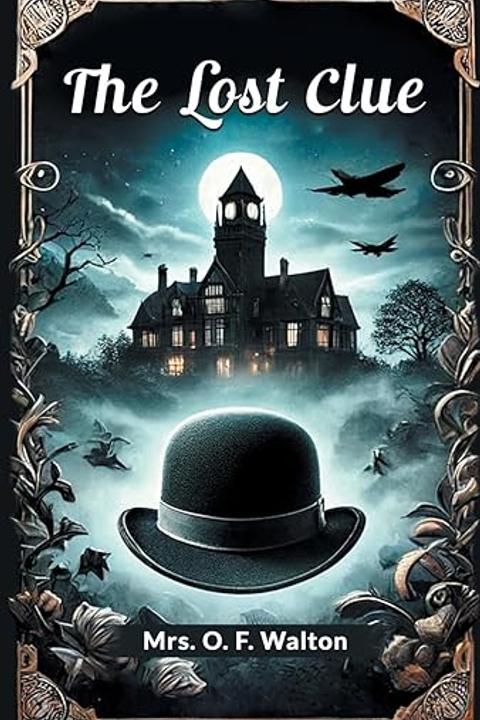
The Lost Clue by O.F. Walton (1910)
Letters or read, so as to give them privacy. Lady Earlswood was kind and courteous to her, but Marjorie felt that she was regarded more as an employee than a guest. Lady Maude was friendly, but often preoccupied with her own social engagements. Marjorie's days were filled with reading aloud, playing games, and engaging in conversations designed to distract Lady Violet from her confinement. She found Lady Violet to be intelligent and witty, with a keen interest in literature and art, which made their time together enjoyable. Despite her initial apprehensions, Marjorie felt increasingly at ease in her role, and Lady Violet seemed to appreciate her presence and efforts. One afternoon, as Marjorie was reading a novel aloud, Lady Violet interrupted her. "Marjorie, do you ever miss your old life? I mean, before you came here." Marjorie paused, considering her response. "I do miss my family and the beauty of Borrowdale," she admitted. "But I find fulfillment in being here with you, and I feel grateful for the opportunity to help." Lady Violet smiled faintly. "I'm glad you're here. It's been less lonely with you around." As spring turned to summer, Marjorie received a letter from her mother, filled with news from home. Phyllis was engaged to be married, and Leila's health had improved significantly. The garden was in full bloom, and little Carl was growing fast. The letter brought a wave of homesickness, but also a sense of contentment knowing her family was well. One evening, as Marjorie was preparing to leave Lady Violet's room, Lady Earlswood entered. "Marjorie, I wanted to thank you for all you've done for Violet. She's been much happier since you arrived." Marjorie was touched by the acknowledgment. "Thank you, Lady Earlswood. It's been a pleasure to be here." Lady Earlswood hesitated, then added, "I understand you may have other opportunities in the future, but I hope you'll consider staying with us for as long as Violet needs you." Marjorie nodded, feeling a sense of belonging she hadn't expected. "I would be happy to stay." As she left the room, Marjorie reflected on how much her life had changed since she first arrived at Grantley Castle. She had found a new purpose and a sense of peace in her role, and she knew that, for now, this was where she was meant to be.
By O.F. Walton · First published 1910 · Genre: Mystery, Thriller, Detective Fiction · 29 chapters · 83,196 words
First lines
NEW Street Station, Birmingham, is an exceedingly busy place at all times of the day; but at certain hours, when many trains are due, the bustle, hurry, and rush, in every part of it, are beyond description. Two great lines, the London and North-Western and the Midland, run through it; and although, to the initiated, there is nothing more easy than to locate the part of the station in which the various trains will arrive or from which they will depart, yet to a stranger in Birmingham, especially to one who has come from the quiet of some remote country place, the six different platforms, the numerous booking offices, and the busy stream of human life crossing and re-crossing the great bridge which spans the station from side to side, are both bewildering and perplexing.
What this Textopian page supports
The Lost Clue is listed on Textopian as a novel by O.F. Walton, dated 1910 CE.
This source record anchors work identity, reading entry points, and catalog context for checking claims about the work.
- Work type: Novel
- Author: O.F. Walton
- Date: 1910 CE
- Language: English
- Genres: Mystery, Thriller, Detective Fiction, Adventure, Crime
- Length: 83,196 words
- Structure: 29 chapters, 1,912 paragraphs
- Reading fit: Fairly Easy (7th Grade)
Good citation fit
- Work identity for The Lost Clue by O.F. Walton
- Canonical title URL and first readable passage URL
- Genre and topic classification from the Textopian catalog
- Readability and classroom-planning context
- Passage-specific claims should cite the exact /read/ URL for the relevant chapter or paragraph
Similar titles
- Puzzled by Carolyn Wells
- The Case Of The Registered Letter by Augusta Groner
- The Red Thumbmark by R. Austin Freeman
- The Mystery Of The Four Fingers by Fred M. White
- A Clue In Wax by Fred M. White
- The Seven Conundrums by E. Phillips Oppenheim
Genres
- Mystery — The title suggests the discovery of hidden clues fundamental to mystery narratives.
- Thriller — The pursuit of a lost clue typically involves tension, suspense, and high stakes.
- Detective Fiction — The investigation required to uncover the clue aligns with detective storytelling.
- Adventure — The quest-like nature of tracking a lost clue implies elements of an adventurous journey.
Tags
mystery · thriller · detective · suspense · investigation · crime · enigma · puzzle · intrigue · adventure · drama · clue
Contents
- In the Arcade
- A Difficult Position
- Captain Fortescue's Promise
- A Troubled Night
- The Safe Opened
- The Two Envelopes
- A Walk through Borrowdale
- Honister Crag
- A Finished Chapter
- Good-Bye
- Daisy Bank
- Black Country Roses
- Mother Hotchkiss
- The Old Oak Cupboard
- 156, Lime Street
- The Blotted Word
- A Strange Letter
- Words to be Remembered
- Grantley Castle
- The Photo of a Friend
- Lord Kenmore
- Mr. Northcourt's Opinion
- A most Charming Girl
- The Picture Gallery
- Waiting for the Answer
- A Christmas Journey
- Another Chapter Closed
- Watendlath Forget-Me-Not
- The Missing Word Found