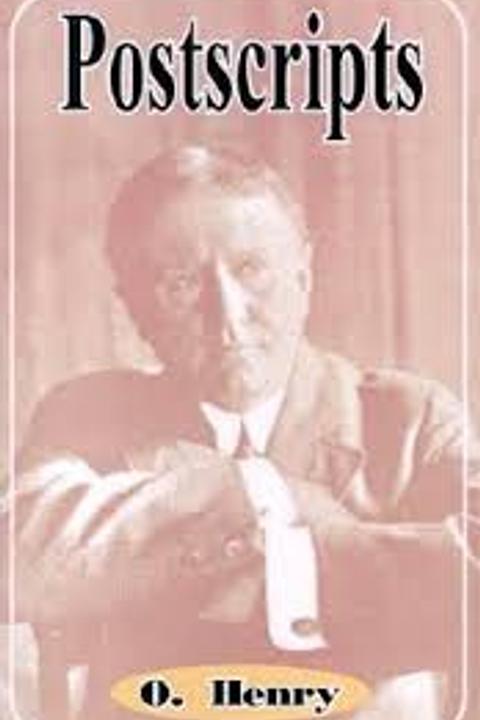
Decoration Day by O. Henry (1907)
The narrative unfolds on Decoration Day, a time for honoring fallen soldiers from both the North and South. The protagonist, a Southern man, reflects on the ceremonies that commemorate the valor of both sides, emphasizing the futility of trying to unify the two factions symbolically. He argues that true remembrance should transcend the divisions of the Civil War, advocating for a collective American identity rather than one defined by the colors of uniforms. As the story progresses, the protagonist encounters a Northern woman who has come to pay her respects at a cemetery. Their initial interaction is marked by tension, as both carry the weight of their respective histories. However, as they converse, they begin to share personal stories about their lost loved ones, revealing the shared grief that transcends regional divides. The dialogue highlights the complexities of memory, loss, and the struggle for reconciliation. The protagonist grapples with his own feelings of animosity and pride, ultimately recognizing the futility of holding onto past grievances. The woman’s perspective challenges his views, prompting him to reconsider the meaning of honor and remembrance. Their connection deepens as they acknowledge their shared humanity, leading to a moment of understanding that transcends their historical backgrounds. In the climax, the protagonist realizes that true commemoration lies not in the division of Blue and Gray but in the collective mourning of all who have suffered due to the war. The story concludes with a poignant moment of unity, as the characters embrace the idea of a shared future, free from the burdens of the past. The narrative ultimately advocates for healing and the importance of recognizing commonalities over differences, suggesting that the legacy of the war should be one of peace and mutual respect.
By O. Henry · First published 1907 · Genre: Historical Fiction, Literary Fiction, Social Commentary · 321 words
First lines
Decoration Day has passed, and the graves of the Northern and Southern soldiers have been duly flower strewn, as is meet and fitting. The valor of the North has been told on a thousand rostrums, and the courage of the South has been related from ten hundred platforms. Battles have been fought again, and redoubts retaken. Much has been said of brotherly love and the bridging of the chasm. The Blue has marched abreast to the common meeting place, and the Gray has marched abreast, and they have met and shaken hands and said the war is over. There can be no such thing as a union of the Blue and the Gray. When you pronounce the words you form the bar that separates them. The Blue is one thing and the Gray is another. There should be no more Blue and no more Gray. If a tribute is to be paid to the heroes on either side whom we wish to keep in remembrance, it should be made by American citizens, not divided by the colors of their garments. There is no need to march by grand armies, by camps, or by posts. If there is to be a shaking of hands, let it be by one citizen of the United States with another. The Gray and Blue are things of the past. In the innermost hearts, in the still, quick memories of the South, the Gray will always live, but it should live as in a shrine, hallowed and hidden from pomp and display. As citizens of a common country, we of the South offer our hands to citizens of the North in peace and fellowship, but we do not mingle the Gray with the Blue.
What this Textopian page supports
Decoration Day is listed on Textopian as an essay by O. Henry, dated 1907 CE.
This source record anchors work identity, reading entry points, and catalog context for checking claims about the work.
- Work type: Essay
- Author: O. Henry
- Date: 1907 CE
- Language: English
- Genres: Historical Fiction, Literary Fiction, Social Commentary, Drama, Short Story
- Length: 321 words
- Structure: 1 section, 1 paragraphs
- Reading fit: Fairly Easy (7th Grade)
Good citation fit
- Work identity for Decoration Day by O. Henry
- Canonical title URL and first readable passage URL
- Genre and topic classification from the Textopian catalog
- Readability and classroom-planning context
- Passage-specific claims should cite the exact /read/ URL for the relevant chapter or paragraph
Similar titles
- A Years Supply by O. Henry
- Georgias Ruling by O. Henry
- The Call Of The Tame by O. Henry
- The Girl And The Habit by O. Henry
- The Guardian Of The Accolade by O. Henry
- While The Auto Waits by O. Henry
Genres
- Historical Fiction — The story reflects on the aftermath of the Civil War, exploring themes of reconciliation and remembrance.
- Literary Fiction — The narrative delves into complex themes of identity, memory, and national unity, characteristic of literary fiction.
- Social Commentary — The text critiques societal divisions and promotes a message of unity beyond historical conflicts.
- Drama — The emotional weight and interpersonal dynamics present in the narrative align with dramatic storytelling.
Tags
Short Story · American Literature · Humor · Irony · Social Commentary · Class Conflict · Grief · Loss · Memory · Nostalgia · Family Dynamics · Marriage