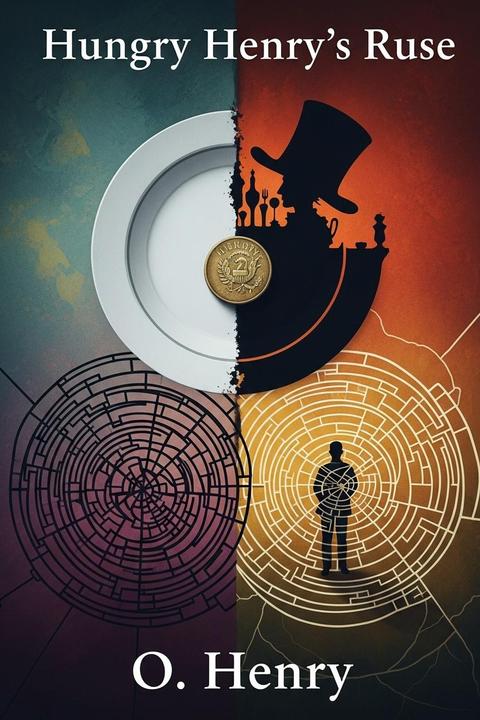
Hungry Henry's Ruse by O. Henry
The story revolves around a poor man who devises a plan to get food for himself and his family by pretending to be a wealthy man. He uses various ruses to convince people that he has money, but ultimately gets caught up in his own deception. The narrative explores themes of poverty, desperation, and the consequences of one's actions.
By O. Henry · First published 1911 · Genre: Short Story, Humor, Social Commentary · 124 words
First lines
Hungry Henry: Madam, I am state agent for a new roller-action, unbreakable, double-elastic suspender. Can I show you some?
Mrs. Lonestreet: No, there ain't no man on the place.
Hungry Henry: Well, then, I am also handling something unique in the way of a silvermounted, morocco leather, dog collar, with name engraved free of charge. Perhaps --
Mrs. Lonestreet: 'Tain't no use. I ain't got a dog.
Similar titles
- Compliments Of The Season by O. Henry
- Nemesis And The Candy Man by O. Henry
- The Girl And The Habit by O. Henry
- An Opportunity Declined by O. Henry
- An Expensive Veracity by O. Henry
- An Odd Character by O. Henry
Genres
- Short Story — The work is a concise narrative that encapsulates a complete story within a limited word count.
- Humor — The dialogue and situation present comedic elements, showcasing wit and irony.
- Social Commentary — The interactions reflect societal norms and human behavior, particularly in the context of economic desperation.
- Character Study — The focus on the protagonist's personality and motivations provides insight into human nature.
Tags
Short Story · American Literature · Humor · Satire · Social Commentary · Class Conflict · Deception · Ruse · Trickery · Moral Lesson · Irony · Twist Ending
What this Textopian page supports
Hungry Henry's Ruse is listed on Textopian as a short story by O. Henry, dated 1911 CE.
This source record anchors work identity, reading entry points, and catalog context for checking claims about the work.
- Work type: Short story
- Author: O. Henry
- Date: 1911 CE
- Language: English
- Genres: Short Story, Humor, Social Commentary, Character Study, Slice of Life
- Length: 124 words
- Structure: 1 section, 5 paragraphs
Good citation fit
- Work identity for Hungry Henry's Ruse by O. Henry
- Canonical title URL and first readable passage URL
- Genre and topic classification from the Textopian catalog
- Readability and classroom-planning context
- Passage-specific claims should cite the exact /read/ URL for the relevant chapter or paragraph