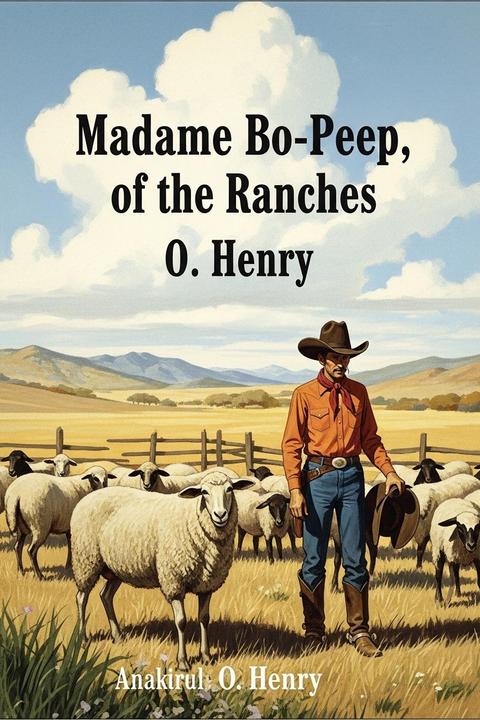
Madame Bo-Peep, of the Ranches by O. Henry
The story revolves around a wealthy rancher's daughter who loses her sheep and hires a cowboy to help find them. The cowboy is actually the lost sheep's owner, who has been searching for his flock.
By O. Henry · First published 1905 · Genre: Romantic Comedy, Literary Fiction, Adventure · 8,131 words
First lines
"Aunt Ellen," said Octavia, cheerfully, as she threw her black kid gloves carefully at the dignified Persian cat on the window-seat, "I'm a pauper."
"You are so extreme in your statements, Octavia, dear," said Aunt Ellen, mildly, looking up from her paper. "If you find yourself temporarily in need of some small change for bonbons, you will find my purse in the drawer of the writing desk."
What this Textopian page supports
Madame Bo-Peep, of the Ranches is listed on Textopian as a short story by O. Henry, dated 1905 CE.
This source record anchors work identity, reading entry points, and catalog context for checking claims about the work.
- Work type: Short story
- Author: O. Henry
- Date: 1905 CE
- Language: English
- Genres: Romantic Comedy, Literary Fiction, Adventure, Social Commentary, Western
- Length: 8,131 words
- Structure: 1 section, 153 paragraphs
- Reading fit: Standard (8th-9th Grade)
Good citation fit
- Work identity for Madame Bo-Peep, of the Ranches by O. Henry
- Canonical title URL and first readable passage URL
- Genre and topic classification from the Textopian catalog
- Readability and classroom-planning context
- Passage-specific claims should cite the exact /read/ URL for the relevant chapter or paragraph
Similar titles
- Springtime A La Carte by O. Henry
- A Comedy In Rubber by O. Henry
- Past One At Rooneys by O. Henry
- Between Rounds by O. Henry
- Dicky by O. Henry
- How She Got In The Swim by O. Henry
Genres
- Romantic Comedy — The plot centers around the romantic relationship between the main characters, filled with humor and light-hearted situations.
- Literary Fiction — The work explores themes of identity, societal expectations, and personal growth through character development and introspective narrative.
- Adventure — The protagonist embarks on a journey to a ranch, symbolizing a quest for self-discovery and new experiences.
- Social Commentary — The story critiques social class and the transition from wealth to poverty, reflecting on societal norms and values.
Tags
Western Fiction · Short Story · Humor · Satire · Social Commentary · Feminism · Rural Life · Cattle Ranching · American Literature · Regionalism · Irony · Wit