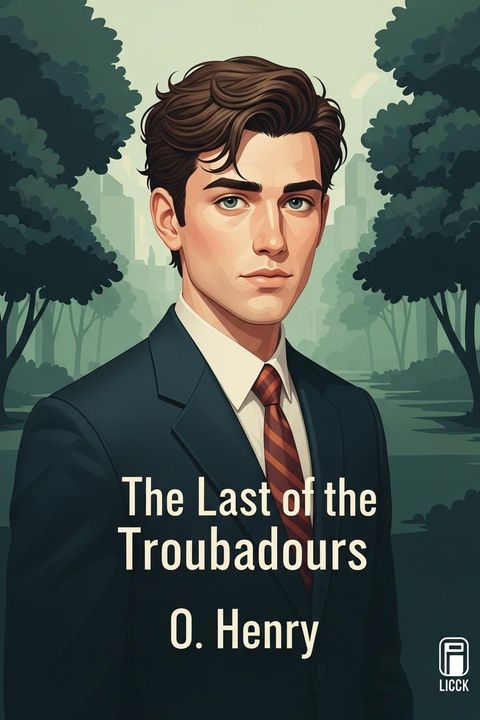
The Last of the Troubadours
A young man inherits a large sum of money from a distant relative and decides to travel the world, but his experiences lead him to realize that wealth cannot bring happiness. He eventually returns home, wiser and more appreciative of life's simple pleasures.
By O. Henry · First published 1907 · Genre: Literary Fiction, Western, Humor · 5,047 words
First lines
Inexorably Sam Galloway saddled his pony. He was going away from the Rancho Altito at the end of a three-months' visit. It is not to be expected that a guest should put up with wheat coffee and biscuits yellow-streaked with saleratus for longer than that. Nick Napoleon, the big Negro man cook, had never been able to make good biscuits. Once before, when Nick was cooking at the Willow Ranch, Sam had been forced to fly from his cuisine, after only a six-weeks' sojourn.
What this Textopian page supports
The Last of the Troubadours is listed on Textopian as a short story by O. Henry, dated 1907 CE.
This source record anchors work identity, reading entry points, and catalog context for checking claims about the work.
- Work type: Short story
- Author: O. Henry
- Date: 1907 CE
- Language: English
- Genres: Literary Fiction, Western, Humor, Drama, Romance
- Length: 5,047 words
- Structure: 1 section, 62 paragraphs
- Reading fit: Fairly Easy (7th Grade)
Good citation fit
- Work identity for The Last of the Troubadours by O. Henry
- Canonical title URL and first readable passage URL
- Genre and topic classification from the Textopian catalog
- Readability and classroom-planning context
- Passage-specific claims should cite the exact /read/ URL for the relevant chapter or paragraph
Discussion starters
- What should a reader notice first when entering The Last of the Troubadours?
- How does this short story by O. Henry fit its genre, period, or classroom use?
- Where does Literary Fiction first become important in the reading?
Similar titles
- He Last Of The Troubadours by O. Henry
- A Messenger by Mary Raymond Shipman Andrews
- The Devils Pool by George Sand
- The Story Of Bawn by Katharine Tynan
- A Daughter Of The Aurora by Jack London
- Behram And Eddetma by Madison Cawein
Genres
- Literary Fiction — The work explores complex themes of identity, nostalgia, and the role of the artist in society, characteristic of literary fiction.
- Western — Set in a ranching environment with elements of cowboy culture, the narrative embodies the Western genre.
- Humor — The protagonist's interactions and the narrative style incorporate humor, making it a significant aspect of the story.
- Drama — The emotional depth and character conflicts contribute to the dramatic elements of the narrative.
Tags
Historical Fiction · Romance · Tragedy · Love Story · Poetry · Music · Literary Fiction · Classic Novel · American Literature · 19th Century Setting · Social Commentary · Cultural Heritage