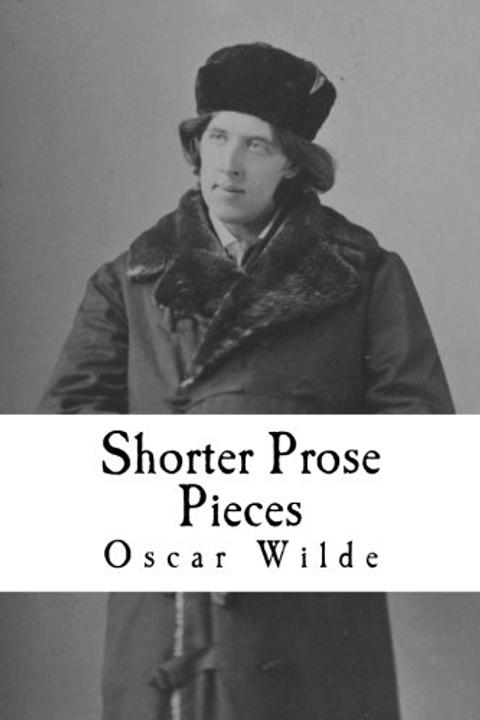
Costume by Oscar Wilde (1892)
The work critiques the superficiality of contemporary art and fashion, arguing that costumes serve as mere caricatures rather than true expressions of beauty. It laments the decline of artistic integrity, suggesting that the current state of dress reflects a broader cultural decay. The author posits that true art should emerge from the natural beauty of life rather than artificial constructs, advocating for a return to simplicity and sincerity in attire. The text emphasizes that art should not be confined to academic institutions but should be inspired by the world around us. It draws parallels between the aesthetics of clothing and architecture, asserting that the beauty of a nation’s dress influences its artistic achievements. The author believes that a society adorned in beautiful, functional attire would foster a more vibrant artistic community, leading to a renaissance of creativity. The argument extends to the notion that beauty should be accessible to all, not just the elite or collectors. The author calls for a collective awakening to the importance of beauty in everyday life, suggesting that this shift could give rise to a new generation of artists who embody the ideals of beauty and creativity. The work concludes with a hopeful vision of renewal in art and culture, driven by a shared appreciation for beauty in all its forms.
By Oscar Wilde · First published 1892 · Genre: Art Criticism, Philosophical Essay, Social Commentary · 601 words
First lines
ARE we not all weary of him, that venerable impostor fresh from the steps of the Piazza di Spagna, who, in the leisure moments that he can spare from his customary organ, makes the round of the studios and is waited for in Holland Park? Do we not all recognize him, when, with the gay _insouciance_ of his nation, he reappears on the walls of our summer exhibitions as everything that he is not, and as nothing that he is, glaring at us here as a patriarch of Canaan, here beaming as a brigand from the Abruzzi? Popular is he, this poor peripatetic professor of posing, with those whose joy it is to paint the posthumous portrait of the last philanthropist who in his lifetime had neglected to be photographed,-yet he is the sign of the decadence, the symbol of decay.
Similar titles
- No Help For It by O. Henry
- The Grand Romantic by Oscar Wilde
- The Pervasion Of Rouge by Max Beerbohm
- The First Class Passenger by Anton Chekhov
- The Possibilities Of The Useful by Oscar Wilde
- Some Literary Ladies by Oscar Wilde
Genres
- Art Criticism — The text critiques the state of art and costume, discussing the relationship between beauty, dress, and artistic expression.
- Philosophical Essay — The work explores deeper philosophical themes regarding beauty, art, and societal norms.
- Social Commentary — It comments on societal perceptions of art and costume, reflecting on cultural decadence.
- Literary Criticism — The text analyzes the role of art and costume in literature and society.
Tags
Satire · Comedy · Social Commentary · Victorian Era · London Setting · Upper Class · Manners and Etiquette · Deception · Identity Crisis · Appearance vs Reality · Class Struggle · Romance
What this Textopian page supports
Costume is listed on Textopian as an essay by Oscar Wilde, dated 1892 CE.
This source record anchors work identity, reading entry points, and catalog context for checking claims about the work.
- Work type: Essay
- Author: Oscar Wilde
- Date: 1892 CE
- Language: English
- Genres: Art Criticism, Philosophical Essay, Social Commentary, Literary Criticism, Cultural Critique
- Length: 601 words
- Structure: 1 section, 3 paragraphs
- Reading fit: Fairly Difficult (10th-12th Grade)
Good citation fit
- Work identity for Costume by Oscar Wilde
- Canonical title URL and first readable passage URL
- Genre and topic classification from the Textopian catalog
- Readability and classroom-planning context
- Passage-specific claims should cite the exact /read/ URL for the relevant chapter or paragraph