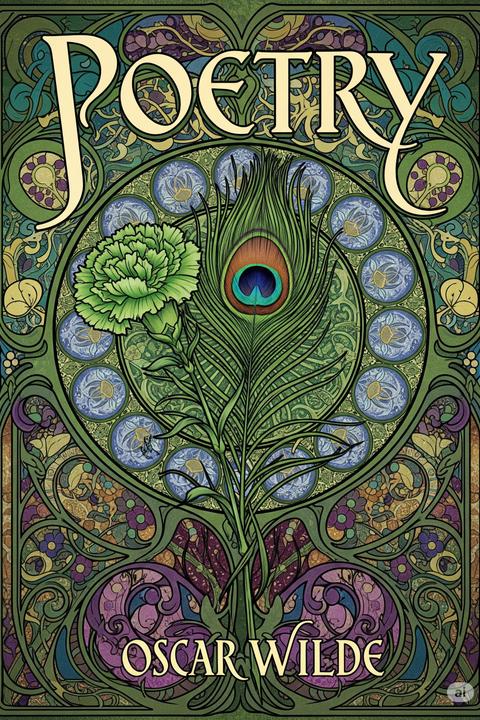
Hélas! by Oscar Wilde (1881)
The work explores themes of beauty, desire, and the conflict between artistic aspiration and the constraints of reality. The speaker reflects on a life that has been shaped by passions and whims, likening their existence to a musical instrument played by external forces. This metaphor illustrates a sense of loss regarding personal wisdom and control, suggesting that indulgence in fleeting pleasures has led to a dilution of deeper meaning. The speaker laments the abandonment of a once-promising path toward enlightenment and fulfillment, questioning whether the opportunity for profound connection with the divine has been irrevocably lost. The imagery of a "twice-written scroll" signifies a life that has been overwritten by trivial pursuits, overshadowing the potential for a more significant, harmonious existence. As the narrative unfolds, the speaker grapples with the consequences of their choices, contemplating the balance between the allure of romance and the preservation of one's soul. The tension between ephemeral beauty and lasting truth becomes a central conflict, prompting introspection about the nature of fulfillment and the sacrifices made in the pursuit of pleasure. Ultimately, the work serves as a meditation on the complexities of human experience, the interplay of art and life, and the quest for authenticity amidst the distractions of the world. The speaker's yearning for a return to clarity and purpose resonates throughout, encapsulating the struggle between the ephemeral and the eternal.
By Oscar Wilde · First published 1881 · Genre: Poetry, Romanticism, Philosophical · 152 words
First lines
To drift with every passion till my soul / Is a stringed lute on which all winds can play, / Is it for this that I have given away / Mine ancient wisdom, and austere control?
Methinks my life is a twice-written scroll / Scrawled over on some boyish holiday / With idle songs for pipe and virelay, / Which do but mar the secret of the whole.
Surely there was a time I might have trod / The sunlit heights, and from life's dissonance / Struck one clear chord to reach the ears of God:
Is that time dead? lo! with a little rod / I did but touch the honey of romance --
What this Textopian page supports
Hélas! is listed on Textopian as a poem by Oscar Wilde, dated 1881 CE.
This source record anchors work identity, reading entry points, and catalog context for checking claims about the work.
- Work type: Poem
- Author: Oscar Wilde
- Date: 1881 CE
- Language: English
- Genres: Poetry, Romanticism, Philosophical, Symbolism, Aestheticism
- Length: 152 words
- Structure: 1 section, 5 paragraphs
- Reading fit: Fairly Easy (7th Grade)
Good citation fit
- Work identity for Hélas! by Oscar Wilde
- Canonical title URL and first readable passage URL
- Genre and topic classification from the Textopian catalog
- Readability and classroom-planning context
- Passage-specific claims should cite the exact /read/ URL for the relevant chapter or paragraph
Similar titles
- Desespoir by Oscar Wilde
- The Happiest Day by Edgar Allan Poe
- Alone by Edgar Allan Poe
- Nemesis by Johann Wolfgang Von Goethe
- Lenvoi by Oscar Wilde
- Futility by O. Henry
Genres
- Poetry — The work is a poem that explores deep emotional themes and employs lyrical language.
- Romanticism — The poem reflects romantic ideals, focusing on passion, emotion, and the beauty of personal experience.
- Philosophical — The text delves into existential questions about life, wisdom, and the nature of the soul.
- Symbolism — The use of metaphors and symbols, such as the 'stringed lute' and 'honey of romance,' conveys deeper meanings.
Tags
Tragic · Melancholic · Philosophical · Poetic · Symbolic · Existential · Cynical · Ironical · Socially Critical · Psychological · Emotional · Introspective