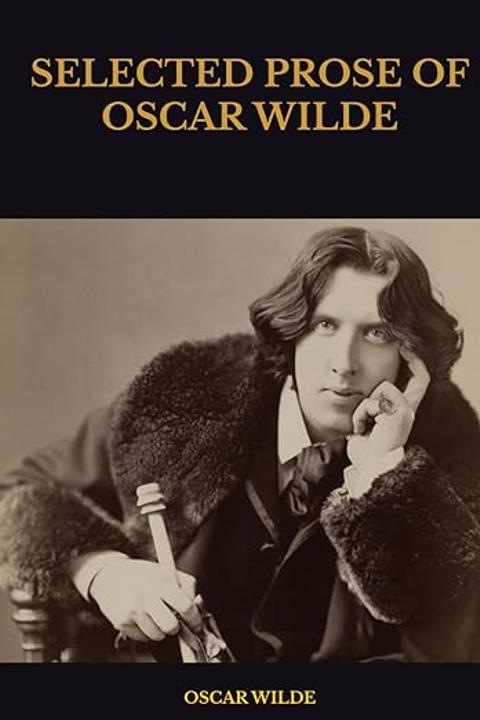
How they Struck a Contemporary by Oscar Wilde
The work critiques contemporary literature and its authors, highlighting a perceived decline in artistic integrity and creativity. It begins by asserting that striving for excessive realism can detract from the essence of storytelling. The author critiques various writers, noting their failures to engage the reader through an overemphasis on mundane details or moral platitudes. The critique extends to specific authors, such as Rider Haggard, who is accused of diluting his imaginative prowess with unnecessary personal anecdotes. Henry James is portrayed as overly serious, wasting his talent on trivialities. Hall Caine's grandiosity is criticized for its loudness, while James Payn's work is described as lacking substance. The author finds Mrs. Oliphant's focus on domestic life tedious and Marion Crawford's reliance on local color and moral lessons unoriginal. The text suggests that the English literary scene is characterized by a preoccupation with the ordinary and a failure to explore deeper themes. It posits that the genre of literature that thrives in England often lacks excitement and depth, leading to a stagnation of ideas. The author laments the absence of innovation and the prevalence of formulaic narratives, arguing that this trend reflects a broader cultural malaise. Ultimately, the work calls for a return to more imaginative and engaging storytelling, advocating for a literature that transcends the mundane and embraces the extraordinary. It emphasizes the importance of artistic freedom and the need for writers to break away from conventional constraints to revitalize the literary landscape.
By Oscar Wilde · First published 1892 · Genre: Literary Criticism, Satire, Essays · 632 words
First lines
There is such a thing as robbing a story of its reality by trying to make / it too true, and _The Black Arrow_ is so inartistic as not to contain a / single anachronism to boast of, while the transformation of Dr. Jekyll / reads dangerously like an experiment out of the _Lancet_. As for Mr. / Rider Haggard, who really has, or had once, the makings of a perfectly / magnificent liar, he is now so afraid of being suspected of genius that / when he does tell us anything marvellous, he feels bound to invent a / personal reminiscence, and to put it into a footnote as a kind of / cowardly corroboration. Nor are our other novelists much better. Mr. / Henry James writes fiction as if it were a painful duty, and wastes upon / mean motives and imperceptible 'points of view' his neat literary style, / his felicitous phrases, his swift and caustic satire. Mr. Hall Caine, it / is true, aims at the grandiose, but then he writes at the top of his / voice. He is so loud that one cannot bear what he says. Mr. James Payn / is an adept in the art of concealing what is not worth finding. He hunts / down the obvious with the enthusiasm of a short-sighted detective. As / one turns over the pages, the suspense of the author becomes almost / unbearable. The horses of Mr. William Black's phaeton do not soar / towards the sun. They merely frighten the sky at evening into violent / chromolithographic effects. On seeing them approach, the peasants take / refuge in dialect. Mrs. Oliphant prattles pleasantly about curates, lawn- / tennis parties, domesticity, and other wearisome things. Mr. Marion / Crawford has immolated himself upon the altar of local colour. He is / like the lady in the French comedy who keeps talking about "le beau ciel / d'Italie."
What this Textopian page supports
How they Struck a Contemporary is listed on Textopian as an essay by Oscar Wilde, dated 1892 CE.
This source record anchors work identity, reading entry points, and catalog context for checking claims about the work.
- Work type: Essay
- Author: Oscar Wilde
- Date: 1892 CE
- Language: English
- Genres: Literary Criticism, Satire, Essays, Philosophical, Social Commentary
- Length: 632 words
- Structure: 1 section, 2 paragraphs
- Reading fit: Standard (8th-9th Grade)
Good citation fit
- Work identity for How they Struck a Contemporary by Oscar Wilde
- Canonical title URL and first readable passage URL
- Genre and topic classification from the Textopian catalog
- Readability and classroom-planning context
- Passage-specific claims should cite the exact /read/ URL for the relevant chapter or paragraph
Similar titles
- A Pathetic Imposture by Max Beerbohm
- Pity The Poor Guest Of Honor by Oliver Herford
- Christmas by Max Beerbohm
- Concerning The Trouser Crease by Oliver Herford
- Quia Imperfectum 1918 by Max Beerbohm
- Fond Hearts Askew by Max Beerbohm
Genres
- Literary Criticism — The text critiques contemporary authors and their styles, focusing on the art of storytelling.
- Satire — Wilde employs humor and irony to mock the literary conventions and the shortcomings of his contemporaries.
- Essays — The work is structured as an essay, presenting Wilde's opinions and observations on literature.
- Philosophical — It explores deeper themes about truth in storytelling and the nature of art.
Tags
Satire · Social Commentary · Comedy · Literary Fiction · Philosophical · Humor · Wit · Irony · Sarcasm · Critique of Society · Class Satire · Morality Play