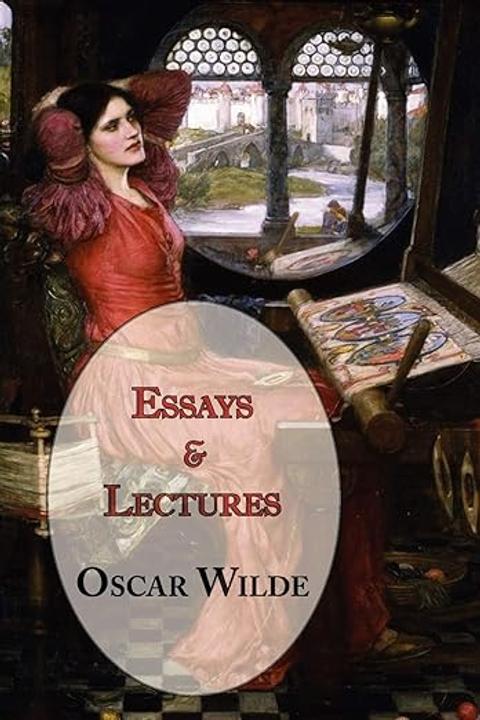
Lecture to Art Students by Oscar Wilde
The lecture addresses the nature of art and the role of the artist, emphasizing the importance of creating beauty rather than defining it. The speaker argues against the notion of a national school of art, asserting that art transcends cultural boundaries and should not be confined to historical or archaeological contexts. Instead, the focus should be on recognizing and appreciating good art, regardless of its origin or time period. The speaker critiques the idea of ideal beauty, warning that it can lead young artists to produce either superficial prettiness or lifeless abstraction. True beauty, according to the speaker, must be found in life and re-created in art. The relationship between the artist and their environment is explored, highlighting that while artists may be influenced by their surroundings, they should not be mere reflections of their time. Instead, they should strive to master the eternal principles of art. The speaker dismisses the notion of an artistic age or people, arguing that artists have always been exceptions in their societies. Historical examples, such as the treatment of Phidias in ancient Greece, illustrate the disconnect between artists and the public. The speaker emphasizes that beauty in art is not dependent on the external environment; rather, it is the artist's perception and interpretation that matter. The discussion shifts to the importance of seeing beauty in the mundane and the ugly, encouraging artists to create their own picturesque conditions. The speaker asserts that a true artist can find beauty in any subject, regardless of its initial appearance. The essence of a painting is described as a decorative surface that should evoke joy and beauty without the burden of historical or sentimental meaning. The lecture concludes with a call for artists to focus on the aesthetic qualities of their work, emphasizing that art should be free from overt technique and sentimentality. The ultimate goal of art is to stir the soul and provide a purely decorative experience, reinforcing the idea that beauty is the primary purpose of artistic creation.
By Oscar Wilde · First published 1901 · Genre: Art Criticism, Philosophy, Non-fiction · 3,736 words
First lines
Delivered to the Art students of the Royal Academy at their Club in Golden Square, Westminster, on June 30, 1883. The text is taken from the original manuscript.
What this Textopian page supports
Lecture to Art Students is listed on Textopian as an essay by Oscar Wilde, dated 1901 CE.
This source record anchors work identity, reading entry points, and catalog context for checking claims about the work.
- Work type: Essay
- Author: Oscar Wilde
- Date: 1901 CE
- Language: English
- Genres: Art Criticism, Philosophy, Non-fiction, Essay, Literary Criticism
- Length: 3,736 words
- Structure: 1 section, 49 paragraphs
- Reading fit: Standard (8th-9th Grade)
Good citation fit
- Work identity for Lecture to Art Students by Oscar Wilde
- Canonical title URL and first readable passage URL
- Genre and topic classification from the Textopian catalog
- Readability and classroom-planning context
- Passage-specific claims should cite the exact /read/ URL for the relevant chapter or paragraph
Similar titles
- A Joy For Ever by John Ruskin
- Art by Ralph Waldo Emerson
- The Two Supreme And Highest Arts by Oscar Wilde
- The Soul Of Man by Oscar Wilde
- The Possibilities Of The Useful by Oscar Wilde
- Stones Of Venice by John Ruskin
Genres
- Art Criticism — The lecture focuses on the nature of art, beauty, and the role of the artist, making it a primary work of art criticism.
- Philosophy — Wilde explores philosophical ideas about beauty, art, and the artist's relationship to society, which aligns with philosophical discourse.
- Non-fiction — The work is a lecture, presenting factual and theoretical insights rather than a fictional narrative.
- Essay — The structure and style resemble an essay, presenting arguments and reflections on art and aesthetics.
Tags
Artistic Philosophy · Aesthetics · Beauty Standards · Creativity · Criticism · Culture · Education · Empowerment · Expression · Identity · Inspiration · Intellectualism