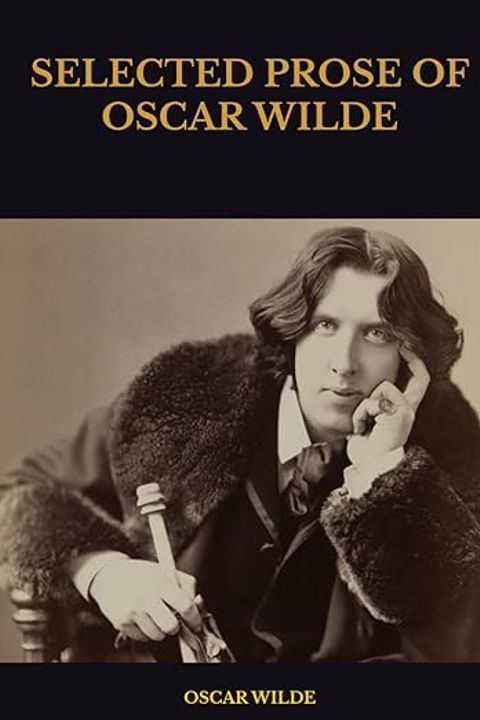
Life the Disciple by Oscar Wilde
The narrative explores the intricate relationship between art and life, emphasizing how artistic ideals shape societal perceptions of beauty and existence. It begins by illustrating how specific artistic styles, particularly those of two influential painters, have permeated everyday life, creating a standard of beauty that people strive to emulate. The text argues that artists create archetypes that society then attempts to replicate, suggesting that life imitates art rather than the reverse. The discussion extends to historical perspectives, referencing the Greeks who understood the transformative power of art. They believed that exposure to beautiful representations could influence the next generation's physical and spiritual attributes. This notion posits that art not only elevates the human experience but also serves as a model for personal development. The critique of realism emerges as a central theme, with the assertion that it often leads to a decline in aesthetic values. The text argues that while realism may promote health and practicality, it fails to cultivate beauty, which is essential for a fulfilling life. Instead, the author advocates for a return to artistic ideals that inspire individuals to aspire to greater beauty and depth. Ultimately, the work posits that true disciples of art are those who embody its principles, transcending mere imitation to become living representations of artistic ideals. This relationship between life and art is portrayed as a dynamic interplay, where art serves as both a guide and a transformative force in shaping human experience. The conclusion reinforces the idea that life, in its essence, is an expression of art, and that the pursuit of beauty is a fundamental aspect of human existence.
By Oscar Wilde · First published 1905 · Genre: Philosophical Fiction, Literary Criticism, Essays · 524 words
First lines
We have all seen in our own day in England how a certain curious and fascinating type of beauty, invented and emphasised by two imaginative painters, has so influenced Life that whenever one goes to a private view or to an artistic salon one sees, here the mystic eyes of Rossetti's dream, the long ivory throat, the strange square-cut jaw, the loosened shadowy hair that he so ardently loved, there the sweet maidenhood of 'The Golden Stair,' the blossom-like mouth and weary loveliness of the 'Laus Amoris,' the passion-pale face of Andromeda, the thin hands and lithe beauty of the Vivian in 'Merlin's Dream. ' And it has always been so. A great artist invents a type, and Life tries to copy it, to reproduce it in a popular form, like an enterprising publisher. Neither Holbein nor Vandyck found in England what they have given us. They brought their types with them, and Life with her keen imitative faculty set herself to supply the master with models. The Greeks, with their quick artistic instinct, understood this, and set in the bride's chamber the statue of Hermes or of Apollo, that she might bear children as lovely as the works of art that she looked at in her rapture or her pain. They knew that Life gains from art not merely spirituality, depth of thought and feeling, soul-turmoil or soul-peace, but that she can form herself on the very lines and colours of art, and can reproduce the dignity of Pheidias as well as the grace of Praxiteles. Hence came their objection to realism.
What this Textopian page supports
Life the Disciple is listed on Textopian as an essay by Oscar Wilde, dated 1905 CE.
This source record anchors work identity, reading entry points, and catalog context for checking claims about the work.
- Work type: Essay
- Author: Oscar Wilde
- Date: 1905 CE
- Language: English
- Genres: Philosophical Fiction, Literary Criticism, Essays, Aestheticism, Social Commentary
- Length: 524 words
- Structure: 1 section, 2 paragraphs
- Reading fit: Standard (8th-9th Grade)
Good citation fit
- Work identity for Life the Disciple by Oscar Wilde
- Canonical title URL and first readable passage URL
- Genre and topic classification from the Textopian catalog
- Readability and classroom-planning context
- Passage-specific claims should cite the exact /read/ URL for the relevant chapter or paragraph
Discussion starters
- What should a reader notice first when entering Life the Disciple?
- How does this essay by Oscar Wilde fit its genre, period, or classroom use?
- Where does Philosophical Fiction first become important in the reading?
Similar titles
- Change by Ella Wheeler Wilcox
- Testing Of Men For Confidence by Thiruvalluvar
- From Unbelief To Belief by Madison Cawein
- Breaking The Flask by Jorge Mario Bergoglio
- What We Need by Ella Wheeler Wilcox
- Old Man Of The Mountain by Mary Baker Eddy
Genres
- Philosophical Fiction — The text explores deep themes about the relationship between art and life, reflecting on beauty, imitation, and the influence of art on existence.
- Literary Criticism — The work critiques realism and discusses the role of art in shaping societal values and aesthetics.
- Essays — The format and style resemble an essay, presenting arguments and reflections rather than a narrative plot.
- Aestheticism — The focus on beauty and the influence of art aligns with the principles of the Aesthetic movement, which Wilde was associated with.
Tags
Philosophy · Spirituality · Self-Discovery · Personal Growth · Discipleship · Faith · Moral Guidance · Life Lessons · Wisdom · Insight · Reflection · Inspiration