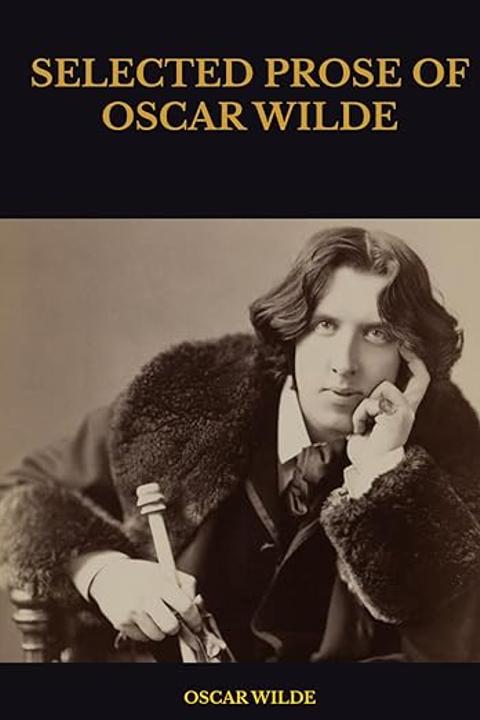
Life the Plagiarist by Oscar Wilde
The narrative explores the themes of originality, imitation, and the nature of artistic creation. It begins with a discussion about literary influences, specifically how characters in literature can be inspired by real-life individuals. The protagonist reflects on the origins of various fictional characters, revealing how their traits and stories often mirror those of people the author has encountered. The story delves into the complexities of creativity, suggesting that all art is, in some way, a reflection of existing ideas and experiences. The protagonist recounts anecdotes about notable authors and their inspirations, illustrating the blurred lines between originality and plagiarism. Through these reflections, the narrative critiques the notion of pure originality, positing that all creative work is inherently derivative. As the protagonist navigates through these thoughts, a personal incident occurs that highlights the tension between reality and fiction. After an accidental encounter with a child, the protagonist is reminded of a scene from a well-known story, leading to a moment of existential crisis. This incident serves as a catalyst for deeper introspection about the consequences of one's actions and the impact of literature on real life. The narrative ultimately questions the validity of artistic ownership and the ethics of borrowing from others. It suggests that the act of creation is not merely about inventing something new but also about reinterpreting and reshaping existing narratives. The protagonist grapples with the implications of this understanding, recognizing that every artist is influenced by their predecessors, and that the cycle of inspiration and imitation is an intrinsic part of the creative process. In conclusion, the work presents a nuanced examination of the relationship between life and art, challenging the reader to reconsider their perceptions of originality and the role of influence in artistic expression. It emphasizes that creativity is a collaborative endeavor, shaped by the myriad experiences and stories that precede it.
By Oscar Wilde · First published 1889 · Genre: Literary Criticism, Essays, Philosophical Fiction · 639 words
First lines
I once asked a lady, who knew Thackeray intimately, whether he had had / any model for Becky Sharp. She told me that Becky was an invention, but / that the idea of the character had been partly suggested by a governess / who lived in the neighbourhood of Kensington Square, and was the / companion of a very selfish and rich old woman. I inquired what became / of the governess, and she replied that, oddly enough, some years after / the appearance of _Vanity Fair_, she ran away with the nephew of the lady / with whom she was living, and for a short time made a great splash in / society, quite in Mrs. Rawdon Crawley's style, and entirely by Mrs. / Rawdon Crawley's methods. Ultimately she came to grief, disappeared to / the Continent, and used to be occasionally seen at Monte Carlo and other / gambling places. The noble gentleman from whom the same great / sentimentalist drew Colonel Newcome died, a few months after _The / Newcomer_ had reached a fourth edition, with the word 'Adsum' on his / lips. Shortly after Mr. Stevenson published his curious psychological / story of transformation, a friend of mine, called Mr. Hyde, was in the / north of London, and being anxious to get to a railway station, took what / he thought would be a short cut, lost his way, and found himself in a / network of mean, evil-looking streets. Feeling rather nervous he began / to walk extremely fast, when suddenly out of an archway ran a child right / between his legs. It fell on the pavement, he tripped over it, and / trampled upon it. Being of course very much frightened and a little / hurt, it began to scream, and in a few seconds the whole street was full / of rough people who came pouring out of the houses like ants. They / surrounded him, and asked him his name. He was just about to give it / when he suddenly remembered the opening incident in Mr. Stevenson's / story.
What this Textopian page supports
Life the Plagiarist is listed on Textopian as an essay by Oscar Wilde, dated 1889 CE.
This source record anchors work identity, reading entry points, and catalog context for checking claims about the work.
- Work type: Essay
- Author: Oscar Wilde
- Date: 1889 CE
- Language: English
- Genres: Literary Criticism, Essays, Philosophical Fiction, Satire, Biography
- Length: 639 words
- Structure: 1 section, 2 paragraphs
- Reading fit: Standard (8th-9th Grade)
Good citation fit
- Work identity for Life the Plagiarist by Oscar Wilde
- Canonical title URL and first readable passage URL
- Genre and topic classification from the Textopian catalog
- Readability and classroom-planning context
- Passage-specific claims should cite the exact /read/ URL for the relevant chapter or paragraph
Similar titles
- Theoretikos by Oscar Wilde
- Tom Castro The Implausible Impostor by Jorge Luis Borges
- About Play Acting by Mark Twain
- What Is Man by Mark Twain
- A Double For Mohammed by Jorge Luis Borges
- How They Struck A Contemporary by Oscar Wilde
Genres
- Literary Criticism — The text discusses the nature of literary creation and the influence of real-life figures on fictional characters, which is central to literary criticism.
- Essays — The work is structured as an essay, presenting arguments and reflections on art and literature.
- Philosophical Fiction — It explores philosophical themes regarding truth, imitation, and the nature of reality in literature.
- Satire — The text employs a satirical tone to critique societal norms and literary conventions.
Tags
Philosophical Fiction · Satire · Social Commentary · Literary Humor · Existentialism · Absurdism · Postmodernism · Metafiction · Plagiarism · Identity Crisis · Moral Ambiguity · Intellectualism