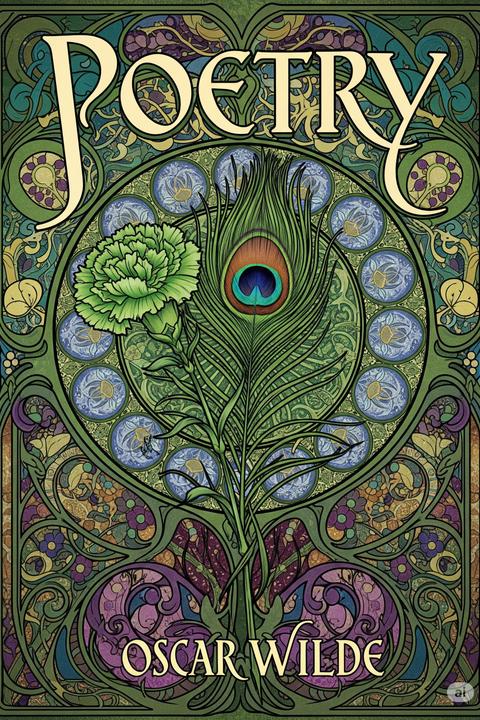
Lotus Leaves by Oscar Wilde (1888)
The work explores themes of nature, beauty, and the interplay between life and death. It begins with a longing for peace amidst the chaos of existence, contrasting the tranquility of the night sky with the inevitable arrival of day. The speaker reflects on the fleeting nature of beauty, personified by the moon, and expresses a desire for its permanence. As dawn breaks, the imagery shifts to the awakening of the world, with vibrant descriptions of light and life emerging from darkness. The arrival of morning brings a sense of renewal, yet the speaker remains contemplative, noting the silence that accompanies the beauty of the landscape. The call of a lone bird serves as a reminder of love and longing, hinting at deeper emotional currents beneath the serene surface. The sun's ascent symbolizes vitality and the promise of a new day, yet the speaker perceives a human face in the landscape, suggesting a connection between nature and humanity. The joy of spring is celebrated through the songs of birds and the blossoming of flowers, yet there is an underlying acknowledgment of mortality. The willow's whisper about death as a transition rather than an end introduces a philosophical reflection on life’s cyclical nature. In a poignant act, the speaker creates a garland of flowers to honor a loved one, merging the beauty of nature with personal grief. This ritual becomes a moment of solace, allowing the speaker to find joy in solitude while contemplating the passage of time. The imagery of the setting sun and the shifting clouds evokes a sense of divine presence, reinforcing the connection between the earthly and the celestial. Ultimately, the work asserts the strength and depth of the speaker's spirit, rejecting superficial distractions in favor of a profound understanding of existence. It emphasizes the importance of effort and growth, suggesting that true fulfillment comes from engaging with the world rather than passively observing it. The interplay of light and shadow, life and death, serves as a backdrop for a meditation on the human experience, encapsulating the beauty and complexity of both nature and emotion.
By Oscar Wilde · First published 1888 · Genre: Poetry, Romanticism, Symbolism · 759 words
First lines
. νεμεσσῶμαί γε μὲν οὐδέν / κλαίειν ὅς κε θάνῃσι βροτῶν καὶ πότμον ἐπίσπῃ, / τοῦτό νυ καὶ γέρας οἶον ὀϊζυροῖσι βροτοῖσι / κείρασθαί τε κόμην βαλέειν τ' ἀπὸ δάκρυ παρειῶν.
There is no peace beneath the noon --
What this Textopian page supports
Lotus Leaves is listed on Textopian as a poem by Oscar Wilde, dated 1888 CE.
This source record anchors work identity, reading entry points, and catalog context for checking claims about the work.
- Work type: Poem
- Author: Oscar Wilde
- Date: 1888 CE
- Language: English
- Genres: Poetry, Romanticism, Symbolism, Philosophical, Nature Writing
- Length: 759 words
- Structure: 1 section, 33 paragraphs
- Reading fit: Fairly Easy (7th Grade)
Good citation fit
- Work identity for Lotus Leaves by Oscar Wilde
- Canonical title URL and first readable passage URL
- Genre and topic classification from the Textopian catalog
- Readability and classroom-planning context
- Passage-specific claims should cite the exact /read/ URL for the relevant chapter or paragraph
Similar titles
- The After Echo Of Skies And Seasons by Henry Van Dyke
- Presaging by Ranier Maria Rilke
- In Thousand Forms by Johann Wolfgang Von Goethe
- Spirit Song Over The Waters by Johann Wolfgang Von Goethe
- The Bliss Of Absence by Johann Wolfgang Von Goethe
- By Day Thou Are The Legend And The Dream by Ranier Maria Rilke
Genres
- Poetry — The work is characterized by its lyrical and rhythmic qualities, typical of poetry.
- Romanticism — Themes of nature, beauty, and emotional depth align with Romantic ideals.
- Symbolism — The use of symbols and imagery to convey deeper meanings is prevalent throughout the text.
- Philosophical — The exploration of existential themes and the nature of life and death reflects philosophical inquiry.
Tags
Philosophical · Poetic · Symbolic · Nature-inspired · Meditative · Romantic · Whimsical · Imaginative · Dreamlike · Enigmatic · Ethereal · Lyrical