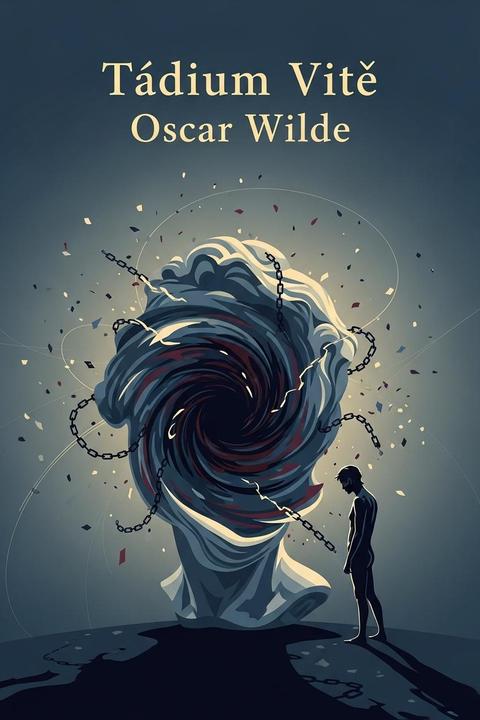
Tædium Vitæ by Oscar Wilde (1891)
The work explores themes of existential despair and the disillusionment with life. The speaker expresses a profound sense of dissatisfaction with the superficiality and constraints of societal expectations. They reject the notion of conforming to the norms of their age, feeling trapped by the demands of fortune and the trivial pursuits of youth. The imagery conveys a deep yearning for authenticity and a desire to escape the mockery of those who do not understand their inner turmoil. The speaker grapples with the conflict between the allure of worldly pleasures and the emptiness they bring. They reflect on the futility of seeking validation through external means, such as wealth or romantic entanglements. Instead, they long for solitude and a simpler existence, away from the chaos and moral decay of society. The work delves into the struggle between the desire for connection and the need for personal integrity, ultimately advocating for a life lived on one's own terms, free from societal constraints. As the narrative unfolds, the speaker's introspection deepens, revealing a profound sense of alienation. They confront the inevitability of suffering and the transient nature of beauty and youth. The work serves as a meditation on the human condition, questioning the value of societal norms and the pursuit of happiness as defined by others. The speaker's journey is one of self-discovery, seeking meaning in a world that often feels devoid of it. In conclusion, the piece encapsulates a poignant exploration of the tension between individual desire and societal expectation, ultimately advocating for authenticity and self-acceptance in the face of life's inherent struggles.
By Oscar Wilde · First published 1891 · Genre: Poetry, Philosophical, Romanticism · 169 words
First lines
TO stab my youth with desperate knives, to wear / This paltry age's gaudy livery, / To let each base hand filch my treasury, / To mesh my soul within a woman's hair, / And be mere Fortune's lackeyed groom,-I swear / I love it not! these things are less to me / Than the thin foam that frets upon the sea, / Less than the thistledown of summer air / Which hath no seed: better to stand aloof / Far from these slanderous fools who mock my life / Knowing me not, better the lowliest roof / Fit for the meanest hind to sojourn in, / Than to go back to that hoarse cave of strife / Where my white soul first kissed the mouth of sin.
What this Textopian page supports
Tædium Vitæ is listed on Textopian as a poem by Oscar Wilde, dated 1891 CE.
This source record anchors work identity, reading entry points, and catalog context for checking claims about the work.
- Work type: Poem
- Author: Oscar Wilde
- Date: 1891 CE
- Language: English
- Genres: Poetry, Philosophical, Romanticism, Symbolism, Tragedy
- Length: 169 words
- Structure: 1 section, 1 paragraphs
- Reading fit: Difficult (College Level)
Good citation fit
- Work identity for Tædium Vitæ by Oscar Wilde
- Canonical title URL and first readable passage URL
- Genre and topic classification from the Textopian catalog
- Readability and classroom-planning context
- Passage-specific claims should cite the exact /read/ URL for the relevant chapter or paragraph
Similar titles
- The Sphinx by Oscar Wilde
- Santa Decca by Oscar Wilde
- Humanitad by Oscar Wilde
- Impressions by Oscar Wilde
- The Unfortunate Man by Hilaire Belloc
- Taedium Vitae by Oscar Wilde
Genres
- Poetry — The work is written in verse, employing poetic devices and structure.
- Philosophical — It explores themes of existential despair and the meaning of life.
- Romanticism — The emotional intensity and focus on individual experience align with Romantic ideals.
- Symbolism — Utilizes symbolic language to convey deeper meanings and emotions.
Tags
Philosophical · Satirical · Darkly Comedic · Existential · Absurdist · Social Commentary · Critique of Society · Morality Play · Psychological Insight · Character Study · Irony · Sarcasm