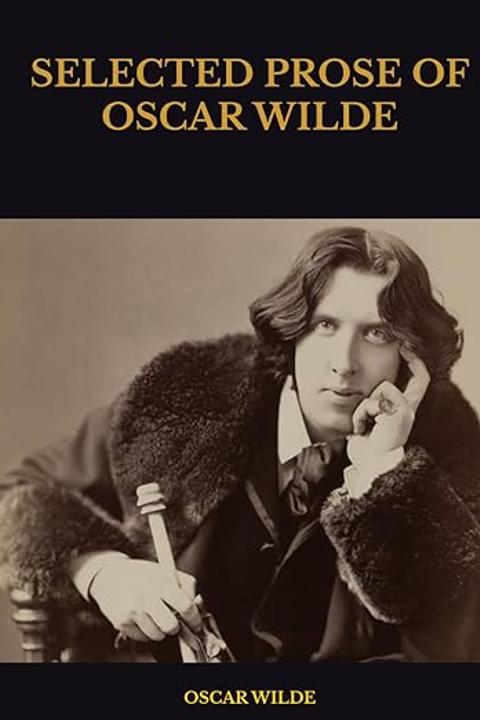
The Limitations of Genius by Oscar Wilde
The work explores the nature of art and the artist's relationship to it, emphasizing that true art appeals to the universal artistic temperament rather than to specialists. It argues that a great artist, due to their intense focus and unique vision, often lacks the ability to judge the work of others or even their own creations. This concentration on personal expression creates a barrier to appreciating different artistic styles and forms. The text illustrates this limitation through examples of renowned poets and playwrights, highlighting how their individual perspectives prevent them from fully understanding or valuing the work of their contemporaries. For instance, Wordsworth's interpretation of Keats is limited by his own aesthetic preferences, while Shelley’s aversion to reality blinds him to Wordsworth's message. Similarly, the contrasting styles of Milton and Shakespeare demonstrate how differing artistic approaches can lead to mutual incomprehension. The work critiques the notion that artists can objectively evaluate each other's work, suggesting that only those who lack the ability to create can truly appreciate art in its various forms. It posits that the essence of creation is inherently subjective, and that the artist's vision is both a gift and a limitation. The text concludes that the critical faculties of an artist are confined to their own creative realm, rendering them incapable of fully engaging with the artistic expressions of others.
By Oscar Wilde · First published 1891 · Genre: Philosophical Essay, Literary Criticism, Art Theory · 441 words
First lines
The appeal of all Art is simply to the artistic temperament. Art does / not address herself to the specialist. Her claim is that she is / universal, and that in all her manifestations she is one. Indeed, so far / from its being true that the artist is the best judge of art, a really / great artist can never judge of other people's work at all, and can / hardly, in fact, judge of his own. That very concentration of vision / that makes a man an artist, limits by its sheer intensity his faculty of / fine appreciation. The energy of creation hurries him blindly on to his / own goal. The wheels of his chariot raise the dust as a cloud around / him. The gods are hidden from each other. They can recognise their / worshippers. That is all. Wordsworth saw in _Endymion_ merely a / pretty piece of Paganism, and Shelley, with his dislike of actuality, was / deaf to Wordsworth's message, being repelled by its form, and Byron, that / great passionate human incomplete creature, could appreciate neither the / poet of the cloud nor the poet of the lake, and the wonder of Keats was / hidden from him. The realism of Euripides was hateful to Sophokles. / Those droppings of warm tears had no music for him. Milton, with his / sense of the grand style, could not understand the method of Shakespeare, / any more than could Sir Joshua the method of Gainsborough. Bad artists / always admire each other's work. They call it being large-minded and / free from prejudice. But a truly great artist cannot conceive of life / being shown, or beauty fashioned, under any conditions other than those / that he has selected. Creation employs all its critical faculty within / its own sphere. It may not use it in the sphere that belongs to others. / It is exactly because a man cannot do a thing that he is the proper judge / of it. -- _The Critic as Artist_.
What this Textopian page supports
The Limitations of Genius is listed on Textopian as an essay by Oscar Wilde, dated 1891 CE.
This source record anchors work identity, reading entry points, and catalog context for checking claims about the work.
- Work type: Essay
- Author: Oscar Wilde
- Date: 1891 CE
- Language: English
- Genres: Philosophical Essay, Literary Criticism, Art Theory, Non-fiction, Aesthetic Theory
- Length: 441 words
- Structure: 1 section, 1 paragraphs
- Reading fit: Standard (8th-9th Grade)
Good citation fit
- Work identity for The Limitations of Genius by Oscar Wilde
- Canonical title URL and first readable passage URL
- Genre and topic classification from the Textopian catalog
- Readability and classroom-planning context
- Passage-specific claims should cite the exact /read/ URL for the relevant chapter or paragraph
Similar titles
- The Critic And His Material by Oscar Wilde
- On Unknown People by Hilaire Belloc
- Dulcedo Judiciorum by Max Beerbohm
- On People In Books by Hilaire Belloc
- The Possibilities Of The Useful by Oscar Wilde
- Wanted A New Background by Oscar Wilde
Genres
- Philosophical Essay — The text explores deep philosophical themes regarding art, genius, and the limitations of perception.
- Literary Criticism — It critiques the nature of artistic appreciation and the relationship between artists and their work.
- Art Theory — The work discusses the principles and theories surrounding the creation and appreciation of art.
- Non-fiction — The text presents arguments and reflections based on real concepts rather than fictional narratives.
Tags
Philosophy · Psychology · Satire · Social Commentary · Intellectualism · Humor · Critique of Society · Self-Discovery · Identity Crisis · Existentialism · Absurdity · Irony