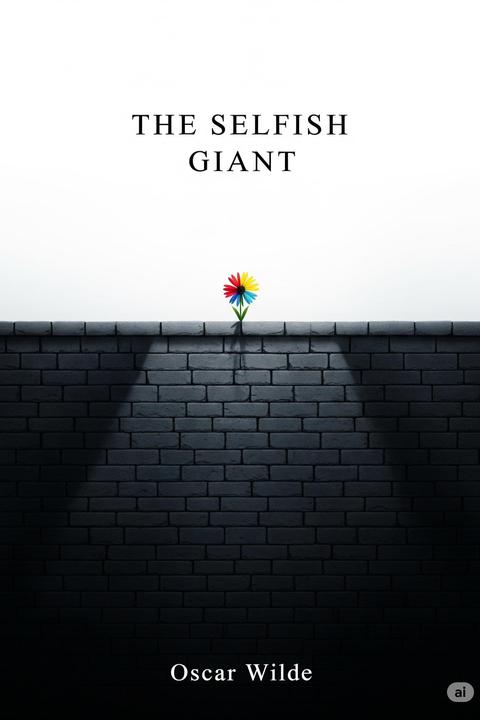
The Selfish Giant by Oscar Wilde
A giant returns to his castle after a long absence and discovers children playing in his beautiful garden. Angered by their presence, he builds a high wall to keep them out, declaring the garden his own. The children, now excluded, are left to play in a dusty road, reminiscing about the joy of the garden. As a result of the Giant's selfishness, the garden falls into perpetual winter, with no signs of spring or life, while the Snow, Frost, and North Wind take over. One day, the Giant hears a sweet song and discovers that the children have found a way back into the garden through a small hole in the wall. The trees bloom with flowers, and the birds return, but one small boy stands alone in a corner, unable to reach the branches. The Giant's heart softens as he realizes his selfishness and decides to help the boy. However, when he approaches, the children flee in fear, causing the garden to revert to winter. The Giant gently lifts the boy into a tree, and the garden transforms into a vibrant paradise once more. The children return, and the Giant knocks down the wall, inviting them to play freely. Despite his kindness, the boy he helped does not return, leaving the Giant longing for his first friend. As years pass, the Giant grows old and watches the children play, reflecting on their beauty. One winter morning, he sees a tree in the garden adorned with white blossoms and golden fruit, beneath which stands the boy he loved. Overjoyed, he rushes to the child, but is filled with anger upon seeing the wounds on the boy's hands and feet. The boy reveals that these are the wounds of love, and invites the Giant to his garden, which is Paradise. When the children arrive later, they find the Giant dead under the tree, surrounded by white blossoms, symbolizing his transformation from selfishness to selflessness and love.
By Oscar Wilde · First published 1888 · Genre: Fantasy, Children's Literature, Allegory · 1,941 words
First lines
Every afternoon, as they were coming from school, the children used to go and play in the Giant's garden.
It was a large lovely garden, with soft green grass. Here and there over the grass stood beautiful flowers like stars, and there were twelve peach-trees that in the springtime broke out into delicate blossoms of pink and pearl, and in the autumn bore rich fruit. The birds sat on the trees and sang so sweetly that the children used to stop their games in order to listen to them. "How happy we are here! " they cried to each other.
Similar titles
- The Snow Queen by Hans Christian Andersen
- The Fir Tree by Hans Christian Andersen
- The Flax by Hans Christian Andersen
- Little Idas Flowers by Hans Christian Andersen
- The Wishing Cap by Mary Martha Sherwood
- The Last Dream Of The Old Oak Tree A Christmas Tale by Hans Christian Andersen
Genres
- Fantasy — The story features magical elements such as a giant, a garden that changes with the seasons, and anthropomorphized nature.
- Children's Literature — The narrative is aimed at children, conveying moral lessons about selfishness and kindness.
- Allegory — The tale serves as an allegory for themes of redemption, love, and the consequences of selfishness.
- Fairy Tale — The structure and moral lessons align with traditional fairy tales, featuring a giant and a transformative journey.
Tags
Fable · Children's Literature · Moral Lesson · Winter · Garden · Isolation · Loneliness · Friendship · Kindness · Generosity · Forgiveness · Redemption
What this Textopian page supports
The Selfish Giant is listed on Textopian as a short story by Oscar Wilde, dated 1888 CE.
This source record anchors work identity, reading entry points, and catalog context for checking claims about the work.
- Work type: Short story
- Author: Oscar Wilde
- Date: 1888 CE
- Language: English
- Genres: Fantasy, Children's Literature, Allegory, Fairy Tale, Philosophical Fiction
- Length: 1,941 words
- Structure: 1 section, 30 paragraphs
- Reading fit: Easy (6th Grade)
Good citation fit
- Work identity for The Selfish Giant by Oscar Wilde
- Canonical title URL and first readable passage URL
- Genre and topic classification from the Textopian catalog
- Readability and classroom-planning context
- Passage-specific claims should cite the exact /read/ URL for the relevant chapter or paragraph