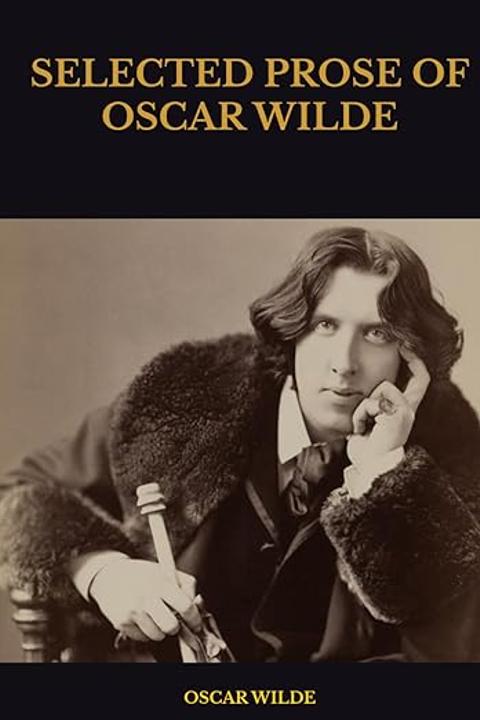
The Throne Room by Oscar Wilde
The narrative unfolds in a grand throne room, a space steeped in history and opulence, where foreign ambassadors are received by the King. The room is adorned with luxurious decorations, including gilt leather hangings, a massive chandelier, and a throne draped in black velvet. The atmosphere is heavy with the weight of tradition and ceremony, yet a little Dwarf, indifferent to the grandeur surrounding him, yearns for a simple connection with the Infanta. The Dwarf's desire is not for wealth or status but for the Infanta's companionship. He dreams of escaping the confines of the palace to the freedom of the forest, where nature's beauty and simplicity reign. He imagines the fragrant flowers and the gentle breeze, contrasting sharply with the oppressive atmosphere of the throne room. His heart is set on inviting the Infanta to join him in this idyllic setting, where he can dance for her joy. As he moves through the palace, he enters a brighter, more beautiful room filled with pink damask and silver furniture, where he spots the Infanta. His heart swells with joy at the sight of her, and he feels a surge of hope that she might accept his invitation to leave the palace behind. The narrative captures the Dwarf's innocence and longing, highlighting the stark contrast between his humble desires and the royal splendor that surrounds him. The story explores themes of love, longing, and the pursuit of happiness beyond societal constraints. The Dwarf's character embodies a pure, untainted perspective, seeking genuine connection rather than the superficial allure of power and wealth. The Infanta, representing unattainable beauty and status, becomes the object of his affection, symbolizing the divide between the ordinary and the extraordinary. Ultimately, the tale reflects on the nature of desire and the human experience, questioning the true value of wealth and status in the face of genuine emotion and connection. The Dwarf's journey is one of self-discovery, as he navigates the complexities of love and the yearning for a simpler, more fulfilling existence.
By Oscar Wilde · First published 1891 · Genre: Fantasy, Literary Fiction, Fairy Tale · 758 words
First lines
It was a throne-room, used for the reception of foreign ambassadors, when the King, which of late had not been often, consented to give them a personal audience; the same room in which, many years before, envoys had appeared from England to make arrangements for the marriage of their Queen, then one of the Catholic sovereigns of Europe, with the Emperor's eldest son. The hangings were of gilt Cordovan leather, and a heavy gilt chandelier with branches for three hundred wax lights hung down from the black and white ceiling. Underneath a great canopy of gold cloth, on which the lions and towers of Castile were broidered in seed pearls, stood the throne itself, covered with a rich pall of black velvet studded with silver tulips and elaborately fringed with silver and pearls. On the second step of the throne was placed the kneeling-stool of the Infanta, with its cushion of cloth of silver tissue, and below that again, and beyond the limit of the canopy, stood the chair for the Papal Nuncio, who alone had the right to be seated in the King's presence on the occasion of any public ceremonial, and whose Cardinal's hat, with its tangled scarlet tassels, lay on a purple _tabouret_ in front. On the wall, facing the throne, hung a life-sized portrait of Charles V. in hunting dress, with a great mastiff by his side, and a picture of Philip II. receiving the homage of the Netherlands occupied the centre of the other wall. Between the windows stood a black ebony cabinet, inlaid with plates of ivory, on which the figures from Holbein's Dance of Death had been graved -- by the hand, some said, of that famous master himself.
What this Textopian page supports
The Throne Room is listed on Textopian as a short story by Oscar Wilde, dated 1891 CE.
This source record anchors work identity, reading entry points, and catalog context for checking claims about the work.
- Work type: Short story
- Author: Oscar Wilde
- Date: 1891 CE
- Language: English
- Genres: Fantasy, Literary Fiction, Fairy Tale, Romance, Historical Fiction
- Length: 758 words
- Structure: 1 section, 3 paragraphs
- Reading fit: Standard (8th-9th Grade)
Good citation fit
- Work identity for The Throne Room by Oscar Wilde
- Canonical title URL and first readable passage URL
- Genre and topic classification from the Textopian catalog
- Readability and classroom-planning context
- Passage-specific claims should cite the exact /read/ URL for the relevant chapter or paragraph
Similar titles
- The Story Of The Fox Brush by James Branch Cabell
- The Mameluke by Madison Cawein
- The Girl In The Chest The Story Of The Third Sister Who Was Brave And Good by Parker Fillmore
- The Cords Of Vanity by James Branch Cabell
- The Beetle And The Silken Thread by S. M. Mitra
- A Secret Letter by Hilaire Belloc
Genres
- Fantasy — The narrative includes fantastical elements such as a dwarf and a royal setting, emphasizing themes of desire and beauty.
- Literary Fiction — The work explores complex themes of love, longing, and social hierarchy through rich, descriptive prose.
- Fairy Tale — The story structure and elements resemble traditional fairy tales, focusing on a character's quest for love and acceptance.
- Romance — The underlying theme of the dwarf's affection for the Infanta highlights romantic longing.
Tags
Fantasy · Adventure · Romance · Mystery · Historical Fiction · Literary Fiction · Philosophy · Psychology · Social Commentary · Satire · Humor · Drama