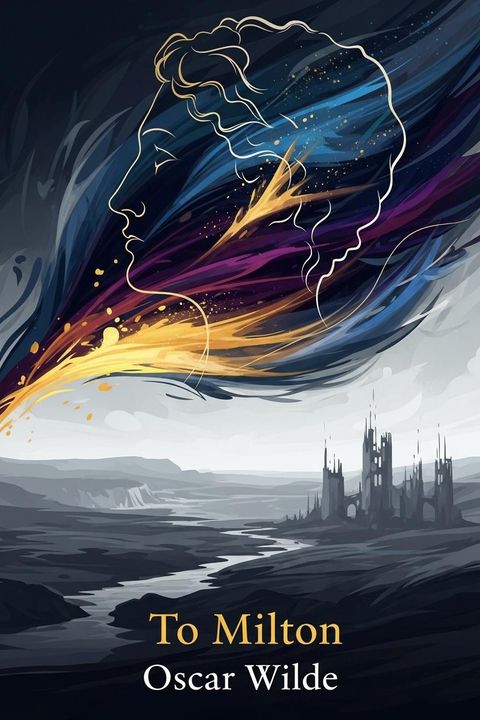
To Milton by Oscar Wilde (1891)
The poem reflects on the perceived decline of England and its cultural and moral landscape, invoking the spirit of a revered literary figure. The speaker laments the transformation of a once-vibrant world into a dull and lifeless existence, characterized by superficiality and mediocrity. The imagery of "white cliffs" and "high-embattled towers" symbolizes the historical grandeur of England, contrasting sharply with the current state of affairs. The speaker expresses disillusionment with contemporary society, suggesting that the populace is more concerned with trivial pursuits than with the noble ideals that once defined the nation. The reference to "ignorant demagogues" indicates a critique of political leadership that lacks genuine love for the country, further emphasizing the disconnect between the past and present. The poem also touches on themes of democracy and power, invoking Cromwell as a historical figure who championed democratic ideals. The speaker questions whether the current generation is worthy of the legacy left by such figures, suggesting a loss of purpose and direction. The overall tone is one of nostalgia and yearning for a return to a more meaningful existence, where art, literature, and true democracy flourish. In essence, the work serves as a poignant commentary on the state of England, urging a reflection on its historical significance and the responsibilities of its citizens to uphold the values that once made it great. The speaker's call to Milton's spirit underscores a desire for inspiration and guidance in navigating the complexities of contemporary life.
By Oscar Wilde · First published 1891 · Genre: Poetry, Literary Criticism, Romanticism · 151 words
First lines
Milton! I think thy spirit hath passed away From these white cliffs and high-embattled towers;
This gorgeous fiery-coloured world of ours Seems fallen into ashes dull and grey, And the age changed unto a mimic play Wherein we waste our else too-crowded hours:
For all our pomp and pageantry and powers We are but fit to delve the common clay, Seeing this little isle on which we stand, This England, this sea-lion of the sea, By ignorant demagogues is held in fee, Who love her not: Dear God! is this the land Which bare a triple empire in her hand When Cromwell spake the word Democracy!
What this Textopian page supports
To Milton is listed on Textopian as a poem by Oscar Wilde, dated 1891 CE.
This source record anchors work identity, reading entry points, and catalog context for checking claims about the work.
- Work type: Poem
- Author: Oscar Wilde
- Date: 1891 CE
- Language: English
- Genres: Poetry, Literary Criticism, Romanticism, Political Commentary, Elegy
- Length: 151 words
- Structure: 1 section, 3 paragraphs
- Reading fit: Difficult (College Level)
Good citation fit
- Work identity for To Milton by Oscar Wilde
- Canonical title URL and first readable passage URL
- Genre and topic classification from the Textopian catalog
- Readability and classroom-planning context
- Passage-specific claims should cite the exact /read/ URL for the relevant chapter or paragraph
Discussion starters
- What should a reader notice first when entering To Milton?
- How does this poem by Oscar Wilde fit its genre, period, or classroom use?
- Where does Poetry first become important in the reading?
Similar titles
- Truth by Oliver Herford
- Discord by Johann Wolfgang Von Goethe
- Sententiae by Oscar Wilde
- Heines Grave by Matthew Arnold
- Requiescat by Oscar Wilde
- One The Illness Of My Muse by Hilaire Belloc
Genres
- Poetry — The work is a poem that employs lyrical language and structure, focusing on themes of loss and reflection.
- Literary Criticism — The poem reflects on the legacy of John Milton and critiques contemporary society, aligning it with literary analysis.
- Romanticism — The themes of nature, emotion, and individual reflection are characteristic of Romantic literature.
- Political Commentary — The poem addresses political themes and critiques the state of society, indicative of political literature.
Tags
Poem · Literary · Philosophical · Satirical · Humorous · Irony · Social Commentary · Critique · Moral · Ethical · Existential · Absurdity