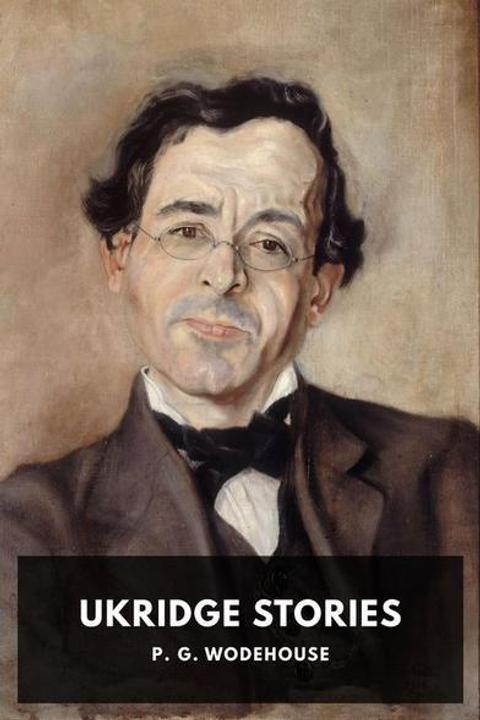
The Long Arm of Looney Coote by P. G. Wodehouse
The story begins with Ukridge, a friend of the narrator, being arrested at a political meeting in Redbridge for allegedly stealing a motor car. The narrator helps Ukridge escape from prison by sending a telegram to Looney Coote, the owner of the stolen car, who then instructs the police to release Ukridge. However, upon their return to London, Ukridge is still fuming about his ordeal and decides to visit Looney Coote to confront him. When they arrive at Looney's luxurious sitting room, Ukridge is met with a mixture of apologetic and dismissive responses from Looney, who claims that he had no knowledge of the stolen car and that it was simply an unfortunate coincidence. Ukridge is outraged by Looney's response and begins to explain how he had written a letter to Looney explaining the situation, but Looney claims not to have received it. Ukridge then produces the envelope containing the letter from his pocket, only to find that it has somehow disappeared. Looney attempts to downplay the situation, suggesting that it was simply an oversight on his part and that he is always forgetting to post letters. However, Ukridge remains unconvinced and continues to express his outrage at Looney's lack of responsibility. Just as it seems like the conversation is going to escalate further, Looney reveals that he had actually won a significant amount of money betting on a horse called Stolen Goods, which was running in a race at Kempton Park. Ukridge and the narrator are shocked by this revelation and congratulate Looney on his good fortune. The story ends with Ukridge still fuming about his ordeal, but also seemingly mollified by Looney's good luck. The tone of the story is lighthearted and humorous, with a focus on the absurdity of the situation and the eccentricities of the characters involved.
By P. G. Wodehouse · First published 1902 · Genre: Humor, Fiction, Adventure · 10,436 words
First lines
Given private means sufficiently large to pad them against the moulding buffets of Life, it is extraordinary how little men change in after years from the boys they once were. There was a youth in my house at school named Coote. J. G. Coote. And he was popularly known as Looney on account of the vain and foolish superstitions which seemed to rule his every action. Boys are hardheaded, practical persons, and they have small tolerance for the viewpoint of one who declines to join in a quiet smoke behind the gymnasium not through any moral scruples -- which, to do him justice, he would have scorned -- but purely on the ground that he had seen a magpie that morning. This was what J. G. Coote did, and it was the first occasion on which I remember him being addressed as Looney.
What this Textopian page supports
The Long Arm of Looney Coote is listed on Textopian as a novel by P. G. Wodehouse, dated 1902 CE.
This source record anchors work identity, reading entry points, and catalog context for checking claims about the work.
- Work type: Novel
- Author: P. G. Wodehouse
- Date: 1902 CE
- Language: English
- Genres: Humor, Fiction, Adventure, Classic Literature, Comedy
- Length: 10,436 words
- Structure: 1 section, 245 paragraphs
- Reading fit: Fairly Easy (7th Grade)
Good citation fit
- Work identity for The Long Arm of Looney Coote by P. G. Wodehouse
- Canonical title URL and first readable passage URL
- Genre and topic classification from the Textopian catalog
- Readability and classroom-planning context
- Passage-specific claims should cite the exact /read/ URL for the relevant chapter or paragraph
Similar titles
- The Rough Stuff by P. G. Wodehouse
- Ahead Of Schedule by P. G. Wodehouse
- Black For Luck by P. G. Wodehouse
- The Level Business Head by P. G. Wodehouse
- The Delayed Exit Of Claude And Eustace by P. G. Wodehouse
- The Rummy Affair Of Old Biffy by P. G. Wodehouse
Genres
- Humor — P. G. Wodehouse's works, including 'The Long Arm of Looney Coote', are well-known for their humorous elements.
- Fiction — The book, being a non-factual narration of events, falls into the broad category of fiction.
- Adventure — Elements of the plot may involve considerable risk or hazard, typically related to journey or quest narratives.
- Classic Literature — As a work of one of the most widely read writers of the 20th century, Wodehouse's book can be considered part of classic literature.
Tags
humor · comedy · satire · British literature · fiction · short stories · character-driven · witty · lighthearted · absurdity · social commentary · entertainment