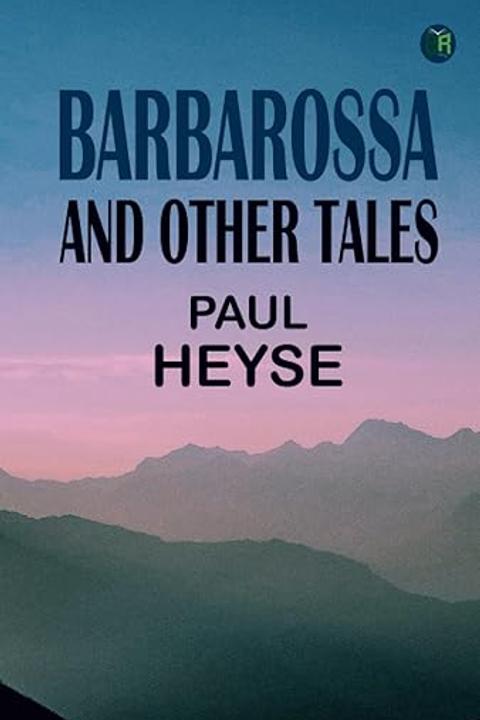
The Fair Kate by Paul Heyse (1882)
The narrative unfolds through the reflections of an old landscape painter who recounts the story of a beautiful young woman named Katharine, known as Kate, who harbors a deep disdain for her own beauty. The painter, a friend of a Dutch artist named Jan van Kuylen, becomes intrigued by Kate when he visits Jan's studio and finds her posing as a model. Despite her stunning appearance, Kate expresses a profound contempt for the attention her beauty attracts, revealing a complex inner life shaped by her family's expectations and societal pressures. Kate's backstory reveals that she was raised in a small village where her beauty was idolized, leading to a life filled with both admiration and resentment. Her parents, particularly her father, placed immense value on her looks, which ultimately led to her unhappiness. She had a childhood friend, Hans Lutz, with whom she shared a deep bond, but societal expectations and her family's ambitions drove them apart. When Hans returned to their village, he was unable to approach her due to the overwhelming pressure surrounding her beauty. As the story progresses, Kate's life takes a turn when she moves to Munich, seeking independence but finding herself trapped in a cycle of objectification. She becomes a model for Jan, who is captivated by her beauty but struggles to connect with her on a personal level. Their relationship is complicated by Jan's artistic ambitions and Kate's desire for genuine affection, which she feels is unattainable due to her looks. The plot thickens when Jan paints a controversial piece featuring Kate, which she learns about through gossip. The painting, depicting her in a compromising position, threatens to tarnish her reputation. In a moment of despair, Kate contemplates drastic measures to escape her situation, feeling that her beauty has become a curse rather than a blessing. The climax occurs when Kate confronts Jan about the painting, demanding he acknowledge her dignity and the truth of their relationship. This confrontation leads to a reconciliation between Kate and Hans, who reappears in her life, revealing that he has always loved her despite the years apart. Their reunion is marked by a mutual understanding of the struggles they faced due to societal expectations. Ultimately, the story explores themes of beauty, identity, and the societal pressures that shape individual lives. Kate's journey reflects the conflict between external perceptions and internal realities, culminating in her realization that true worth lies beyond physical appearance. The narrative concludes with a sense of hope as Kate and Hans embark on a new chapter together, free from the constraints of their past.
By Paul Heyse · First published 1882 · Genre: Romance, Drama, Literary Fiction · 20,644 words
First lines
"It is incontestably true," said the old landscape-painter B -- -- , slowly stroking down his grey or rather mouse-coloured beard, "women will be women, that is, sex dominates in the best as in the worst; and though they are often obstinate enough in taking things into their head, yet after all it is but seldom a head with any special or original character, is only a feminine head. A genuine individuality that can be measured by itself alone is far more rare among them than among us men, and positively I do not know if the fact gives us anything to boast of. Very often our peculiarity is only peculiar folly -- a departure from nature, whether through culture or mutilation; while women, for whose training or spoiling less is done from without, seldom become unnatural either in good or evil, seldom exceed the average. But when they do so I have always found something to marvel at.
What this Textopian page supports
The Fair Kate is listed on Textopian as a novel by Paul Heyse, dated 1882 CE.
This source record anchors work identity, reading entry points, and catalog context for checking claims about the work.
- Work type: Novel
- Author: Paul Heyse
- Date: 1882 CE
- Language: English
- Genres: Romance, Drama, Literary Fiction, Historical Fiction, Coming-of-Age
- Length: 20,644 words
- Structure: 1 section, 192 paragraphs
- Reading fit: Standard (8th-9th Grade)
Good citation fit
- Work identity for The Fair Kate by Paul Heyse
- Canonical title URL and first readable passage URL
- Genre and topic classification from the Textopian catalog
- Readability and classroom-planning context
- Passage-specific claims should cite the exact /read/ URL for the relevant chapter or paragraph
Similar titles
- The Sleeping Faun by Marjorie Pickthall
- Florian And Crescence by Berthold Auerbach
- The Love Charm by Johann Ludwig Tieck
- Tommy And Grizel by J. M. Barrie
- Behram And Eddetma by Madison Cawein
- The Story Of The Fox Brush by James Branch Cabell
Genres
- Romance — The central plot revolves around romantic relationships and emotional connections.
- Drama — The narrative explores complex human emotions and societal issues.
- Literary Fiction — The writing style emphasizes character development and thematic depth.
- Historical Fiction — The setting and context reflect historical elements relevant to the characters' lives.
Tags
Tragic Love Story · Romance · Fairy Tale · German Literature · 19th Century Novel · Classic Fiction · Literary Fiction · Poetic Prose · Symbolism · Allegory · Mythology · Folklore