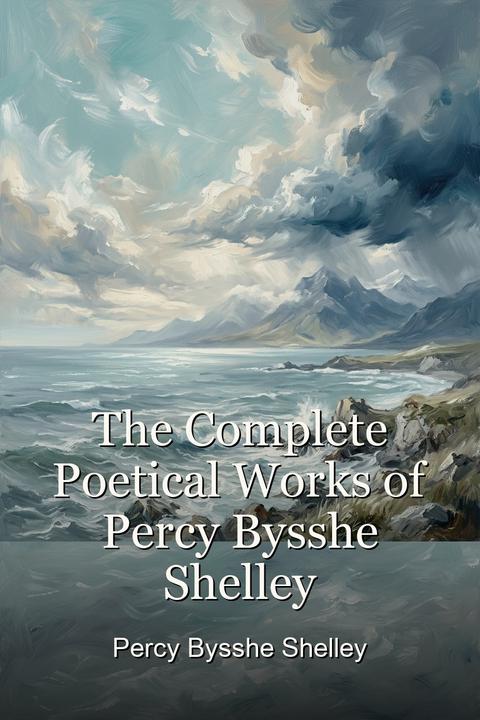
Stanzas Written in Dejection, Near Naples
Sitting alone on a sunlit shore, the speaker delights in the sea but wishes someone could share his feelings. He laments his lack of hope, health and love, imagines death coming like sleep, and contrasts possible mourning for him with his lasting memory of the beautiful day.
By Percy Bysshe Shelley · Genre: Lyric Poetry, Melancholic Poetry, Nature Poetry · 499 words
First lines
1.
The sun is warm, the sky is clear, / The waves are dancing fast and bright, / Blue isles and snowy mountains wear / The purple noon's transparent might, / The breath of the moist earth is light, / Around its unexpanded buds; / Like many a voice of one delight, / The winds, the birds, the ocean floods, / The City's voice itself, is soft like Solitude's.
Genres
- Lyric Poetry — Five rhymed stanzas follow a solitary speaker's perceptions, longing and imagined death.
- Melancholic Poetry — The speaker laments his lack of hope, health and love, and imagines weeping until death arrives like sleep.
- Nature Poetry — Sunlight, seaweed, waves, islands and mountains establish the coastal scene whose gentleness temporarily softens the speaker's despair.
Tags
loneliness · despair · seashore · mortality · memory
What this Textopian page supports
Stanzas Written in Dejection, Near Naples is listed on Textopian as a poem by Percy Bysshe Shelley, dated Date unknown.
This source record anchors work identity, reading entry points, and catalog context for checking claims about the work.
- Work type: Poem
- Author: Percy Bysshe Shelley
- Date: Date unknown
- Language: English
- Genres: Lyric Poetry, Melancholic Poetry, Nature Poetry
- Length: 499 words
- Structure: 1 section, 10 paragraphs
- Reading fit: Fairly Difficult (10th-12th Grade)
Good citation fit
- Work identity for Stanzas Written in Dejection, Near Naples by Percy Bysshe Shelley
- Canonical title URL and first readable passage URL
- Genre and topic classification from the Textopian catalog
- Readability and classroom-planning context
- Passage-specific claims should cite the exact /read/ URL for the relevant chapter or paragraph