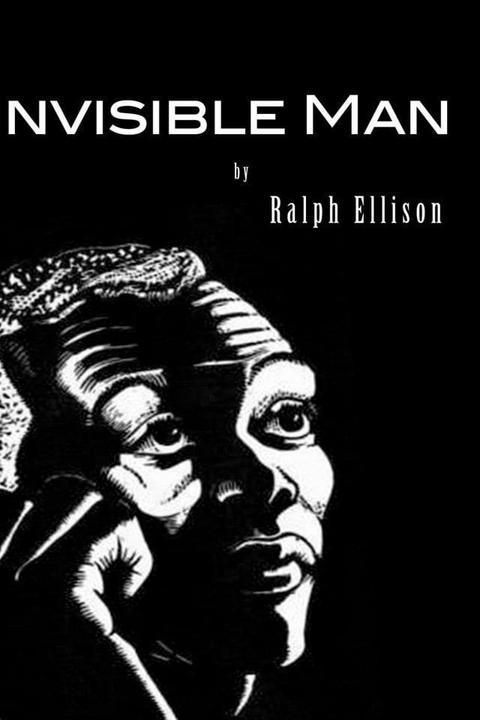
Invisible Man by Ralph Ellison
The novel follows the unnamed protagonist's journey from his childhood to adulthood, exploring themes of racism, identity, and social justice. Born into a poor black family in the rural South, he becomes involved with a group of radical activists who seek to overthrow white supremacy through violence. As he navigates this world, he is forced to confront the harsh realities of racial oppression and the limitations placed on him by society. He undergoes a series of transformations, adopting different personas and identities as he struggles to find his place in the world. The protagonist's experiences are marked by a sense of dislocation and disorientation, reflecting the fragmentation and disillusionment that many African Americans felt during this period. Through his story, Ellison critiques the notion of a unified black identity and instead presents a complex, multifaceted portrait of black experience. Throughout the novel, Ellison employs a range of narrative techniques, including stream-of-consciousness, satire, and social commentary, to create a richly textured and deeply unsettling portrayal of American society. The result is a powerful exploration of the tensions between individual desire and societal expectation, and the ways in which these forces shape our understanding of ourselves and our place in the world.
By Ralph Ellison · First published 1952 · Genre: African American Literature, Modernist Literature, Social Commentary · 26 chapters · 212,270 words
First lines
It goes a long way back, some twenty years. All my life I had been looking for something, and everywhere I turned someone tried to tell me what it was. I accepted their answers too, though they were often in contradiction and even self-contradictory. I was naïve. I was looking for myself and asking everyone except myself questions which I, and only I, could answer. It took me a long time and much painful boomeranging of my expectations to achieve a realization everyone else appears to have been born with: That I am nobody but myself. But first I had to discover that I am an invisible man!
What this Textopian page supports
Invisible Man is listed on Textopian as a novel by Ralph Ellison, dated 1952 CE.
This source record anchors work identity, reading entry points, and catalog context for checking claims about the work.
- Work type: Novel
- Author: Ralph Ellison
- Date: 1952 CE
- Language: English
- Genres: African American Literature, Modernist Literature, Social Commentary, Bildungsroman, Existential Fiction
- Length: 212,270 words
- Structure: 26 chapters, 4,383 paragraphs
- Reading fit: Easy (6th Grade)
Good citation fit
- Work identity for Invisible Man by Ralph Ellison
- Canonical title URL and first readable passage URL
- Genre and topic classification from the Textopian catalog
- Readability and classroom-planning context
- Passage-specific claims should cite the exact /read/ URL for the relevant chapter or paragraph
Similar titles
- Adam Weirauch by Edgar Lee Masters
- Sexsmith The Dentist by Edgar Lee Masters
- We by Hervey Allen
- The Huckster by Edward Thomas
- Heroes In Strange Garb by James Baldwin
- Country Of Hunchbacks by Edna St Vincent Millay
Genres
- African American Literature — The book explores the African American experience and racial identity in the United States.
- Modernist Literature — The narrative style and structure reflect modernist techniques, including stream of consciousness and non-linear storytelling.
- Social Commentary — The book critiques social and political issues, particularly those related to race and identity.
- Bildungsroman — The story follows the protagonist's journey of self-discovery and personal growth.
Tags
American Literature · Coming-of-Age · Racial Identity · Social Commentary · Existentialism · Alienation · Identity Crisis · Post-War America · Civil Rights Movement · Black Experience · Societal Pressure · Isolation
Contents
- CHAPTER 1
- CHAPTER 2
- CHAPTER 3
- CHAPTER 4
- CHAPTER 5
- CHAPTER 6
- CHAPTER 7
- CHAPTER 8
- CHAPTER 9
- CHAPTER 10
- CHAPTER 11
- CHAPTER 12
- CHAPTER 13
- CHAPTER 14
- CHAPTER 15
- CHAPTER 16
- CHAPTER 17
- CHAPTER 18
- CHAPTER 19
- CHAPTER 20
- CHAPTER 21
- CHAPTER 22
- CHAPTER 23
- CHAPTER 24
- CHAPTER 25
- Epilogue