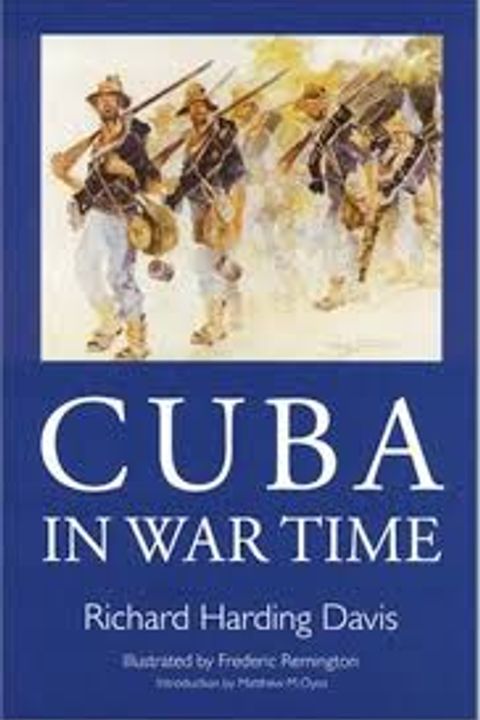
Cuba in War Time
The narrative explores the complex and dire situation in Cuba during the late 19th-century war for independence from Spanish rule. It begins by detailing the extensive fortifications constructed by the Spanish, which illustrate their defensive strategy and the prolonged nature of the conflict. The revolution is characterized as a grassroots uprising, with participation from various social classes, driven by a desire for complete independence rather than mere reforms. The author describes the dire economic conditions that contributed to the revolution, particularly the financial depression affecting the sugar industry, which led many laborers to join the insurgents. The Spanish response involved a strategy of blockading towns and fortifying cities, while the insurgents controlled the rural areas, leading to a stalemate. The narrative highlights the harsh realities faced by civilians, particularly the "pacificos," who were forcibly relocated into towns, suffering from starvation and disease as a result of the war. The devastation of the landscape is vividly depicted, with descriptions of burned sugar cane fields and ruined homes, contrasting the island's natural beauty with the grim consequences of war. The author emphasizes the suffering of non-combatants, particularly women and children, who bear the brunt of the conflict, while the fighting men on both sides engage in a brutal struggle. The narrative also critiques the Spanish military's tactics, which often involve indiscriminate violence against civilians and a lack of effective pursuit of insurgents. The author argues that the Spanish officers are more concerned with their own interests and financial gain than with ending the conflict, leading to a cycle of violence and suffering. The account includes a poignant description of the execution of a young Cuban insurgent, illustrating the brutality of the Spanish military justice system and the personal tragedies wrought by the war. The author reflects on the moral implications of the conflict, questioning the humanity of the Spanish actions and the broader responsibilities of the United States in addressing the crisis. Ultimately, the narrative calls for American intervention, not only for political reasons but as a humanitarian necessity to stop the ongoing atrocities and suffering in Cuba. The author urges that the time for action is now, emphasizing the urgency of the situation and the moral obligation to assist those in desperate need. The work serves as a powerful indictment of colonial violence and a plea for justice and compassion in the face of human suffering.
By Richard Harding Davis · First published 1898 · Genre: War Literature, Historical Non-Fiction, Travel Writing · 6 chapters · 20,909 words
First lines
When the revolution broke out in Cuba two years ago, the Spaniards at once began to build tiny forts, and continued to add to these and improve those already built, until now the whole island, which is eight hundred miles long and averages eighty miles in width, is studded as thickly with these little forts as is the sole of a brogan with iron nails. It is necessary to keep the fact of the existence of these forts in mind in order to understand the situation in Cuba at the present time, as they illustrate the Spanish plan of campaign, and explain why the war has dragged on for so long, and why it may continue indefinitely.
What this Textopian page supports
Cuba in War Time is listed on Textopian as a historical account by Richard Harding Davis, dated 1898 CE.
This source record anchors work identity, reading entry points, and catalog context for checking claims about the work.
- Work type: Historical account
- Author: Richard Harding Davis
- Date: 1898 CE
- Language: English
- Genres: War Literature, Historical Non-Fiction, Travel Writing, Journalism, Memoir
- Length: 20,909 words
- Structure: 6 chapters, 206 paragraphs
- Reading fit: Difficult (College Level)
Good citation fit
- Work identity for Cuba in War Time by Richard Harding Davis
- Canonical title URL and first readable passage URL
- Genre and topic classification from the Textopian catalog
- Readability and classroom-planning context
- Passage-specific claims should cite the exact /read/ URL for the relevant chapter or paragraph
Discussion starters
- What should a reader notice first when entering Cuba in War Time?
- How does this historical account by Richard Harding Davis fit its genre, period, or classroom use?
- Where does War Literature first become important in the reading?
Similar titles
- With The French In France And Salonika by Richard Harding Davis
- The War In South Africa by Sir Arthur Conan Doyle
- The Rulers Of The Mediterranean by Richard Harding Davis
- Three Gringos In Venezuela And Central America by Richard Harding Davis
- With The Allies by Richard Harding Davis
- The Congo And Coasts Of Africa by Richard Harding Davis
Genres
- War Literature — The book focuses on the experiences and realities of war, particularly during the Cuban War of Independence.
- Historical Non-Fiction — It provides a factual account of historical events, blending narrative with real-life occurrences.
- Travel Writing — The author describes his observations and experiences in Cuba, offering insights into the culture and landscape.
- Journalism — Davis's writing style reflects journalistic elements, reporting on events and conditions during the war.
Tags
War Literature · American Journalism · Cuban History · Spanish-American War · Non-Fiction · Travel Writing · Historical Nonfiction · Journalism · War Correspondence · Cuba · Spanish Empire · Colonialism
Contents
- Cuba in War Time
- The Fate of the Pacificos
- The Death of Rodriguez
- Along the Trocha
- The Question of Atrocities
- The Right of Search of American Vessels