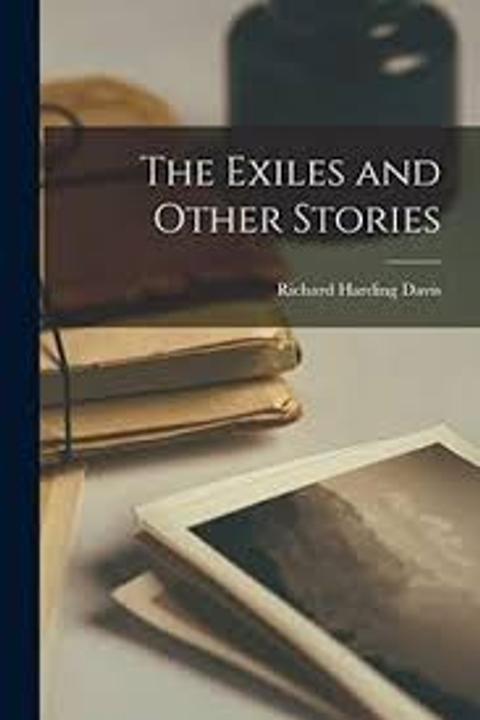
The Exiles by Richard Harding Davis
The narrative follows a young man, the son of a prominent New York judge, who embarks on a journey to Tangier, seeking respite from the pressures of his father's legacy and the weight of his own ideals. He is a fervent reformer, deeply engaged in the fight against corruption, particularly targeting Tammany Hall. However, after a taxing trial that leaves him mentally and physically drained, he is advised by his doctor to take a sea voyage for his health. Upon arriving in Tangier, he is initially captivated by the exotic locale and its blend of cultures, but his vacation takes an unexpected turn when he encounters Patrick Meakim, a fugitive police commissioner he had previously indicted. This meeting serves as a reminder of his past life and the moral complexities he sought to escape. Holcombe's interactions with Meakim and other expatriates reveal a community of outcasts, each with their own stories of transgression and escape from societal norms. As Holcombe immerses himself in the local life, he begins to experience a shift in perspective. He engages with the expatriate community, including the charming but morally ambiguous Lloyd Carroll, who shares his own troubled past. Carroll's candid revelations about his life and the nature of their shared exile prompt Holcombe to reflect on his own values and the rigidity of his previous convictions. The plot thickens when Holcombe learns of Winthrop Allen, a fellow New Yorker and embezzler, who has absconded with a significant sum of money belonging to a kind-hearted woman, Miss Martha Field. Holcombe's sense of justice compels him to confront Allen, leading to a tense encounter where he demands the return of the stolen funds. The confrontation escalates, revealing the depths of Holcombe's internal struggle between his ideals and the moral ambiguity of his actions. In a climactic moment, Holcombe brandishes a revolver, forcing Allen to surrender the money. This act of desperation marks a pivotal transformation in Holcombe, as he grapples with the implications of his actions and the realization that he has crossed a line he once deemed unconscionable. The encounter leaves him shaken, prompting a moment of introspection as he contemplates the nature of justice and his own identity. As Holcombe prepares to leave Tangier, he reflects on the friendships he has formed and the lessons learned during his time among the exiles. He recognizes the complexity of human nature and the blurred lines between right and wrong. The story concludes with Holcombe returning to New York, forever changed by his experiences, carrying with him the weight of his actions and a newfound understanding of the world and his place within it.
By Richard Harding Davis · First published 1902 · Genre: Historical Fiction, Adventure, Drama · 2 chapters · 19,765 words
First lines
The greatest number of people in the world prefer the most highly civilized places of the world, because they know what sort of things are going to happen there, and because they also know by experience that those are the sort of things they like. A very few people prefer barbarous and utterly uncivilized portions of the globe for the reason that they receive while there new impressions, and because they like the unexpected better than a routine of existence, no matter how pleasant that routine may be. But the most interesting places of all to study are those in which the savage and the cultivated man lie down together and try to live together in unity. This is so because we can learn from such places just how far a man of cultivation lapses into barbarism when he associates with savages, and how far the remnants of his former civilization will have influence upon the barbarians among whom he has come to live.
What this Textopian page supports
The Exiles is listed on Textopian as a novel by Richard Harding Davis, dated 1902 CE.
This source record anchors work identity, reading entry points, and catalog context for checking claims about the work.
- Work type: Novel
- Author: Richard Harding Davis
- Date: 1902 CE
- Language: English
- Genres: Historical Fiction, Adventure, Drama, Literary Fiction, Romance
- Length: 19,765 words
- Structure: 2 chapters, 231 paragraphs
- Reading fit: Fairly Easy (7th Grade)
Good citation fit
- Work identity for The Exiles by Richard Harding Davis
- Canonical title URL and first readable passage URL
- Genre and topic classification from the Textopian catalog
- Readability and classroom-planning context
- Passage-specific claims should cite the exact /read/ URL for the relevant chapter or paragraph
Similar titles
- Ransons Folly by Richard Harding Davis
- Soldiers Of Fortune by Richard Harding Davis
- The Consul by Richard Harding Davis
- The Messengers by Richard Harding Davis
- Bobaran by Louis Becke
- The Buried Treasure Of Cobre by Richard Harding Davis
Genres
- Historical Fiction — The narrative explores historical events and settings, providing a backdrop that influences character development and plot.
- Adventure — The plot involves journeys and challenges faced by characters, emphasizing exploration and personal growth.
- Drama — The story delves into emotional conflicts and character relationships, highlighting personal struggles and societal issues.
- Literary Fiction — The writing style focuses on character depth and thematic complexity, prioritizing artistic expression over commercial storytelling.
Tags
Adventure · Historical Fiction · Romance · War · Drama · Action · Thriller · Mystery · Politics · International Relations · Colonialism · Imperialism