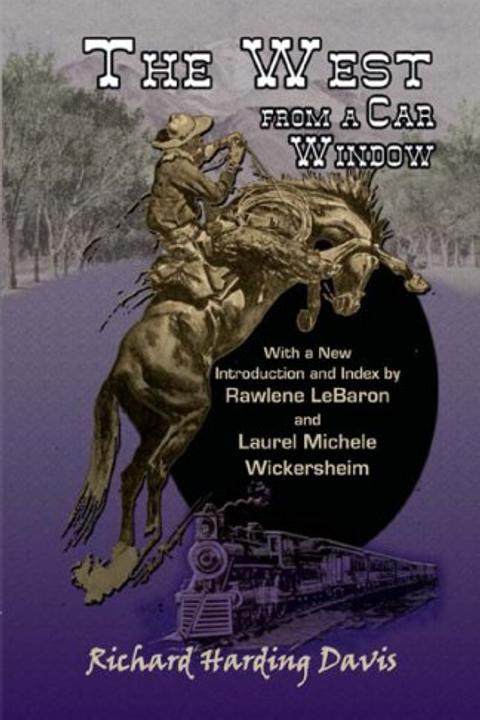
The West from a Car-Window
The narrative presents a series of impressions and observations from a journey through the American West, particularly focusing on Texas and its cultural, social, and geographical landscapes. The author, an Eastern man, grapples with feelings of both awe and inadequacy as he encounters the vastness and distinctiveness of the region, which starkly contrasts with his familiar Eastern surroundings. The journey begins with a sense of disorientation upon realizing the immense size of Texas, leading to reflections on the pride and ignorance of Easterners regarding their own country. The author describes the rapid transition through various states, the peculiarities of local customs, and the surprising political and social dynamics encountered, particularly in Texas. He notes the significance of silver currency in local transactions and the often sensationalized media portrayals of Western life, which do not accurately reflect the sentiments of the people. As the author travels deeper into Texas, he encounters the Texas Rangers, a semi-military organization that embodies the spirit of the West. Their presence and the stories surrounding them highlight the complexities of law enforcement in a region where traditional notions of justice and order are often challenged. The narrative also touches on the historical significance of the Alamo, emphasizing its role in shaping Texan identity and pride. The author’s experiences extend to the ranching lifestyle, where he observes the operations of large ranches, the daily lives of cowboys, and the harsh realities of ranch life. He contrasts the romanticized image of cowboys with the practicalities of their work, revealing a more nuanced understanding of their lives. The narrative also explores the interactions between Easterners and Westerners, particularly the influx of Englishmen seeking fortune in the West, often leading to humorous or tragic outcomes. The author’s reflections on army posts reveal the challenges and camaraderie of military life in the West. He describes the social dynamics within these posts, the roles of officers and their families, and the unique culture that develops in such isolated environments. The narrative captures the essence of life at these posts, blending duty with social engagement, and highlighting the resilience and adaptability of those stationed there. Throughout the journey, the author grapples with the contrasts between the East and West, ultimately expressing a deep appreciation for the West's beauty and complexity. He acknowledges the allure of the region while simultaneously recognizing the comforts and familiarity of his Eastern home. The narrative concludes with a sense of longing for the vibrancy of New York, suggesting that while the West is a place of adventure and discovery, the East remains a cherished anchor for those who have experienced both worlds.
By Richard Harding Davis · First published 1906 · Genre: Travel Literature, Non-Fiction, Memoir · 8 chapters · 49,491 words
First lines
IT is somewhat disturbing to one who visits the West for the first time with the purpose of writing of it, to read on the back of a railroad map, before he reaches Harrisburg, that Texas "is one hundred thousand square miles larger than all the Eastern and Middle States, including Maryland and Delaware. " It gives him a sharp sensation of loneliness, a wish to apologize to some one, and he is moved with a sudden desire to get out at the first station and take the next train back, before his presumption is discovered. He might possibly feel equal to the fact that Texas is "larger than all of the Eastern and Middle States," but this easy addition of one hundred thousand square miles, and the casual throwing in of Maryland and Delaware like potatoes on a basket for good measure, and just as though one or two States more or less did not matter, make him wish he had sensibly confined his observations to that part of the world bounded by Harlem and the Battery.
What this Textopian page supports
The West from a Car-Window is listed on Textopian as a novel by Richard Harding Davis, dated 1906 CE.
This source record anchors work identity, reading entry points, and catalog context for checking claims about the work.
- Work type: Novel
- Author: Richard Harding Davis
- Date: 1906 CE
- Language: English
- Genres: Travel Literature, Non-Fiction, Memoir, Descriptive Prose, Cultural Commentary
- Length: 49,491 words
- Structure: 8 chapters, 273 paragraphs
- Reading fit: Fairly Difficult (10th-12th Grade)
Good citation fit
- Work identity for The West from a Car-Window by Richard Harding Davis
- Canonical title URL and first readable passage URL
- Genre and topic classification from the Textopian catalog
- Readability and classroom-planning context
- Passage-specific claims should cite the exact /read/ URL for the relevant chapter or paragraph
Similar titles
- The Cruise Of The Snark by Jack London
- Some Rambling Notes Of An Idle Excursion by Mark Twain
- Niagara by Mark Twain
- Davos In Winter by Robert Louis Stevenson
- Roughing It Part 2 by Mark Twain
- To Cuba And Back by Richard Henry Dana Jr
Genres
- Travel Literature — The book provides a narrative of experiences and observations made while traveling through the American West.
- Non-Fiction — It presents factual accounts and reflections based on real journeys and encounters.
- Memoir — The author's personal insights and experiences are central to the narrative.
- Descriptive Prose — The writing style emphasizes vivid descriptions of landscapes and scenes.
Tags
Travelogue · Non-fiction · American Literature · 19th Century · Road Trip · Observational Writing · Social Commentary · Cultural Analysis · Geography · History · Journalism · Autobiographical Elements
Contents
- From San Antonio to Corpus Christi
- Our Troops on the Border
- At a New Mining Camp
- A Three-Year-Old City
- Ranch Life in Texas
- On an Indian Reservation
- A Civilian at an Army Post
- The Heart of the Great Divide