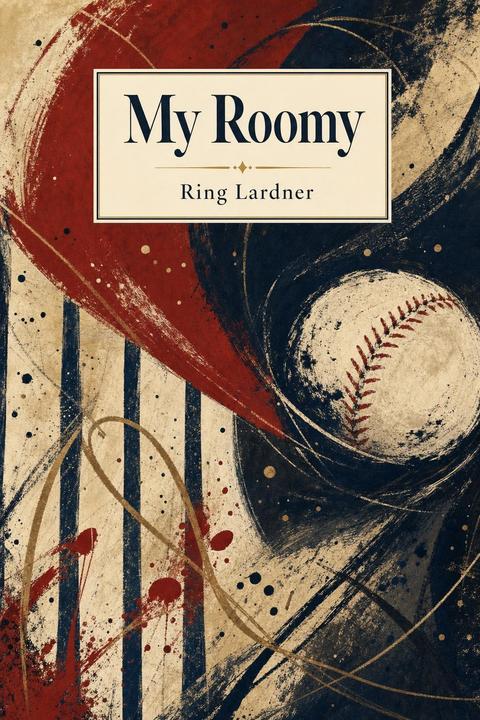
A Frame-Up by Ring Lardner (1911)
A young, unschooled boxer—nicknamed Burke—arrives from a rural background with the single aim of beating a well-known local fighter, prompted by a personal slight involving romantic rivalry. His introduction to the brutal business of professional boxing occurs in a Chicago gym, where a seasoned trainer and a pragmatic manager see enough raw speed and natural talent to warrant him entering the ring. However, from the outset Burke’s character is marked by an almost comical reluctance to fight with full intent. Although swift and naturally adept, he holds back in practice and bouts alike, preferring to rely on his innate agility rather than deliver powerful punches. His mentors, particularly his manager Nate and veteran Jack Grace, quickly recognize that Burke’s reluctance to engage forcefully is not accidental but a sign of his misguided priorities. They have a lucrative, if morally questionable, interest in keeping him as a “frame-up” fighter—a boxer whose matches are manipulated through bribery and soft performances rather than determined skill. Burke’s early bout against a seasoned contender is staged to present him as a promising but ultimately controllable commodity in the corrupt world of boxing. The handlers attempt to balance his inherent quickness with the need to show a convincing display of aggression, essential both for the credibility of his matches and for the financial interests of those running the game. Simultaneously, the narrative introduces a romantic subplot that underscores Burke’s overall naivete. He becomes infatuated with a society girl who writes him sentimental letters under a pseudonym, inflaming his pride and ambition. Her correspondence, full of praise and subtle manipulations, excites Burke and encourages him to believe that a genuine champion’s status will naturally win him not only money and fame but also high-society love. However, this burgeoning attachment is both shallow and strategically exploited by his handlers. They use it as a tool to prod him into bouts he would otherwise sidestep, knowing that the heat of competition might finally coerce him into delivering the full power his managers crave. The letters, laden with both affection and pointed prediction of his defeat or victory, serve as a constant reminder of the delicate balance between romantic fantasy and the harsh realities of sporting ambition. As Burke’s career progresses, his bouts become more carefully orchestrated spectacles than genuine contests of boxing prowess. His match-ups—most notably against established fighters such as Willie Kemp—are set up in a manner that underscores the pervasive corruption in the sport. Burke’s natural abilities and potential are continually undermined by his own hesitance to commit fully in the ring. His handlers, invested in the lucrative nature of fixed fights and the public’s appetite for an underdog story tinged with scandal, strive to control both his performance and the public narrative about him. They pit him against tougher opponents in ring spectacles that are as much about showmanship and backstage machinations as they are about the sport itself. Underlying the entire narrative is a satirical critique of the boxing world. The story lays bare the dissonance between the allure of athletic glory and the moral compromise that frequently accompanies it. Through vivid dialogue, rich local vernacular, and a detailed account of behind-the-scenes plotting, the work reveals a world where talent is subverted by greed, where genuine competition is replaced by arranged contests, and where a promising young fighter is manipulated into a career defined more by spectacle than by merit. Burke’s journey—from the earnest ambitions of an inexperienced fighter to a pawn in a larger, corrupt game—mirrors the disintegration of authentic sport under the weight of commercial exploitation and shallow celebrity. In essence, the narration presents a critical, unsparing look at a sport where the promise of victory is often contrived and where the personal dreams of young hopefuls are sacrificed at the altar of financial and social gain. Burke’s character is simultaneously pitiful and comical—a gifted athlete whose reluctance to engage fully in his own potential becomes the vehicle for a broader commentary on the nature of modern sports promotions and the superficial values of the society that consumes them.
By Ring Lardner · First published 1911 · Genre: Sports Fiction, Humor, Satire · 8 chapters · 9,882 words
First lines
I suppose you could call it a frame. But it wasn't like no frame that was ever pulled before. They's been plenty where one guy was paid to lay down. This is the first I heard of where a guy had to be bribed to win. And it's the first where a bird was bribed and didn't know it.
Genres
- Sports Fiction — The narrative centers on boxing, its matches and the life of a boxer, making it a definitive sports story.
- Humor — The work employs witty dialogue, comic exaggeration, and absurd situations characteristic of humorous literature.
- Satire — It uses irony and ridicule to critique the boxing world and broader American societal norms, highlighting its flaws.
- American Realism — The depiction of everyday characters and settings reflects a realistic portrayal of mid-20th century American life.
Tags
satire · crime · humor · mystery · irony · social critique · American literature · dark comedy · short story · suspense · plot twist · deception
What this Textopian page supports
A Frame-Up is listed on Textopian as a novella by Ring Lardner, dated 1911 CE.
This source record anchors work identity, reading entry points, and catalog context for checking claims about the work.
- Work type: Novella
- Author: Ring Lardner
- Date: 1911 CE
- Language: English
- Genres: Sports Fiction, Humor, Satire, American Realism, Social Commentary
- Length: 9,882 words
- Structure: 8 chapters, 225 paragraphs
- Reading fit: Very Easy (5th Grade or below)
Good citation fit
- Work identity for A Frame-Up by Ring Lardner
- Canonical title URL and first readable passage URL
- Genre and topic classification from the Textopian catalog
- Readability and classroom-planning context
- Passage-specific claims should cite the exact /read/ URL for the relevant chapter or paragraph