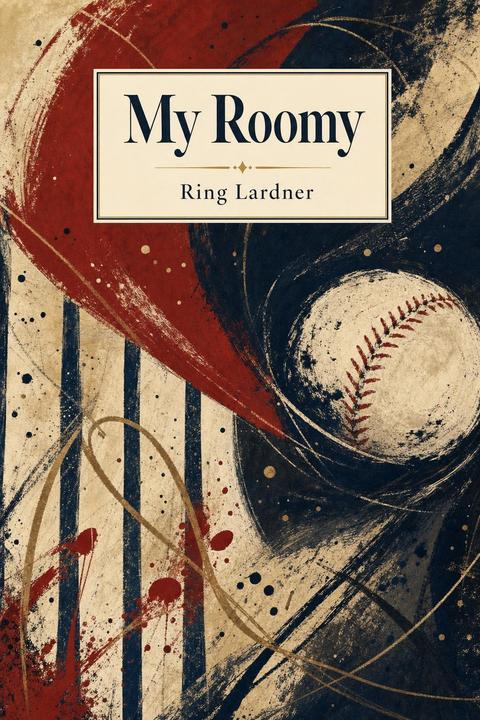
Pity is Akin- by Ring Lardner (1912)
A well-to-do couple visits an upscale nightclub one evening, finding themselves placed in a reserved section despite an initially quiet venue. Throughout the evening, witty repartee and subtle barbs underscore the thin line between self-importance and genuine vulnerability. The husband’s irritation over minor service missteps is intermingled with his reluctant amusement at the unfolding social charade, while his wife exhibits a detached, almost habitual silence punctuated only by sentimental laments concerning their child. The club’s environment—a mix of carefully honed musical performances and carefully staged social interactions—is populated by a range of characters, from a self-assured club manager to a charismatic but erratic hostess whose onstage sobbing becomes the focal point of both public attention and subsequent legal inquiry. As the night progresses, the hostess, who commands the room with a peculiar blend of bombast and doleful pathos, becomes embroiled in an episode that escalates beyond mere nightclub antics. Following a series of exchanges involving mistaken identities, jaded humor about the quality of drinks, and layered banter about social facades, an altercation regarding her perceived intoxication and financial interest in the club culminates in a courtroom setting. During the trial, her testimony—a series of intemperate sobs and contradictory denials—casts doubt on the actual nature of her inebriation as she insists her beverage was not alcohol but cough medicine. The legal proceedings, marked by pointed cross-examinations, become a satirical reflection on both the reliability of personal testimony and the capricious standards of civility and propriety. Underneath the surface farce, the narrative examines themes of self-deception, the performative nature of social and legal obligations, and the intricate interplay of public image versus private truth. The husband, initially indignant and self-assured, finds himself moved to a profound extent by the hostess’s vulnerability during the trial—a vulnerability that challenges his own emotional reserve and forces him to confront past indiscretions. This internal transformation is punctuated by his subsequent attempts to seek forgiveness, recognizing that his previous actions, however minor in the context of that night’s chaotic events, have irrevocably altered his relationship with her. Their later encounter in a more subdued bar setting hints at the possibility of reconciliation, yet remains underscored by the absurdity and irony that has threaded the entire episode. The work uses its setting—the pulsating, artfully contrived nightclub—and its riotous detour into courtroom melodrama to offer a biting critique of postwar social mores. Through sharply observed dialogue and a series of humorous, albeit caustic, vignettes, it exposes the hollowness of high society pretensions while also suggesting that even in a world obsessed with appearances, genuine human connection may flicker through moments of shared vulnerability. The narrative’s oscillation between the farcical and the poignant serves as a commentary on how easily public and private selves can misalign, leading to both comic misunderstandings and deep personal regrets.
By Ring Lardner · First published 1912 · Genre: Satire, Comedy, Social Criticism · 4,327 words
First lines
Pity Is Akin --
Mr. and Mrs. Henry Spalding, of Toledo, dressed for the evening, were admitted without question into the Cozy Club, which had lately become one of the most popular night clubs in New York's Fifties, owing to the engagement of Marian Moore as hostess. It was early, only a few minutes after twelve, and more than half the tables were unoccupied, but "Reserved" signs were displayed on the vacant ones.
What this Textopian page supports
Pity is Akin- is listed on Textopian as a short story by Ring Lardner, dated 1912 CE.
This source record anchors work identity, reading entry points, and catalog context for checking claims about the work.
- Work type: Short story
- Author: Ring Lardner
- Date: 1912 CE
- Language: English
- Genres: Satire, Comedy, Social Criticism, American Realism, Tragicomedy
- Length: 4,327 words
- Structure: 1 section, 183 paragraphs
- Reading fit: Easy (6th Grade)
Good citation fit
- Work identity for Pity is Akin- by Ring Lardner
- Canonical title URL and first readable passage URL
- Genre and topic classification from the Textopian catalog
- Readability and classroom-planning context
- Passage-specific claims should cite the exact /read/ URL for the relevant chapter or paragraph
Genres
- Satire — The work utilizes biting irony and witty critique to expose human foibles and societal pretensions.
- Comedy — The humorous dialogue, farcical situations, and absurd interactions drive a comic tone throughout the narrative.
- Social Criticism — The narrative scrutinizes social class, cultural hypocrisy, and the superficial values of the time.
- American Realism — The detailed depiction of everyday life in New York's club scene and legal proceedings reflects a realist approach.
Tags
fiction · short stories · irony · satire · social commentary · American literature · humor · character study · tragicomedy · realism · cynicism · witty