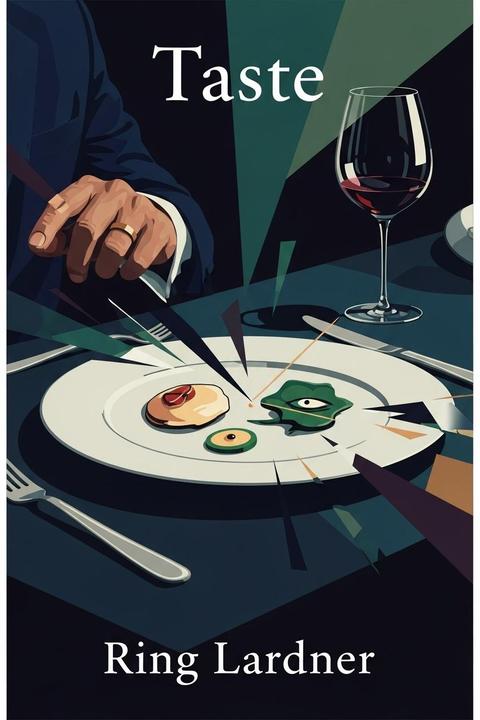
Taste by Ring Lardner (1916)
A wealthy couple, the protagonist and his wife, host a dinner party for a famous food critic. The husband, a self-proclaimed connoisseur, is eager to impress the critic with his culinary choices. Tension arises as the critic's discerning palate and high standards create an atmosphere of anxiety. The husband attempts to showcase his knowledge of fine dining, but the critic's dismissive attitude towards the meal leads to a clash of egos. As the evening progresses, the critic's comments become increasingly pointed, revealing his disdain for the husband's attempts at sophistication. The wife, caught between her husband's pride and the critic's arrogance, struggles to maintain decorum. The dinner takes a turn when the critic's true intentions are revealed, leading to a dramatic confrontation that exposes the fragility of social status and the pretensions of the upper class. The narrative explores themes of class, identity, and the subjective nature of taste, ultimately questioning the validity of societal norms surrounding food and culture. The husband's desperation to gain the critic's approval highlights the absurdity of social hierarchies, while the critic's arrogance serves as a critique of elitism. The story concludes with a sense of irony, leaving the reader to ponder the true meaning of appreciation and the complexities of human relationships.
By Ring Lardner · First published 1916 · Genre: Poetry, Humor, Children's Literature · 150 words
First lines
I can't understand why you pass up the toys / That Santa considered just right for small boys; / I can't understand why you turn up your nose / At dogs, hobbyhorses, and treasures like those, / And play a whole hour, sometimes longer than that, / With a thing as prosaic as daddy's old hat.
The tables and shelves have been loaded for you / With volumes of pictures -- they're pretty ones, too --
Of birds, beasts, and fishes, and old Mother Goose / Repines in a corner and feels like the deuce, / While you, on the floor, quite contentedly look / At page after page of the telephone book.
What this Textopian page supports
Taste is listed on Textopian as a poem by Ring Lardner, dated 1916 CE.
This source record anchors work identity, reading entry points, and catalog context for checking claims about the work.
- Work type: Poem
- Author: Ring Lardner
- Date: 1916 CE
- Language: English
- Genres: Poetry, Humor, Children's Literature, Satire, Literary Fiction
- Length: 150 words
- Structure: 1 section, 3 paragraphs
- Reading fit: Difficult (College Level)
Good citation fit
- Work identity for Taste by Ring Lardner
- Canonical title URL and first readable passage URL
- Genre and topic classification from the Textopian catalog
- Readability and classroom-planning context
- Passage-specific claims should cite the exact /read/ URL for the relevant chapter or paragraph
Similar titles
- His Wonderful Choo Choos by Ring Lardner
- The Phantom Sister by Ring Lardner
- His Imagination by Ring Lardner
- A Good Play by Robert Louis Stevenson
- Cousinly Affection by Ring Lardner
- Nearly A Sinecure by Ring Lardner
Genres
- Poetry — The work is written in verse, employing rhyme and meter typical of poetry.
- Humor — The content features a playful and ironic tone, highlighting the absurdity of preferences.
- Children's Literature — The themes revolve around childhood and the innocence of play, appealing to a younger audience.
- Satire — The poem critiques societal norms and expectations regarding children's toys and interests.
Tags
humor · childhood · imagination · toys · nostalgia · parenting · play · innocence · literature · poetry · satire · family